
LUISTER NAAR DE JOODSE STEMMEN OVER
DE ISRAELISCHE MEGA-MISDRIJVEN TEGEN
HET INTERNATIONAAL HUMANITAIR RECHT
JEGENS DE PALESTIJNEN !
THE JEWISH VOICE FOR PEACE - JVP
LEES "THE WIRE" !
PALESTINA BERICHTEN NA 30 november 2025 staan hier

31 december 2025
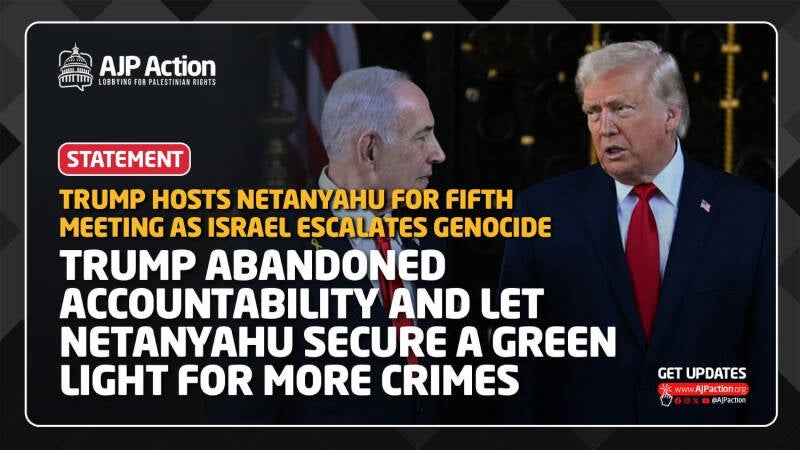
Trump abandoned accountability and let Netanyahu secure a green light for more crimes
[WASHINGTON D.C., DECEMBER 31, 2025] — This week marked the fifth meeting this year between Israeli Prime Minister Benjamin Netanyahu and President Donald Trump, a meeting that was supposed to be about Trump pressing Netanyahu to move into the second phase of the ceasefire. In recent weeks, Trump and senior administration officials had privately expressed frustration with Netanyahu, accusing him of slow-walking, or outright trying to block, the transition to phase two. Instead, what unfolded at Mar-a-Lago was Trump lavishing praise on Netanyahu, granting him political victory on every major issue he sought, and effectively surrendering any leverage the United States claims to have.
Netanyahu was welcomed as a legitimate head of state rather than what he is, a leader of an apartheid regime and facing an international arrest warrant for war crimes and Crimes Against Humanity. He arrived amid a so-called “ceasefire” that Israel has repeatedly violated since it took effect in October 2025. While the agreement was meant to halt military operations and allow humanitarian access, Israel has continued near-daily attacks that have killed hundreds of Palestinians even after the ceasefire entered into force, while arbitrarily restricting aid. Trump offered no condemnation, no demand for compliance, and no acknowledgment that Israel failed to meet even the most basic obligations of the first phase, despite publicly claiming Israel has upheld the deal.
Instead of enforcing accountability, Trump allowed Netanyahu to reframe the conversation entirely, extracting U.S. support for resuming full-scale war on Gaza if Hamas does not disarm, despite Israel’s own noncompliance. Israel has not facilitated reconstruction, allowed sufficient humanitarian access, or supported the formation of a Palestinian technocratic governing structure as required under the ceasefire framework; failures that persist because Trump, as the architect and guarantor of the so-called peace plan, has refused to enforce its terms or impose any consequences for Israel’s noncompliance. Netanyahu violated phase one repeatedly, yet Trump is now pushing phase two with no conditions, no enforcement, and no accountability.
This abdication is especially damning as Israel escalates collective punishment. Humanitarian aid in Gaza is already catastrophically scarce because Israel has systematically obstructed aid for months. Yet, Israel has announced it will suspend the operations of 37 humanitarian organizations beginning January 1, 2026, including major medical and life-saving groups, under the pretext of new vetting rules. This further dismantles what little humanitarian access remains, pushing a population already facing manufactured famine, disease, flooding of refugee camps, and mass displacement closer to total collapse. A ceasefire that allows the deliberate strangulation of humanitarian lifelines is no ceasefire at all.
Rather than confronting these violations, Trump and Netanyahu used their meeting to openly discuss expanding war. Trump effectively gave Netanyahu a greenlight for further attacks on Lebanon if Hezbollah does not disarm, despite Israel’s continued occupation of Lebanese territory and near-daily strikes. He effectively greenlighted war with Iran, stating that the “United States would help strike Iran again “immediately,” which would inevitably drag the United States into yet another catastrophic conflict. He failed to get a commitment from Netanyahu for an end to Israel’s ongoing attacks on Syria. And despite Trump’s stated opposition to annexation, Israel is actively accelerating de facto annexation of the West Bank through settlement expansion, authorization of new “housing units,” and the approval of 19 new settlement outposts.
Trump did not walk into the room wielding the leverage of a president who bankrolls Israel and could enforce compliance if he chose to. Netanyahu outmaneuvered him. By breaking Israel’s long-standing tradition of awarding the so-called Israel Prize exclusively to Israelis, the Ministry of Education chose to give it to Trump. The move was calculated, it flattered Trump’s ego and fed his narcissism, effectively expanding Israel’s blank check to continue its actions. As a result, Netanyahu was able to move his way into phase two of the ceasefire without fulfilling a single obligation from phase one, all while securing U.S. backing for continued war, regional escalation, and lasting impunity.
Instead of continuing to welcome a war criminal into the country, pouring military aid into a campaign that costs both Palestinian and American lives, and legitimizing violations of international law, the United States should be doing the opposite. It should be cutting Israel off, imposing an arms embargo, enforcing accountability, and complying with both U.S. law and international law.
In solidarity,
Americans for Justice in Palestine Action
2000.
31 december 2025
Help support AMP as we take on the challenges of 2026
In 2025, they tried to silence us and destroy us. Since the genocide in Gaza began over 2 years ago, we have seen atrocity after atrocity taking place across Palestine. And here in the U.S., we have seen the worst wave of repression our movement and community has faced in decades.
More than a dozen lawsuits were filed against AMP and its leadership. Frivolous, malicious attempts to smear our name, drain our resources, and criminalize our movement. Our staff were targeted personally. We were harassed, surveilled, and defamed. Zionist organizations sought to weaponize our own government against its own citizens — a betrayal of the principles it claims to uphold.
They tried to sabotage our two largest events of the year. Right-wing pundits and elected officials launched coordinated attacks on our Palestine Advocacy Days and our Annual Convention for Palestine in the U.S. And they even came after me personally. I received anonymous threats. Texts and phone calls were sent not just to me, but to members of my family, intended to terrorize us and silence our work.
But guess what?
They failed!

Watch our year in review and make your final donation of the year to keep this movement strong
We won three major lawsuits. Our Palestine Advocacy Days broke records with over 700 advocates.
And our Annual Convention was a historic success, packed with over 5000 people who refused to be silenced.
They are coming after us because our work is succeeding.
We are pushing policy.
We are shifting public opinion.
We are organizing in communities, in statehouses, and on Capitol Hill.
And we are doing it all without fear.
That is why they are afraid.
They have seen us help drive 24 million dollars out of Israel bonds in Ohio and Minnesota.
They have watched us build new AMP chapters from coast to coast.
They have witnessed how we have turned Palestine from a fringe issue into a national political force.
So they are trying to stop us before we go further.
But we will not stop.
Not now. Not ever.
2025 will be remembered as the year they failed to break us.
Let 2026 be the year we rise even higher.
We are not going anywhere.
And with your support, neither is this movement. Make a tax-deductible donation today, and help us meet the challenges of 2026.
With strength and determination,
Dr. Osama Abu Irshaid
Executive Director, AMP
2099.

31 december 2025
Gaza Humanitarian Response
Situation Report No. 57
30 December 2025
(As of 18:00 on 29 December 2025, unless otherwise noted)
HIGHLIGHTS
- Heavy rains and cold weather have continued across the Gaza Strip over the past 24 hours, increasing health risks, including hypothermia among infants and illnesses linked to overflowing sewage.
- Between 28 and 29 December, shelter partners distributed tents, blankets, tarpaulins, mattresses, sealing-off kits, as well as cash and voucher assistance to more than 7,400 families across northern Gaza, Deir al Balah, and Khan Younis.
- On 29 December, more than 2,000 women and girls received psychosocial support and Psychological First Aid, while case management continued for dozens of GBV cases to ensure access to essential health, legal and mental health services.
- On 29 December, four new temporary learning spaces were established, bringing the total to 422 learning spaces serving more than 232,500 learners with more than 5,500 teachers. However, recent heavy rainfall damaged several learning spaces, highlighting urgent needs for durable materials to ensure continuity and safety of education activities.
SITUATION OVERVIEW
Over the past 24 hours, weather conditions across the Gaza Strip have led to further casualties and increased health risks, including hypothermia among babies and illnesses linked to overflowing sewage. The UN and its humanitarian partners continue to respond to flood alerts from affected families, distributing tents, tarpaulins, warm clothes, blankets and dignity kits across Gaza. They also continue to mobilize heavy equipment to pump overflowing sewage away from flooded residential areas.
Against this backdrop, Israeli airstrikes, shelling and gunfire continued to be reported across several areas of the Gaza Strip throughout 29 December. Strikes reportedly struck several locations in North Gaza, Gaza city, Deir al Balah, Khan Younis, and Rafah, with overnight escalation in Rafah involving multiple airstrikes and ground fire.
UNITED NATIONS-COORDINATED AID ENTRY*
On 29 December, at least 3,375 pallets of aid administered by the UN and its partners were offloaded at Gaza’s crossings, based on data retrieved from the UN 2720 Mechanism dashboard at 19:00 on 30 December. About 76 per cent of these pallets contained food supplies, followed by shelter items (16 per cent), protection items (5 per cent), and water, sanitation and hygiene (WASH) items. At least 82 truckloads were offloaded at the Kerem Shalom Crossing in the south and 57 at the Zikim Crossing in the north.
On the same day, UNOPS international monitors deployed at Gaza’s crossings verified the collection of at least 1,766 pallets of aid from the Kerem Shalom Crossing. These comprised inter alia 827 pallets of food, 483 pallets of shelter items including tents, mattresses, blankets, kitchen sets, winter clothes and 379 pallets of WASH items.
The above data excludes bilateral donations and the commercial sector.
On 29 December, one out of six humanitarian movements inside Gaza requiring coordination with Israeli authorities was fully facilitated and completed, while two others faced impediments but were eventually fully accomplished. One was impeded and only partially accomplished and two were outright denied.
HUMANITARIAN RESPONSE
The below are preliminary updates shared by Clusters at the time of reporting and will be reconciled and aggregated in the coming days as Clusters receive more data from the capillary network of partners active on the ground.
Shelter
- Between 28 and 29 December, shelter partners provided emergency shelter and non-food items (NFIs), including 9,050 blankets, 5,579 tarpaulins, 1,950 mattresses, 1,236 sealing off kits, 811 tents, and 402 cash and voucher assistance (CVA), reaching 7,481 families across northern Gaza, Deir al Balah and Khan Younis.
- The response was implemented through several humanitarian partners as part of their regular assistance efforts, which included cash support, shelter materials, and winterization items. In addition, an intersectoral joint distribution was carried out to address urgent needs following heavy rainstorms, providing 787 tents to families whose shelters had been damaged, ensuring immediate protection and relief.
Protection
- General Protection
- On 29 December, Child Protection partners continued delivering life-saving services across the Gaza Strip reaching more than 3,500 children and 1,000 caregivers through a combination of mental health and psychosocial support (MHPSS) group and individual sessions, child protection awareness activities, positive parenting sessions, and case management support across Gaza city, northern Gaza, Deir al Balah, Al Zawaida, and Khan Younis.
- On the same day, more than 500 children and their families received life-saving winterization assistance, including winter jackets, blankets, stationery, and child-friendly materials, particularly in northern Gaza. Distribution and service delivery were partially constrained by flooding, road closures, and ongoing storms in some locations.
- Child Protection
- On 29 December Child Protection (CP) partners continued delivering life-saving services across the Strip amid severe winter conditions, access constraints, and damaged infrastructure. CP services reached more than 3,500 children and over 1,000 caregivers through a combination of mental health and psychosocial support (MHPSS) group and individual sessions, child protection awareness activities, positive parenting programs, and case management support across northern Gaza, Deir al Balah, Al Zawaida, and Khan Younis. MHPSS remained central to the response, encompassing structured group activities for children and caregivers, individual counseling, psychological first aid, speech therapy, home visits, and referrals for specialized services. Community-based sessions also addressed family separation, child protection risks, and explosive ordnance risk education (EORE).
- As part of the winter response, on 29 December, more than 500 children and their families received essential winterization assistance, including winter jackets, blankets, stationery, and child-friendly materials, particularly in northern Gaza. Distribution and service delivery were partially constrained by flooding, road closures, and ongoing storms in some locations.
- Gender-Based Violence
- On 29 December, partners addressing Gender-Based Violence (GBV) continued delivering multisectoral services across multiple locations, reaching women, girls, children, and community members through prevention, response, and mitigation activities.
- More than 2,000 women and girls received individual and group counseling, psychological consultations, and Psychological First Aid sessions, and case management services continued, with dozens of active GBV cases followed up to ensure access to health, legal, and mental health services. Helpline services remained operational, receiving over 30 calls from women, girls, and a small number of men seeking information, referrals, and support.
- GBV awareness-raising activities were widely implemented in shelters, community spaces, and women and girls safe spaces. Sessions covered topics such as GBV types, sexual violence, sexual exploitation and abuse, safe referrals, and available services. These activities reached more than 2,000 people, including women, girls, men, and boys. Community dialogue sessions and meetings with influential community members were also conducted to strengthen prevention messaging and community-level protection mechanisms.
- Legal awareness sessions, legal consultations, and social-legal mediation were provided to hundreds of women, focusing on issues such as women’s rights, family law, custody, inheritance, and documentation. Protection services included family mediation, follow-up of protection cases, and support for survivors residing both within and outside shelter settings. Family visitation and case follow-up services were conducted for a small number of highly vulnerable families.
- Distribution of dignity kits, menstrual hygiene management kits (MHM), hygiene kits, and winterization items continued across affected areas. On 29 December, more than 1,000 women and girls received dignity kits and MHM supplies. In addition, winter clothing, blankets, and other relief items were distributed to women and over 200 children, particularly in flood-affected and high-vulnerability areas.
- On 29 December, partners addressing Gender-Based Violence (GBV) continued delivering multisectoral services across multiple locations, reaching women, girls, children, and community members through prevention, response, and mitigation activities.
- Mine Action
- On 29 December, Mine Action partners conducted three explosive hazard assessments in Deir al Balah and Khan Younis in support of rubble removal efforts and for partner activity support, while explosive ordnance risk education (EORE) sessions continued across Gaza, Deir al Balah and Khan Younis governorates.
Education
- Temporary learning spaces (TLSs) continue to expand across the Gaza Strip. On 29 December, four additional TLSs were established in Khan Younis, Deir al Balah, and Gaza city, providing learning opportunities for 1,950 school-aged children supported by 83 teachers. This brings the total to 422 operational TLS across the Strip, with a current capacity of more than 232,500 learners supported by 5,540 teachers.
- At the same time, recent heavy rainfall has affected at least five TLS in Deir al Balah and Gaza city, nearly 1,460 learners, and causing damage to 23 tents. Although repair and mitigation activities are underway, shortages of high-performance tents persist amid growing demand. Many of the affected TLSs are constructed with substandard materials that cannot withstand severe weather conditions. With additional rainfall forecast, the risk of further damage remains high, posing an ongoing challenge to the continuity, safety, and expansion of learning opportunities.
* All figures solely refer to UN and partner assistance dispatched through the UN-coordinated system. They are preliminary and will be reconciled in the course of the ceasefire. Supplies entering through bilateral donations and the commercial sector are not reflected.
2098.

30 december 2025
Humanitarian Situation Update #351
Gaza Strip
30 December 2025
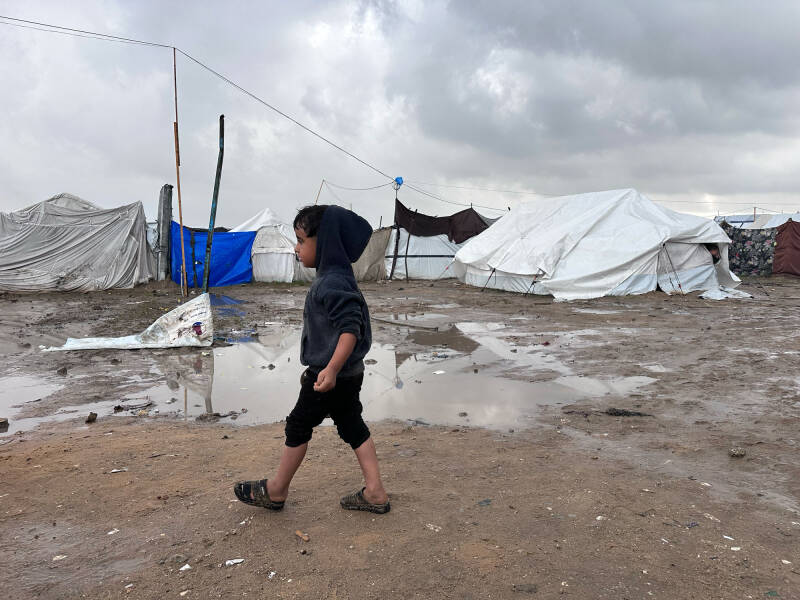
A Palestinian boy walks past tents during a break in the rain in Jabalya, North Gaza. Photo by OCHA
Key Highlights
- Hundreds of thousands of Palestinians in Gaza are struggling in makeshift tents damaged by rain, wind and seawater waves or damaged buildings at risk of collapse.
- So far in December, humanitarian partners have provided emergency shelter assistance to over 80,000 households.
- The latest Integrated Food Security Phase Classification analysis finds that famine conditions have been alleviated but acute food insecurity and malnutrition remain at critically high levels.
- UN agencies continue to emphasize the importance of predictable and unimpeded access, increased supplies and sustained funding for a transition from emergency to early recovery efforts in Gaza.
- Solid waste management efforts are constrained, with waste generation exceeding collection capacity in several areas due to the lack of access to landfills, damaged infrastructure, fuel shortages, and restrictions on the entry of essential equipment and spare parts, according to the Water, Sanitation and Hygiene Cluster.
Context Overview
- Humanitarian convoys by the UN and its partners inside Gaza require coordination with Israeli authorities to and from crossings and in or near other areas where Israeli forces remain deployed. Between 17 and 29 December, 86 humanitarian missions were coordinated with the Israeli authorities, of which 46 were successfully facilitated, 22 were impeded, and five were denied. Thirteen missions were cancelled by the requesting organizations due to operational, logistical or security reasons.
- Airstrikes, shelling and gunfire continue to be reported across the Gaza Strip, resulting in casualties. In one incident, on 19 December, Palestinian Civil Defense (PCD) reported that at least five people were killed when a school sheltering internally displaced persons (IDP) was hit in At Tuffah, in eastern Gaza city, west of the “Yellow Line.” The Israeli military remains deployed in over 50 per cent of the Gaza Strip, beyond the “Yellow Line” which remains largely unmarked on the ground and where access to humanitarian facilities and assets, public infrastructure and agricultural land are either restricted or prohibited. Detonations of residential buildings and bulldozing activities continue to be reported, including near or to the east of the “Yellow Line.” Access to the sea remains prohibited. Between 25 and 26 December, about 150 families living in eastern At Tuffah neighbourhood in Gaza city were displaced to nearby areas following the intensification of military activities and reported reception of verbal evacuation notices. Some families remained in the area due to the lack of alternative shelter options.
- Hundreds of thousands of Palestinians continue to struggle in flooded makeshift tents or damaged buildings at risk of collapse (see more below), while winter storms are heightening the risk of cold-related illnesses and preventable deaths, particularly among children under five. On 28 December, the PCD reported that its teams recovered the bodies of a 30-year-old woman who died due a wall collapse and a seven-year-old child who drowned in a well during the storm. According to the Ministry of Health (MoH) in Gaza, so far in December, 17 people died due to the collapse of damaged buildings and three children died of hypothermia, including a two-month-old baby who died on 29 December. Earlier, a 29-day-old infant died on 18 December shortly after admission into Nasser Medical Complex, according to Médecins Sans Frontières (MSF). MSF teams report consistently high rates of respiratory infections, warning that these will only increase throughout the winter.
- According to the MoH in Gaza, between 17 and 29 December, 17 Palestinians were killed, 70 were injured and 47 bodies were recovered from under the rubble. This brings the casualty toll among Palestinians since 7 October 2023, as reported by the MoH, to 71,266 fatalities and 171,222 injuries. According to the MoH, the total number includes 292 fatalities who were retroactively added between 19 and 26 December after their identification details were approved by a ministerial committee. MoH reported that since the ceasefire, 414 Palestinians have been killed, 1,145 injured, and 680 bodies retrieved from under the rubble.
- According to the Israeli military, between 17 and 29 December, as of noon, no Israeli soldiers were killed in Gaza. The casualty toll among Israeli soldiers since the beginning of the Israeli ground operation in October 2023 stands at 471 fatalities and 2,995 injuries. According to Israeli forces and official Israeli sources cited in the media, more than 1,671 Israelis and foreign nationals have been killed, the majority on 7 October 2023 and its immediate aftermath. As of noon on 30 December, the remains of one hostage are in the Gaza Strip.
- Explosive ordnance continues to pose a serious threat across the Gaza Strip. On 18 December, PCD reported that a child was killed by explosive ordnance (EO) in his family home in An Nuseirat Camp, in Deir al Balah. Highlighting the immense scale of EO contamination in the Gaza Strip, UNMAS chief Julius Van Der Walt noted that people are getting injured “simply by collecting basic necessities on a day-to-day basis.” The Protection Cluster's monitoring system highlights that children remain particularly exposed to serious safety hazards, including explosive remnants of war, while searching for firewood and plastic in and around displacement sites. To mitigate risks and facilitate the creation of an enabling environment for humanitarian aid delivery, since 10 October, mine action partners have responded to requests for explosive hazard assessments (mainly in response to rubble removal efforts), supported inter-agency missions, and delivered risk education sessions to people and frontline humanitarian workers across the Gaza Strip.
- Following the release of the latest Integrated Food Security Phase Classification (IPC) analysis on 19 December (see below), the UN Secretary-General stated that while famine conditions in Gaza have been pushed back and access to food has improved for many people, these gains remain “fragile – perilously so.” Emphasizing that humanitarian needs are growing faster than aid delivery, he called for a durable ceasefire and urged the need for “more crossings, the lifting of restrictions on critical items, the removal of red tape, safe routes inside Gaza, sustained funding, and unimpeded access – including for NGOs.” He also reiterated that international humanitarian and human rights law must be upheld across the Occupied Palestinian Territory (OPT) and reaffirmed his support for UNRWA as an indispensable actor in the response.
- On 30 December, the Israeli authorities announced that they plan to suspend the operation of some international NGOs. In a statement, the Humanitarian Country Team in the OPT, representing UN agencies and over 200 local and international humanitarian partners, urged Israeli authorities to reconsider the announcement, stressing that international NGOs (INGOs) are essential for life-saving aid delivery.
Winter Storms
- The recent rainstorm since 26 December has triggered flash flooding, particularly affecting people living in low-lying areas, coastal zones, and those sheltering in substandard structures and tents. Seawater has once again inundated tents housing displaced families, including in the Al Mawasi area of Khan Younis, rendering many shelters uninhabitable. Many families, already vulnerable from displacement, have been forced to move to higher ground as their belongings were soaked. Heavy winds have further exacerbated conditions, destroying or severely damaging numerous tents and makeshift shelters. According to the PCD in Gaza, since early December, 18 residential buildings have completely collapsed, resulting in significant human and material losses, while over 110 additional buildings have sustained dangerous partial damage, posing an immediate threat to thousands of residents in and around them.
- According to the Water, Sanitation and Hygiene (WASH) Cluster, heavy rains have stretched the capacities of damaged and unmaintained infrastructure, posing serious risks to communities living near stormwater lagoons and sewage networks. Recent rains raised water levels in Wadi Gaza and Sheikh Radwan lagoon, demonstrating the critical need to ensure dewatering pumps can continue to function across the Gaza Strip. The Palestinian Water Authority (PWA) is implementing urgent and critical interventions to mitigate flooding risks and protect public health, but noted that restrictions on the entry of necessary equipment have forced a reliance on emergency measures. The WASH Cluster has cautioned that a range of preparedness measures for flood mitigation requires the urgent entry of specialized equipment, such as pumps, pipes and other electromechanical components, which continue to be denied entry, and a consistent supply of fuel.
- Between 21 and 27 December, Protection partners have provided approximately 10,000 people with integrated, life-saving interventions, including mental health and psychosocial support services, legal services on civic documentation, comprehensive protection support for released detainees, prosthetics and orthotics support to persons with disabilities, and cash assistance. These services include the winterization response, whereby Protection partners have provided clothing parcels, vouchers, and blankets to 6,000 people.
- Overall, since early December, Shelter Cluster partners have reached over 80,000 households (approximately 448,400 people), providing 37,740 tents, 127,860 tarpaulins and 94,980 bedding items, including to respond to weather conditions. These figures include approximately 7,000 tents distributed through UN coordination and other tents provided as bilateral donations and distributed with the support of Shelter Cluster partners. In addition, almost 20,650 households were provided with winter clothing through in-kind as well as cash and voucher assistance. While the shelter gap was expected to further decrease due to sustained response efforts, the additional 65,000 households affected by recent rainstorms have increased overall needs; the Shelter Cluster estimates that over a million people remain in need of urgent shelter assistance.
Famine Conditions Alleviated, but Food Insecurity and Malnutrition Levels Remain Critical
- On 19 December, a new IPC analysis for the Gaza Strip found that acute food insecurity and malnutrition remain at critically high levels. The analysis noted improvement in recent months following reduced hostilities, early steps toward a peace plan, and increased entry of humanitarian and commercial food supplies. The IPC estimates that approximately 1.6 million people will continue to face Crisis or worse levels of acute food insecurity (IPC Phase 3 or above) through April 2026, including about 571,000 people in Emergency (IPC Phase 4) and approximately 1,900 people in Catastrophe (IPC Phase 5). This reflects a reduction from nearly a third of the population projected to face catastrophic conditions in August 2025. The analysis additionally projects that through October 2026, at least 101,000 children between six and 59 months will suffer from acute malnutrition, including more than 31,000 severe cases, placing children at heightened risk of mortality. While this represents a decrease from the 132,000 cases, including 41,000 severe cases, estimated in August, nutrition needs remain extensive. In addition, nearly 37,000 pregnant and breastfeeding women are expected to require urgent nutrition support by October 2026.
- The IPC analysis further highlights that prolonged displacement, inadequate food availability, poor dietary diversity, disrupted markets and constraints on humanitarian access continue to drive severe food consumption gaps across the Gaza Strip. It indicates that no children aged 6-23 months meet minimum dietary diversity standards, while 71.5 per cent continue to experience severe food poverty – consuming two or fewer out of eight food groups per day – down from 92.4 per cent in September, underlining the ongoing risk of long-term nutritional and developmental harm without sustained intervention. The IPC underscores the need for continued, large-scale food assistance alongside an expanded and integrated nutrition response, including treatment for acute malnutrition, micronutrient supplementation and support for infant and young child feeding. It additionally stresses that sustained, expanded, and consistent humanitarian access, predictable commercial supply and the removal of operational impediments are critical to preventing further deterioration and reversing current food insecurity and malnutrition trends across Gaza.
- On 19 December, the Food and Agriculture Organization of the United Nations (FAO), the United Nations Children’s Fund (UNICEF), the World Food Programme (WFP) and the World Health Organization (WHO) underscored that while the latest IPC analysis confirms that famine conditions have been pushed back in Gaza following the ceasefire and improved access, the gains remain extremely fragile: “Humanitarian needs remain staggering, with current assistance addressing only the most basic survival requirements.” UNICEF Director of Emergency Operations, Lucia Elmi, cautioned that “food is now in markets, but many families simply cannot afford to buy it. Health facilities are barely functioning, clean water and sanitation services are scarce, and winter is bringing increasing suffering to displaced people huddling in makeshift shelters. These fragile gains could vanish overnight if fighting resumes.” Calling for decisive action, the agencies stressed that “[o]nly access, supplies and funding at scale can prevent famine from returning and help Gaza move from survival to recovery.”
Access to Markets and Emergency Food Assistance
- According to the latest WFP Market Monitor covering the first half of December, food commodity prices remained largely stable across the Gaza Strip nearly two months into the ceasefire and markets have shown early signs of recovery, supported by the gradual resumption of commercial imports and a reduction in prices. WFP reported that, while most prices remained higher than September 2023 levels and beyond the reach of most people, significant reductions in the prices of nearly all key commodities were recorded compared with the pre-ceasefire period (early October 2025). For instance, egg prices dropped sharply across all governorates, falling to 40 NIS ($11) for a two-kg box, frozen chicken was available at 30-35 NIS ($8-9.5) per kg, and frozen beef at 60-65 NIS ($16-18) per kg. In the second week of December, some staple foods have also been sold at prices below September 2023 levels, such as wheat flour, brown lentils and sunflower oil. A 25-kilogramme (kg) bag of wheat flour, for instance, was sold at NIS 30-40 ($8-11), compared with about NIS 48 ($13) in September 2023.
- WFP noted that high coordination fees imposed on commercial goods entering Gaza, often amounting to several thousand US dollars per truck, combined with damaged infrastructure and ongoing supply chain disruptions, remain key drivers of elevated prices for essential commodities, including meat, eggs, fruits, vegetables and dairy products. As a result, market access remains severely constrained. Three quarters of surveyed households reported continued difficulties accessing markets in the first half of December. Among them, 98 per cent cited lack of cash as the primary barrier, while 32 per cent reported being unable to afford basic food items despite recent price drops. Cash liquidity shortages continue to affect market functionality, with 85 per cent of surveyed retailers reporting insufficient cash, limiting their ability to restock goods or pay suppliers.
- Food consumption continued to show modest improvement in December, WFP highlighted, with surveyed households reporting an average of two meals per day, compared with one meal per day in July. However, one in four surveyed households continued to consume only one meal per day. Dietary diversity remains critically low, with households largely dependent on cereals and pulses. Compared with September 2023 patterns, vegetables were consumed on average only two days per week (down from six), fruits half a day per week (down from three), and meat or other protein sources only 0.7 day per week (down from three), reflecting continued constraints in access to nutritious foods.
- Despite a decrease in the percentage of people who rely on waste burning to cook, down from 55 per cent in November, WFP reports that in the absence of predictable and sufficient gas supplies, people continue to resort to unsafe cooking and heating options. Forty-three per cent of households continue to rely on waste burning, 54.5 per cent on wood, 1.5 per cent on gas, while one per cent have no cooking source at all. The Protection Cluster notes that reported incidents of fire hazards, linked to unsafe cooking and heating practices, have in some cases resulted in severe damage to shelters. In one incident on 19 December, a gas stove malfunctioned resulting in a fire that destroyed the tent of a widowed woman and her four children. Protection teams have since initiated fire safety awareness sessions in displacement sites.
Challenges Facing Solid Waste Management
- Solid waste management across the Gaza Strip remains a serious challenge. According to the WASH Cluster, since October 2023, an estimated $66 million in damages have been recorded to solid and medical waste management systems, the WASH Cluster reported; this includes the destruction or damage of more than 200 waste collection trucks, 18 pieces of landfill equipment, five medical waste vehicles, two medical waste microwaves, 90 facilities and approximately 6,000 waste containers. The two main landfills, Sofa and Johr ad Dik, are located near the border and have remained inaccessible for over 24 months, forcing municipalities and partners to rely on temporary dumping sites. As a result, the waste collection system has fundamentally shifted: primary collection is now largely carried out using donkey carts and tractors, while secondary collection depends on a limited number of tipper and compactor trucks. Waste generation has increased from less than 0.4 kg per capita per day during the most critical phases of hostilities to an estimated 0.5-0.7 kg per capita per day currently, reflecting changing consumption patterns and population movements. This increase, combined with damaged infrastructure, continues to outpace collection capacity in several areas due to lack of access to landfills, insufficient fuel allocations, and restrictions on the entry of spare parts, waste collection machinery and other equipment.
- The United Nations Development Programme (UNDP) reports that since October 2023 it has supported the collection of more than 480,000 tons of solid waste - over 50 per cent of estimated total waste generated – currently serving about 1.4 million people with daily collection. However, collection capacity remains uneven. In southern Gaza, where there are eight out of the 10 dumping sites across the Strip, daily collection is broadly aligned with daily waste generation. By contrast, in northern Gaza, collection rates cover only about 60 per cent of generated waste as of the end of 2025, and the only available temporary dumping sites (Feras Market in Gaza city, and Al Khuzndar in Jabalya) are heavily congested and operating beyond capacity. This has resulted in continued accumulation of solid waste in densely populated areas, posing public health and environmental risks. To help mitigate some of these risks, a new temporary dumping site in the Netzarim corridor has been agreed with municipal authorities and is expected to absorb accumulated waste from Feras Market and other informal dumping locations in the north starting in early 2026, as well as accommodate ongoing daily waste generation.
- With the onset of winter, accumulated waste in flood-prone and densely populated areas poses heightened environmental and public health risks. Rainfall and flooding increase the likelihood of waste dispersal, blocked drainage systems and contamination of water sources, potentially exacerbating health risks and the spread of diseases. Within this context, priority needs include tyres, batteries, spare parts, medical waste treatment equipment, pesticides and additional collection vehicles. While some supplies have entered Gaza, including eight tipper trucks, 55 containers, 92 tyres, and personal protective equipment for workers, and other materials are expected to enter soon including 11 tipper trucks, four compactors and two medical waste collection vehicles, significant gaps remain between current capacity and operational requirements, UNDP notes. Without sustained scale-up of waste collection, access to disposal sites and rehabilitation of waste management infrastructure, public health risks could intensity in the coming months.
Funding
- As of 30 December, Member States disbursed approximately $1.6 billion out of the $4 billion (40 per cent) requested to meet the most critical humanitarian needs of 3 million out of 3.3 million people identified as requiring assistance in Gaza and the West Bank, including East Jerusalem, under the 2025 Flash Appeal for the OPT. Nearly 88 per cent of the requested funds is for the humanitarian response in Gaza, with just over 12 per cent for the West Bank. On 8 December 2025, the UN and its humanitarian partners launched a Flash Appeal for $4.06 billion to address the humanitarian needs of 2.97 million out of 3.62 million people identified as requiring assistance in Gaza and the West Bank, including East Jerusalem, in 2026. Nearly 92 per cent of those required funds are for the humanitarian response in Gaza, with just over eight per cent for the West Bank. In November, the oPt Humanitarian Fund managed 128 ongoing projects, totalling $73.5 million, to address urgent needs in the Gaza Strip (89 per cent) and the West Bank (11 per cent). Of these projects, 61 are being implemented by international NGOs, 51 by national NGOs and 16 by UN agencies. Notably, 58 out of the 77 projects implemented by international NGOs or the UN are being implemented in collaboration with national NGOs. For more information, please see OCHA’s Financial Tracking Service webpage and the oPt HF webpage.
2097.

30 december 2025
Statement by the Humanitarian Country Team of the Occupied Palestinian Territory on international NGOs
East Jerusalem, 30 December 2025
The UN and its partners are urging the Israeli authorities to reconsider today's announcement on international NGOs, which are an essential part of the life-saving humanitarian operation in the Occupied Palestinian Territory.
Ends
For more information, see: https://www.ochaopt.org/content/un-agencies-and-ngos-call-immediate-lifting-impediments-humanitarian-access-and-ngo-operations-occupied
2096.

30 december 2025
Gaza Humanitarian Response
Situation Report No. 56
29 December 2025
(As of 18:00 on 28 December 2025, unless otherwise noted)
HIGHLIGHTS
- Heavy rain since 11 December has affected over 56,000 families across the Gaza Strip. Humanitarian partners have provided emergency aid to 14,000 families and deployed equipment to clear sewage from residential areas.
- In Gaza city, water levels at the Sheikh Radwan lagoon have risen from 1.8 to 2.2 metres. Pumps are operating to prevent the lagoon from reaching critical levels, requiring about 7,000 litres of fuel per day at Sheikh Radwan alone.
- From 21 to 27 December, Shelter Cluster partners reached nearly 21,000 households (about 116,000 people) with emergency shelter materials and other essential items across all governorates. Of these, 3,810 households received tents and other items as part of the flood response, while regular distributions supported about 17,000 households with tents, tarpaulins, blankets, mattresses, and cash and voucher assistance.
- As of 28 December, Food Security Sector partners had reached 223,000 families (approximately 1.1 million people) with general food assistance as part of the December monthly cycle.
SITUATION OVERVIEW
Between 27 and 28 December, airstrikes, shelling and gunfire reportedly continued in several areas across the Gaza Strip, including Beit Lahia, Gaza city, Al Bureij, Khan Younis and Rafah. According to the Gaza Ministry of Health (MoH), as of 11:00 on 29 December, one Palestinian had been killed and three others injured across the Gaza Strip over the previous 48 hours. Overall, since the ceasefire in October 2025 and as of 29 December, 414 people were killed and 1,145 injured, MoH reports.
Meanwhile, Palestinians across the Strip continue to face severe challenges due to recent rainstorms since 11 December. Some 56,051 families across 464 locations and 56 neighbourhoods have been affected. In response to flood-related alerts from affected families, humanitarian partners have distributed emergency packages (tents, blankets, hygiene kits, etc.) to 14,094 families at 18 locations across the Gaza Strip. The UN and its partners are also mobilizing heavy equipment to pump overflowing sewage away from residential areas.
Partners leading on emergency shelter assistance report on lists of buildings at risk of collapse where people are currently residing. These war-damaged structures pose a serious safety risk to occupants and surrounding communities and require demolition due to the high risk of collapse. In response, partners have already initiated actions to provide shelter assistance and are engaging with affected families to find suitable solutions. While some families have expressed willingness to evacuate, the limited availability of safe and suitable land remains a key constraint. Coordination with relevant actors is ongoing to identify feasible solutions and mitigate risks.
In parallel, humanitarian teams are also responding to the needs of hundreds of people newly displaced from At Tuffah neighbourhood of Gaza city, where military operations have triggered further displacement. People who remain in or have returned to As Sanafour area of the neighbourhood, typically because of lack of space elsewhere, report significant challenges in accessing water, food and basic services.
UNITED NATIONS-COORDINATED AID ENTRY*
On 28 December, at least 2,732 pallets of aid administered by the UN and its partners were offloaded at Gaza’s crossings, based on data retrieved from the UN 2720 Mechanism dashboard at 15:00 on 29 December. About 77 per cent of these pallets contained food supplies, followed by water and sanitation (WASH) items (14 per cent), nutrition supplies (6 per cent), and shelter items (2 per cent). At least 67 truckloads were offloaded at the Kerem Shalom Crossing in the south and 58 at the Zikim Crossing in the north.
On the same day, UNOPS international monitors deployed at Gaza’s crossings verified the collection of at least 14,619 pallets of aid from the Kerem Shalom Crossing. These comprised inter alia 10,496 pallets of food assistance, 3,855 pallets of shelter assistance items such as tents, winter clothes, bedding items and kitchenware, 268 pallets of WASH items such as hygiene kits, diapers and water tanks.
The above data excludes bilateral donations and the commercial sector.
Between 27 and 28 December, five of nine humanitarian movements inside Gaza requiring coordination with Israeli authorities were fully facilitated and completed, while one was partially completed. Two missions encountered impediments but were eventually finalized, and one mission was canceled by the organizers.
In one of these nine missions, UN team managed to collect 422,280 litres of diesel at Kerem Shalom Crossing on 28 December. Since the ceasefire came into effect on 10 October 2025, the UN has brought in an average of procured, delivered and distributed 10.9 million liters of diesel and benzine into Gaza. Fuel is indispensable for survival in Gaza. It powers hospitals, water wells, telecommunication, and bakeries, and enables all aspects of lifesaving services to continue.
HUMANITARIAN RESPONSE
The below are preliminary updates shared by Clusters at the time of reporting and will be reconciled and aggregated in the coming days as Clusters receive more data from the capillary network of partners active on the ground.
Food Security
- Between 1 and 28 December, Food Security Sector partners reached 223,000 families (about 1.1 million people) with the monthly general food assistance for December via 60 distribution points across the Strip.
- Hot meal distribution continues at pace. As of 27 December, 1,650,000 meals were prepared and delivered daily by 25 partners through 212 kitchens – 447,000 meals by 49 kitchens in northern Gaza and 1,203,000 by 163 kitchens.
Water, Sanitation and Hygiene
- Fuel continues to be a major concern for the operation of WASH facilities, particularly with heavy rains expected to persist throughout the winter. In Gaza city, water levels at the Sheikh Radwan lagoon have risen from 1.8 to 2.2 metres. Pumps are operating to prevent the lagoon from reaching critical levels, requiring 7,000 litres of fuel per day for Sheikh Radwan alone, in addition to fuel needed to keep mobile and sewage pump stations functioning.
- The first batch of vehicles procured for the Solid Waste Management sector in Gaza arrived on 26 December, consisting of eight dump trucks. In addition, vehicle tires entered on 25 December. This will help sustain waste collection and transportation services. However, the lack of sufficient and sustainable amount of fuel in Gaza is preventing the planned scale-up of waste collection activities from using the new trucks.
- Last week, materials essential to keep desalination plants functional have entered Gaza, to continue supplying 50 per cent of the necessary drinking water. These include essential desalination chemicals, chlorine solution for water disinfection, and cartridge filters critical for continued operations at the Southern Gaza Desalination Plant, the largest seawater desalination plant in southern Gaza. Additionally, five pallets of filters and 42 pallets of chemical supplies will be immediately utilized to effectively keep the desalination plant running.
Shelter
- From 21 to 27 December, Shelter Cluster partners continued distributing emergency shelter and Non-Food Items (NFI) assistance across the Gaza Strip, supporting affected populations in all governorates. Partners reached almost 21,000 households (approximately 116,000 people) through joint and regular distribution modalities:
- Some 3,810 households received tents, blankets, and tarpaulins, as part of the joint distribution response to recent flooding.
- Regular shelter and NFI distributions reached about 17,000 households, delivering 1,644 tents, 21,899 tarpaulins, 18,626 blankets, and 5,719 mattresses.
- More than 2,000 households were supported through cash and voucher assistance (CVA).
- A Shelter Cluster partner has completed repairing 50 housing units through cash for repair assistance in Deir al Balah and is preparing for an additional 50 housing units in Gaza city.
Protection
- General Protection
- Between 27 and 28 December, protection partners provided psychosocial support, legal counseling, disability inclusion and rehabilitation, cash assistance, and winterization-linked protection actions coordinated with Shelter, WASH, and mental health and psychosocial support (MHPSS) actors to at least 852 people.
- Child Protection
- Child Protection (CP) partners continued delivering life-saving services across the Strip amid severe winter conditions, access constraints, and damaged infrastructure. Between 27 and 28 December, CP partners reached over 1,600 children and caregivers through child protection case management, MHPSS services, psychological first aid, community-based child protection awareness, and positive parenting activities across Gaza city, the Deir al Balah, Khan Younis, and Al Mawasi area.
- More than 60 high-risk children, including unaccompanied and separated children and survivors of violence, abuse, exploitation, and neglect, received individual case management support.
- As part of the winterization and protection response, CP partners distributed winter clothing to approximately 5,000 children, winter shoes to over 2,000 children, and blankets, hygiene and dignity kits, and diapers (including for young children and children with disabilities) to more than 1,000 children and caregivers. Child identification bracelets and child-friendly materials, such as recreational and drawing kits, were distributed to support child safety, family tracing, and psychosocial well-being.
- Gender-Based Violence
- Between 27 and 28 December, partners addressing gender-based violence (GBV) provided the following services:
- Psychosocial support, including individual and group counseling sessions, case management, legal awareness, and cash assistance to 2,114 women and girls.
- Awareness-raising activities on addressing GBV types, safe referrals, and available services were also conducted in shelters and Women and Girls Safe Spaces (WGSS), reaching 4,578 people during the above-mentioned period.
- Distribution of dignity kits and menstrual hygiene materials to 800 women and girls, and tents to 10 women to meet urgent needs.
- As part of the ongoing multisectoral response for households affected by flooding, 3,500 dignity kits were committed to support women between 27 and 28 December. Close coordination with the GBV Taskforce continues to ensure survivors of GBV and female-headed households affected by the storm receive comprehensive services aimed at reducing protection risks.
- Between 27 and 28 December, partners addressing gender-based violence (GBV) provided the following services:
- Mine Action
- Between 27 and 28 December, Mine Action partners conducted four explosive hazard assessments in Deir al Balah and Khan Younis in support of rubble removal efforts and for partner activity support, while explosive ordnance risk education (EORE) sessions continued across Gaza, Deir al Balah and Khan Younis governorates.
- During the same period, a Training of Trainers on EORE was conducted for a humanitarian agency.
Education
- On 27 December, a pilot school assessment was carried out in six public schools to test the assessment tool and process for identifying schools eligible for temporary learning tent installation and light rehabilitation, aimed at establishing temporary learning spaces (TLSs) under the Education Cluster scale-up plan. This pilot followed an orientation session on 23 December, during which assessment teams were trained on public school damage assessment tools, including EORE. While the ultimate goal is to assess all accessible public schools in Gaza, the 27 December activity served as a pilot phase to refine the tools and methodology before full-scale implementation.
- The number of TLSs continue to expand. In recent days, one additional TLS was established in Khan Younis, serving 500 school-aged children with support from six teachers. This brings the total to 418 operational TLSs, with a current capacity of 230,600 learners supported by 5,471 teachers. While this steady progress is encouraging and offers hope to many families, significant joint efforts are still required to ensure that all children have access to learning opportunities. The need to expand learning spaces remains critical but depends on the entry of required supplies.
2095.

30 december 2025
The cycle of violence and war crimes are a self-reinforcing spiral. Violence births greater violence and so forth. When violence decreases, there’s a chance to prevent the next eruption of violence. But, paradoxically, exactly at this point is when the world turns its attention away and stops supporting the work of war resistance.
But that is exactly when we need to work the hardest, and plan for the long term. A paradox. As you may have seen, we’ve launched a focused end-of-year campaign to help us act decisively in this window. To do so effectively, we need to raise $50,000. As of today, likely also due to this paradox, we have raised nearly $40,000.
Without closing this gap, we will not be able to fully meet the demands of this moment, and support groups of refusers and resistance as they organize to prevent the next war, exactly at the moment when we can. Thank you for your continued solidarity, courage, and trust.
In solidarity,
Mattan Helman
Executive Director
Refuser Solidarity Network
2096.
29 december 2025
AMP sessions focus on challenges and strategies facing the ongoing genocide
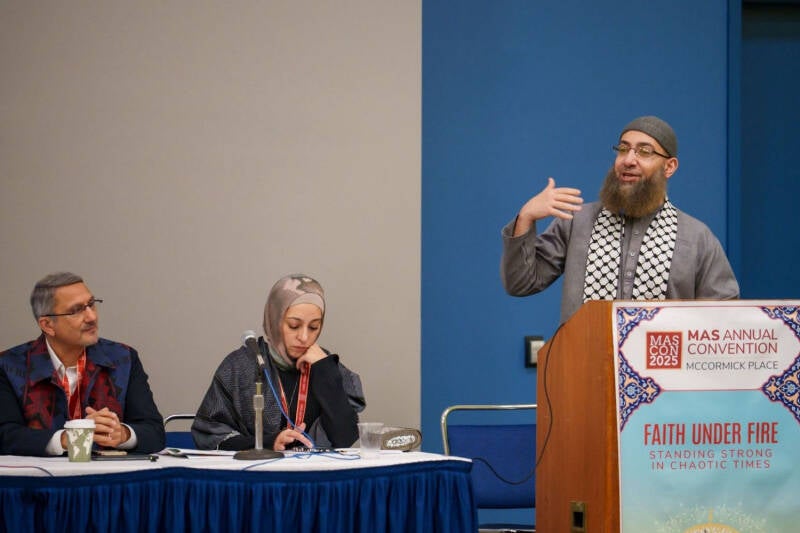
At a time when Palestinians in Gaza are enduring unimaginable violence and loss, the responsibility to bear witness, speak truth, and act with purpose has never been more urgent. At the 2025 MAS Convention, American Muslims for Palestine (AMP) convened a full day of sessions rooted in testimony, faith, strategy, and international law, reminding us that our voices, our organizing, and our principles matter.
Stories of Survival in the Face of Genocide
Palestinian voices took center stage as William Asfour, Fidaa Elayadi, Alaa Abusamaan, and Deanna Othman shared personal narratives connected to Gaza. Through lived experience, the speakers highlighted loss, resilience, and the power of storytelling as a means of preserving humanity, culture, and hope—and as a foundation for healing and liberation.

Palestine Advocacy in the Trump Era: Challenges and Strategies
Dr. Osama Abu Irshaid, Taher Herzallah, and Mohamad Habehh examined how Trump-era policies reshaped U.S. policy and advocacy terrain, from the Jerusalem embassy move and UNRWA defunding to anti-BDS legislation and lawfare. The session emphasized understanding this hostile political landscape while advancing proactive strategies, coalition-building, and effective grassroots campaigns that continue to deliver real wins.

Survive and Thrive: Your Responsibility as a Muslim During This Genocide
In a spiritually grounded discussion moderated by Noor Ali, Dr. Hatem Bazian and Shaykh Mohammad Elshinawy framed advocacy for Palestine as a sacred obligation. Drawing on Islamic tradition, Qur’an, and Sunnah, the speakers reflected on transforming grief into steadfastness, pairing prayer with action, and understanding patience as active, sustained commitment to justice. As Shaykh Elshinawy said, “The one who stands in prayer stands in protest.” Dr. Bazian reminded us that our institutions lose their value if they do not call us to act when it comes to the current genocide, and we must hold them to account.
International Accountability: Removing Israel’s Cloak of Immunity
Moderated by Mallak Ahmad, Tarek Khalil and Alicia Koutsoulieris unpacked the historic legal developments confronting Israeli impunity. The session explored the ICJ case brought by South Africa, findings of genocide and apartheid by major human rights organizations, and the significance of ICC arrest warrants, outlining pathways to advance accountability despite Western political resistance.

AMP is deeply grateful to our community members who made this programming possible. The conversations at MAS Convention reaffirmed that education, faith, and organized action remain essential tools in the struggle for Palestinian freedom.
We look forward to continuing this work together.
In solidarity,
American Muslims for Palestine (AMP)
2095.

29 december 2025
This summer in Cairo, I spent fourteen days with forty teenagers from Gaza–young women and men carrying the weight of displacement, grief, and the relentless search for solid ground. Many were living in harsh, uncertain conditions, strangers in a city where they had no rights, all while loved ones remained in Gaza, living through a violence that has never stopped.
And yet, every morning at Hannoun Summer Camp, they showed up. They arrived with a quiet, extraordinary courage. They came because somewhere inside, despite everything, they still believed in the possibility of their own future.
Yes, we taught English. But language learning was only part of the story. What we built together was a small sanctuary where these students could breathe without fear, speak without shrinking, and remember who they were before two years of unrelenting trauma. For a little while each day, they could reclaim parts of themselves the world has been trying to strip away.
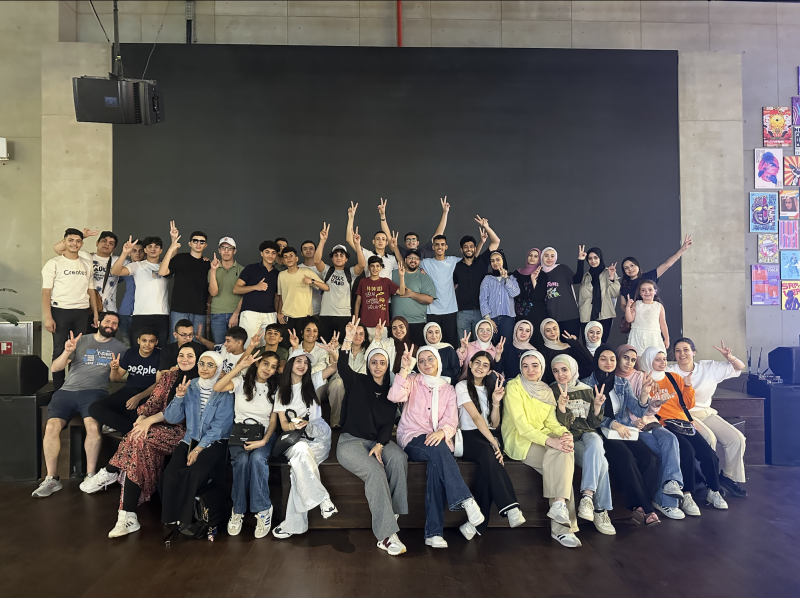
Nine Palestinian educators from the diaspora, the West Bank, and Gaza volunteered their time, their energy, their hearts. They modeled what it means to show up for one another with no hesitation. And alongside Network for Palestine, a mutual aid network created by displaced Palestinians for their own community, we rooted this camp in something larger than a classroom.
This was not charity. This was solidarity. This was refusal. This was Palestinians fiercely insisting on dignity.
Adalah Justice Project made this possible by giving me the time and space to contribute to the camp’s development. My organization did this because they understand a truth Palestinians live every day: that the struggles of our people in the U.S., in Gaza, and in exile are not separate stories. They are one body, one movement, one fight for liberation and humanity.
2095.

29 december 2025
HRF Files Criminal Complaint in Italy Against Israel Yitzhki
On December 15, 2025, the Hind Rajab Foundation (HRF) filed a criminal complaint before Italian judicial authorities against Israeli soldier Israel Yitzhki for war crimes, crimes against humanity, and acts of genocide committed during Israel’s assault on Gaza.
The complaint was filed under universal jurisdiction after confirmation that Yitzhki is present on Italian territory. Under international and Italian law, Italy is legally obligated to investigate and prosecute suspects of grave international crimes found within its jurisdiction.
Why Italy Must Act
Italy is a State Party to the Geneva Conventions, the Rome Statute of the International Criminal Court, and the UN Convention Against Torture. These treaties impose binding duties to prosecute or extradite suspects of grave international crimes.
States cannot lawfully become safe havens.
“International law is meaningless if it stops at borders. When those suspected of war crimes and genocide enter Europe, States must choose between impunity and justice. There is no third option.”
— HRF General Director Dyab Abou Jahjah
Alleged Crimes
According to HRF’s investigation, Yitzhki served in the 432nd Battalion of the Givati Brigade and participated in operations involving:
-
Unlawful destruction of civilian property
-
Attacks on residential buildings and civilian objects
-
Arson and controlled demolitions
-
Occupation and destruction of schools used as civilian refuges
-
Unlawful detention and degrading treatment of Palestinian civilians
These acts constitute war crimes under Article 8 of the Rome Statute and may also amount to crimes against humanity under Article 7.
Urgent Measures Requested
Due to the risk that Yitzhki may leave Italy, HRF has urged Italian authorities to ensure:
-
Yitzhki’s pre-trial detention
-
Seizure of his travel documents
-
Preservation of digital evidence
Gaza: The Context This Case Cannot Be Separated From
The war crimes in Gaza continue—genocide rebranded by a false ceasefire.
According to Gaza’s Government Media Office, Israel has violated the ceasefire at least 875 times since it took effect on October 10, 2025—including air and artillery strikes, shelling, shootings targeting civilians, illegal incursions into residential areas, and the demolition of entire residential areas from which Israeli armed forces were obligated to withdraw.
These documented violations have resulted in:
-
Over 411 Palestinians killed and thousands injured
-
Entire residential areas deliberately destroyed after the truce
-
Tens of thousands left displaced without shelter, land access, or livelihoods
-
Continued denial of adequate humanitarian aid entering Gaza by Israel
These flagrant, systematic violations of the ceasefire leave little doubt that Israel is still, to this day, intent on inflicting conditions conducive to the physical destruction of the Palestinian people, as defined under the Genocide Convention.
Defending the Frontline of International Law
The case filed against Israel Yitzhki is one front in a sustained legal strategy.
The mission of the Hind Rajab Foundation is not only to pursue justice for Hind Rajab and for the tens of thousands of Palestinians killed in this genocide—it is to prevent the collapse of international humanitarian law itself.
As political pressure corrodes enforcement, HRF operates through persistence rather than permission—actively building and sustaining legal pathways over time, case by case and jurisdiction by jurisdiction, until accountability is enforced.
We continue to:
-
File criminal complaints across jurisdictions
-
Coordinate cross-border enforce
-
Prepare state-ready evidence built to withstand political interference with Europol and war-crimes units
-
Apply sustained, parallel legal pressure until the law is enforced
The prohibition of genocide is absolute under international law.
To ignore it is not neutrality. It is complicity.
This is why HRF exists: to make erasure legally impossible; to force enforcement where states have refused; and to ensure international law does not become an empty promise.
2094.

29 december 2025
In deze laatste nieuwsbrief van het jaar een korte maar belangrijke oproep: controleer of je zorgverzekering voor 2026 genocide- en bezettingsvrij is.
Een van de makkelijkste vormen van boycots is het overstappen naar een andere zorgverzekeraar. Jouw zorgverzekeraar bepaalt namelijk welk merk medicijnen je krijgt.
Als jouw verzekeraar onnodig veel medicijnen van Teva verstrekt en je komend jaar zo min mogelijk medicijnen van Teva wil slikken moet je de komende twee dagen 15 minuten besteden aan het overstappen naar een zorgverzekeraar die je dit merk niet door de strot duwt.
Slechts 15 minuten, en je zit voor een heel jaar goed. Makkelijker kan niet.
Kijk op kieszuiver.nl voor keuzehulp bij overstappen naar een genocide- en bezettingsvrije zorgverzekeraar.
Stap Nu Over
Teva is een Israëlisch farmaceutisch bedrijf en een van 's werelds grootste fabrikanten van generieke geneesmiddelen. Teva is diep verweven met Israëls beleid van bezetting en onderdrukking.
Teva is actief in illegaal bezet Palestijns gebied, waaronder de Westelijke Jordaanoever en Oost-Jeruzalem. Daarmee negeert het bedrijf uitspraken van het Internationaal Gerechtshof uit 2024, die duidelijk maken dat deze bezetting in strijd is met het internationaal recht. Wie daar zakendoet, legitimeert en ondersteunt die situatie.
Daarnaast ondersteunt Teva de Israëlische krijgsmacht (IDF), zowel direct als indirect. Dat gebeurt via donaties, het leveren van materieel, het doorbetalen van personeel dat als reservist dient, en door het financieren van traumazorg voor militairen die terugkeren van militaire operaties
Ook draagt Teva bij aan medische apartheid. Door zijn dominante en monopolistische positie in de bezette gebieden helpt het bedrijf illegale nederzettingen economisch levensvatbaar te houden, terwijl Palestijnen structureel minder toegang hebben tot zorg en medicijnen.
Daarom roept BDS op tot een boycot van Teva.
2093.

29 december 2025
2025 was een jaar met meerdere gezichten. Een jaar waarin geweld, vernietiging en straffeloosheid voortduurden, maar waarin tegelijk iets begon te kantelen. In Nederland, in het publieke debat en – heel voorzichtig – ook in de politiek. The Rights Forum heeft daar, samen met anderen en dankzij uw betrokkenheid, zichtbaar en hoorbaar aan bijgedragen: in de rechtszaal, op straat, in het publieke debat en richting de politiek.
We stonden dit jaar letterlijk en figuurlijk op straat. We hielpen de Rode Lijn-demonstraties organiseren, waar honderdduizenden mensen duidelijk maakten dat genocide, etnische zuivering en straffeloosheid onacceptabel zijn. Daarnaast waren we betrokken bij talloze andere demonstraties door het hele land, waar steeds meer Nederlanders hun stem verhieven voor internationaal recht en Palestijnse rechten.

De Rode Lijn-demonstratie in Amsterdam, 5 oktober 2025 [c] Monther Rasheed
Tegelijkertijd bleven we inzetten op kennis, duiding en debat. Via onze website verschenen vrijwel dagelijks analyses, nieuws en achtergronden die helpen begrijpen wat er in Palestina gebeurt – en welke rol Nederland daarin speelt. Zodat niemand later kan zeggen dat hij of zij het niet geweten heeft.
We organiseerden bijeenkomsten met kritische denkers. Hoogtepunten waren de Dries van Agt-lezing met Francesca Albanese en de bijeenkomst met Ilan Pappé en Mariam Barghouti, waarin de feitelijke, juridische en morele kanten van de situatie in Palestina scherp werden neergezet.
Ook juridisch en politiek lieten we ons niet de mond snoeren. Een belangrijk hoogtepunt was de succesvolle rechtszaak tegen de Nederlandse staat over de levering van F-35-onderdelen aan Israël – een doorbraak die laat zien dat het recht ertoe doet.
Aan het einde van dit jaar is duidelijk dat de publieke opinie verschuift. Wat The Rights Forum al jaren zegt, wordt door steeds meer mensen herkend en gedeeld. Dat stemt hoopvol, maar laten we onszelf niets wijsmaken: het gaat veel te langzaam. De genocide gaat door. De etnische zuivering gaat door. En het internationaal recht wordt door Nederland en de EU nog steeds selectief toegepast.
Daarom hebben we uw steun nodig. Uw betrokkenheid en vertrouwen maken ons werk mogelijk. Zolang Palestijnse kinderen niet vrij en veilig kunnen opgroeien, zolang mannen en vrouwen worden beroofd van hun leven, rechten en toekomst, is ons werk niet af.
Dank voor uw steun in 2025. Blijf naast ons staan in 2026. Voor vrijheid. Voor gelijkwaardigheid. Voor gelijke rechten voor iedereen.

Graffiti op de afscheidingsmuur nabij Bethlehem [c] Nick Fielding
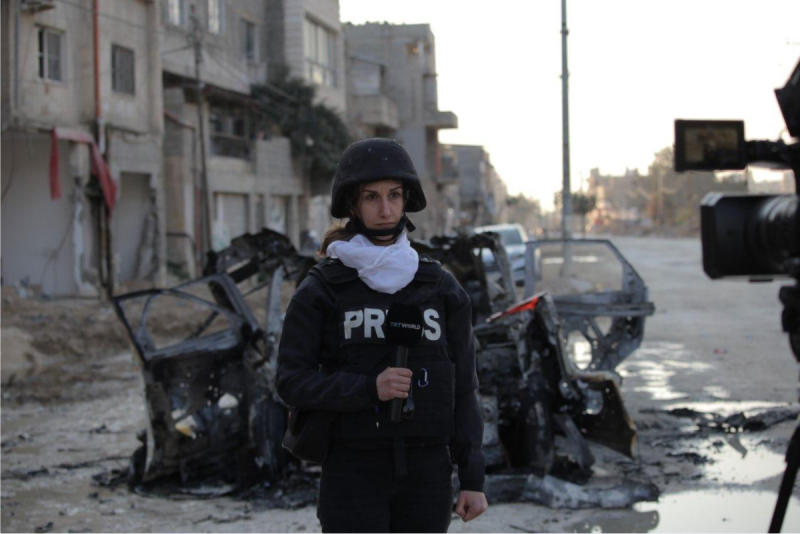
Palestijns journalist Mariam Barghouti: ‘Voordat we op de grond werden uitgewist, waren we op papier al uitgewist’
De Amerikaans-Palestijnse journalist Mariam Barghouti, die werkt vanuit Ramallah op de Westelijke Jordaanoever, was kort in Nederland. The Rights Forum sprak met haar over journalistiek.

Israëli’s schieten in één week drie Palestijnse tieners dood op Westoever
De 16-jarige Abdel Qader werd in koelen bloede doodgeschoten door een Israëlische militair, met drie schoten in zijn borst van een paar meter afstand. ‘Onder het Israëlische apartheidsregime zijn Palestijnse levens niets waard.’
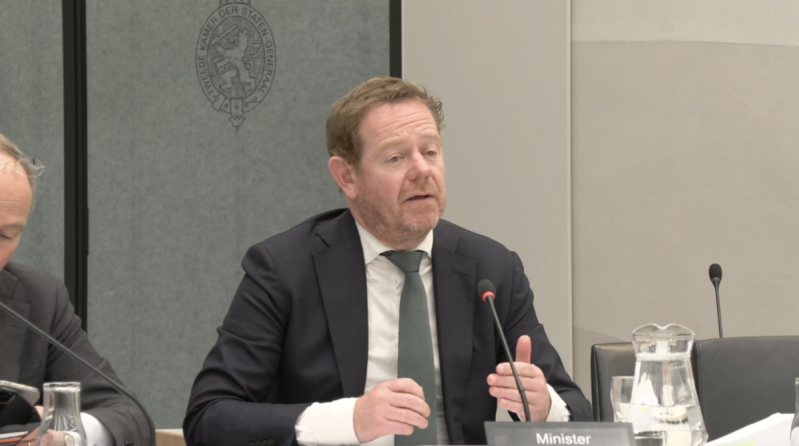
Debat Buitenlandse Zaken | Kabinet toont geen enkele urgentie om Palestijnen te helpen
Met de verkiezingen achter de rug en een nieuwe Tweede Kamer op het pluche werd gehoopt op een rechtvaardiger beleid ten aanzien van de Palestijnen. Dat is echter ver te zoeken.
Vacatures | Redacteur, Communicatiemedewerker & Junior medewerker administratie
Om onze organisatie verder te versterken is The Rights Forum op zoek naar een eindredacteur (fulltime), junior medewerker administratie (24-32 uur) én een medior of senior communicatiemedewerker (32-36 uur).
Uit onze agenda
maandag 29 december t/m vrijdag 9 januari
UTRECHT DOORDEWEEKSE DAGEN 08.30 - 09.30 (donderdagen vanaf 08.00) | Dagelijks stilteprotest voor Palestina, tegen genocide en bezetting (Neude, langs het fietspad)
HILVERSUM DI 30 DEC 16.00 | Lawaaiprotest (Station)
HUIZEN WO 31 DEC 11.30 | Wekelijkse sit-in voor Gaza (Gemeentehuis)
AMSTERDAM VR 2 JAN 12.45 | Wake van Vrouwen in het Zwart (Spui, bij het Lieverdje)
HAARLEM ZO 4 JAN 14.00 | Wekelijks protest tegen de onderdrukking van de Palestijnen (Grote Markt)
BUSSUM MA 5 JAN 12.00 | Demonstratie 'Wij werken hier niet aan mee' (vóór het Gemeentehuis)
HUIZEN WO 7 JAN 11.30 | Wekelijkse sit-in voor Gaza (Gemeentehuis)
Onze agenda wordt doorlopend aangevuld.
2092.

28 december 2025
I wanted to make sure you saw Leah’s email below.
Across the country, USCPR Youth Fellows are taking the skills and experiences they learn in their fellowship with us and advancing historic campaigns in their local communities, from boycotting Chevron in Houston to protesting Elbit Systems in South Carolina.
When you donate to the US Campaign for Palestinian Rights today, you’re making a real difference by investing in the next generation of grassroots organizers.
DONATE NOW
USCPR Youth Fellows are proving that sustained, strategic organizing can win. With your contribution today, we can expand this work and transform what’s possible.
In solidarity,
Maha Akkeh
Development Manager
In Houston, USCPR Youth Fellow AJ discovered that Chevron, the primary energy provider to the state of Israel, not only sponsors the city's beloved marathon, but literally has a police horse named "Techron".1 In a city defined by the oil and gas industry, that could have felt impossible to challenge.
But instead, AJ built something powerful. Working with her organization, Houston DSA, and labor unions like Unite Here Local 23, faith communities, and masjids across Houston, they helped create grassroots action against Chevron at the Houston marathon, part of a campaign that's shifting the culture in one of America's most pro-oil cities. Runners, volunteers, and event staff are now joining the pressure campaign. In Houston, people are mobilizing to boycott Chevron.
Meanwhile in San Diego, USCPR Youth Fellow Eriq transformed a siloed network of organizations into a strategic coalition with real teeth: San Diego for Palestine. When Cisco held their annual conference at the San Diego Convention Center, the coalition didn't just protest outside—they coordinated with a Cisco worker organizing on an internal disruption. That action sparked this worker’s deeper commitment to Palestine organizing. And the coalition learned exactly what power they have to build on and the audacity it would take to do so.
In Oakland, USCPR Youth Fellow Zena and fellow organizers with the People’s Embargo for Palestine uncovered something shocking: Oakland's airport has been shipping weapons components directly to Israel. The dockworker's union had already supported an arms embargo, but the airport was flying under the radar. Within weeks of launching, organizers collected over 10,000 petition signatures. They secured endorsements from over 100 organizations and 50+ businesses. The Alameda Labor Council endorsed. Port commissioners are now discussing binding policy. Hundreds are joining port protests and community members are regularly testifying at board meetings.2
And in Charleston, USCPR Youth Fellow Kirby has spent over a year organizing weekly pickets at Elbit Systems' factory with a local group, Elbit Out of SC. On May Day, he and fellow organizers brought out 70 people, and Elbit shut down early. They forced a county council vote on Elbit's tax breaks, getting officials on record defending weapons manufacturers. They interrupted Elbit's job fair at a technical college. In a city with a brutal history—from the slave trade to ICE raids—Kirby is building a future where Charleston says no to profiting from genocide.3
What do AJ, Eriq, Zena, and Kirby all have in common? Each was a recent USCPR fellow and each learned key organizing skills from USCPR Staff that helped them independently develop and deepen their own local organizing.
The achievements of their groups aren't isolated victories. And they're showing us exactly what it takes to win.
Each of these organizers started with a problem that seemed overwhelming: How do you take on a massive company like Chevron in Houston? How do you build a coalition in fragmented organizing spaces? How do you stop weapons shipments when your own city infrastructure is complicit?
The answer: sustained, strategic bread-and-butter organizing. Continuous relationship building. Escalation arcs that move from political education to action. Connecting local struggles to the broader fight for Palestinian liberation, and all liberation movements.
This is what your support makes possible. And we need to expand this work dramatically in 2026.
Your generous support will enable USCPR to train more organizers like AJ, Eriq, Zena, and Kirby, through expanding our youth fellowship and other educational programs. Investing in organizer skill-sharing and training gives organizers the confidence to grow local power in order to build momentum towards wins like a people's arms embargo or a people's boycott of Chevron.
Your contribution will provide the support we need to commit to fellows for 6-month or year-long organizing cycles. It allows us to invest in the relationship-building and skill development that turns passionate activists into strategic organizers who win. It means those organizers can gain skills and confidence to plan their own multi-month campaign escalations instead of just responding to the crisis of the day.
As Eriq put it while he was at an organizing convening run by USCPR and USCPR Action: "It's incredible, honestly. The lessons, the value of it, you can't quantify it. It's a way to help you stay on track and remember why you're fighting for what you're fighting for. It's a collective struggle. You're not alone in this, and it takes a village truly to help make a difference."
LEAH MUSKIN-PIERRET
Manager of Congressional & Grassroots Advocacy
2091.

28 december 2025
Gaza Humanitarian Response
Situation Report No. 55
27 December 2025
(As of 18:00 on 26 December 2025, unless otherwise noted)
HIGHLIGHTS
- As of 23 December, Food Security Sector partners had reached 194,000 families (approximately 970,000 people) with general food assistance as part of the December monthly cycle.
- The Water, Sanitation and Hygiene (WASH) Cluster dispatched nearly 62,000 dignity kits, over 14,300 hygiene kits and 3,230 bottles of shampoo to partners across Gaza between 23 and 26 December.
SITUATION OVERVIEW
Between 24 and 26 December, airstrikes, shelling and gunfire reportedly continued across the Gaza Strip. According to the Gaza Ministry of Health, as of 13:00 hrs on 27 December, four Palestinians had been killed and eight others injured across the Gaza Strip over the previous 48 hours.
Population movements continued across Gaza, with more than 19,300 movements recorded by Site Management partners between 7 and 20 December. Since the onset of the ceasefire on 10 October, over 807,900 movements have been documented, of which approximately 672,300 were from southern to northern Gaza. Given the extensive destruction, families returning near their homes face heightened concerns as winter conditions set in, with flooding further worsening vulnerabilities and making it increasingly difficult to secure adequate shelter and heating.
UNITED NATIONS-COORDINATED AID ENTRY*
On 24 December, at least 3,599 pallets of aid administered by the UN and its partners were offloaded at Gaza’s crossings, based on data retrieved from the UN 2720 Mechanism dashboard at 15:00 on 27 December. About 67 per cent of these pallets contained food supplies, followed by shelter items (18 per cent), WASH (11 per cent), and health supplies (3 per cent). At least 153 truckloads were offloaded at the Kerem Shalom Crossing in the south and 17 at the Zikim Crossing in the north. Verified data on aid cargo offloads on 25 and 26 December are not available yet at the time of reporting.
With regard to collections, between 24 and 26 December, according to preliminary data, at least 1,007 pallets of shelter, WASH and health supplies, such as winter clothes, mattresses, blankets, tents, dignity kits, vaccines, water filters and chemical supplies, 310 pallets of ready-to-use therapeutic food and Super Cereal, and 454,000 litres of fuel were collected from the Kerem Shalom and Zikim crossings.
The above data excludes bilateral donations and the commercial sector.
Between 24 and 26 December, eight out of twelve humanitarian movements inside Gaza requiring coordination with Israeli authorities were facilitated. Two missions faced impediments – one was eventually completed, while the other aimed at collecting eight tripper trucks from Kerem Shalom, remained unaccomplished – and two other missions were cancelled by the organizers.
HUMANITARIAN RESPONSE
The below are preliminary updates shared by Clusters at the time of reporting and will be reconciled and aggregated in the coming days as Clusters receive more data from the capillary network of partners active on the ground.
Food Security
- Between 1 and 23 December, Food Security Sector partners reached 194,000 families (about 970,000 people) with the monthly general food assistance for December via 60 distribution points across the Strip. This represents 46 per cent of the 2.1 million people the sector aims to reach each month.
- The distribution of veterinary kits and animal feed, which began on 9 December, had reached 2,050 small ruminant holders as of 26 December.
Water, Sanitation and Hygiene
- Between 23 and 26 December, the WASH Cluster dispatched 61,943 dignity kits, 14,323 hygiene kits (including 4,760 of family size) and 3,235 bottles of shampoo to partners across Gaza, sufficient to support approximately 150,000 people in need.
- The WASH Cluster is transferring second pass equipment from the Al Bassa Desalination Plant to the Al-Manshia desalination plant, in Gaza city, and the Marwa Water Well, in Jabalya. Both plants will operate at a capacity of 37 cubic metres per hour. This equipment will improve the plants’ water purification system, therefore ensuring that cleaner water is provided to people.
Protection
- General Protection
- Between 23 and 26 December, General Protection partners reached 1,868 people through mental health and psychosocial support (MHPSS) activities, case management services, legal consultations or assistance and civil documentation support.
- Child Protection
- Between 23 and 26 December, child protection partners supported over 3,500 children and caregivers, including through MHPSS, winter clothing assistance, and disability-inclusive services such as rehabilitation, speech therapy, and referrals for assistive devices.
- In parallel, child protection partners intensified risk mitigation and awareness-raising on unsafe child behaviours such as jumping or throwing stones on moving vehicles in identified hotspot locations, reaching over 600 children and caregivers with targeted messaging to address heightened risks linked to overcrowding and the lack of structured activities.
- Since October 2025, child protection partners have distributed over 600,000 blankets to the most vulnerable families with children, alongside more than 350,000 winter clothing items across the Gaza Strip, prioritizing young children. However, significant gaps persist for adolescents aged 11 and 17 years due to lack of donor funding.
- More than 40 child-friendly and safe spaces (CFSs) remain damaged across the Strip due to the heavy rains of mid-December. More high-performance service tents and tarpaulins must urgently enter the Strip to rehabilitate these sites and safely resume child protection and MHPSS services.
- Gender-Based Violence
- Between 23 and 26 December, partners addressing gender-based violence (GBV) reached approximately 3,809 women and girls through group therapeutic sessions, while individual counseling sessions were provided to 429 women and girls. GBV helplines responded to 23 calls, providing immediate psychosocial first aid, information, and referrals to relevant services. Case management services continued through safe spaces for women and girls, including the provision of emergency cash assistance to 21 GBV survivors and vulnerable women and girls, as well as referrals for psychosocial, legal, and medical services where available.
- A total of 1,556 participants attended awareness sessions on addressing GBV, sexual violence, and protection from sexual exploitation and abuse. These included 974 women and girls and 582 men and boys, who were sensitized on available services addressing GBV, survivors’ rights, and referral mechanisms. Legal awareness, mediation, and individual consultations focused on legal rights, family disputes, and access to justice reached 18 people, including 11 women and seven men.
- Mine Action
- Between 21 and 25 December, Mine Action partners conducted five explosive hazard assessments in Deir al Balah and Gaza city, in support of rubble removal efforts and partner activities.
- In-person sessions of explosive ordnance risk education continued across Gaza city, Deir al Balah, and Khan Younis governorates, reaching more than 17,500 people between 21 and 24 December.
2090.

27 december 2025
Amer Zahr's arrest reasserts a dangerous truth: American lives become disposable under U.S. policy on Israel
American Muslims for Palestine (AMP) condemns Israel’s arrest of Amer Zahr in the strongest possible terms. While we are relieved to hear that he was released this morning, his detention should never have happened in the first place, and his release does not absolve anyone of responsibility. Accountability is still owed.
Amer Zahr is an American citizen. But American citizenship should not operate under some grotesque “golden rule,” where protection is conditional, selective, or politically convenient. Israel has a long and well-documented record of arbitrarily detaining, indefinitely imprisoning, and killing Palestinians, American citizens or not, with no probable cause. We condemn those practices unequivocally, for everyone, on all terms. At the same time, the United States has a clear and non-negotiable duty to protect its own citizens from precisely this kind of abuse. That duty has been repeatedly and shamefully abandoned.
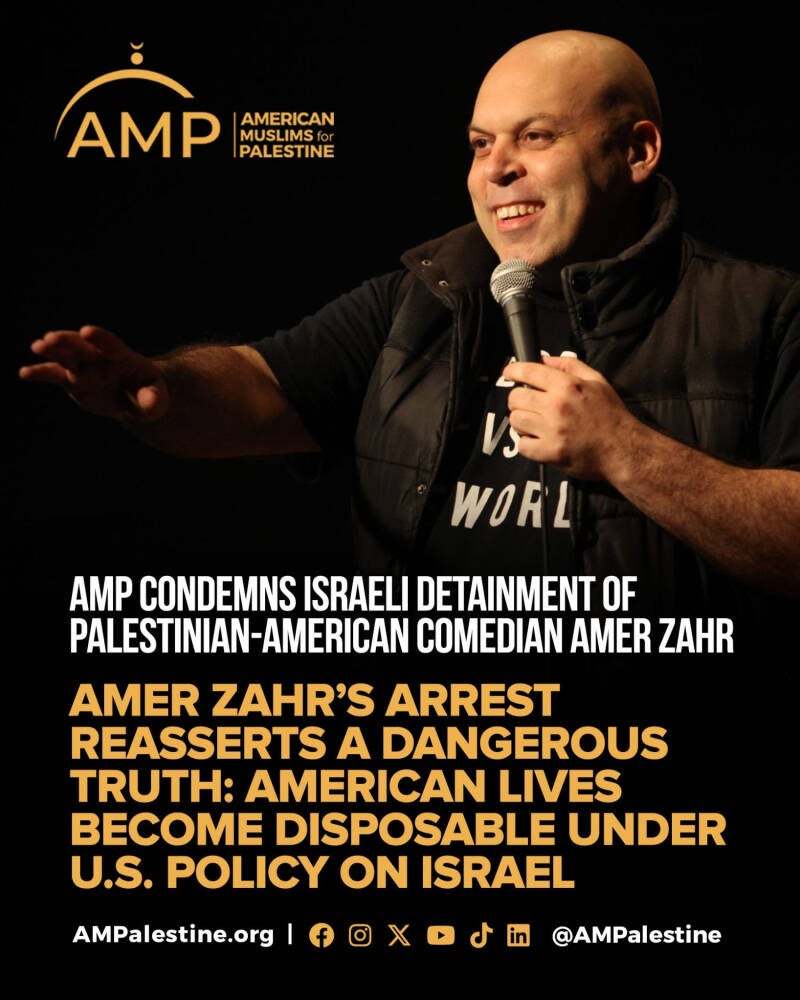
No American should be subjected to arbitrary detention or violence by a foreign entity, especially not by one that survives politically, militarily, and financially on U.S. backing. Israel has shown, time and again, that it does not respect the United States or the lives of Americans. It has detained and killed U.S. citizens with impunity: journalists like Shireen Abu Akleh, children like Mohammed Ibrahim, activists like Rachel Corrie, and Aisha Nour (Ayşenur Eygi). And still, our government continues to prop it up, excuse the behavior, and move on as if American lives are expendable when Israel is the perpetrator.
This is complete negligence, and the double standard is so blatant that it is impossible to ignore. When Americans are harmed by other governments, Washington rushes to condemn, sanction, and retaliate,” said Dr. Osama Abu Irshaid, AMP’s executive director. “When Israel does it, there is silence, deflection, or outright justification. That hypocrisy is not only immoral but also dangerous. It is precisely this recklessness, this refusal to draw lines or impose consequences, that enables Israel’s sense of total impunity. It is what allows genocide and war crimes to continue with U.S. weapons, U.S. funding, and U.S. political cover.”
The responsibility does not rest with Israel alone. It rests with the U.S. government and elected officials in both parties, who have chosen complicity over accountability and loyalty to a foreign state over their obligation to their own people.
If the United States is serious about protecting its citizens and upholding any claim to the rule of law, this must be a red line. Words are not enough. There must be real consequences, transparent, public, and enforceable, so that Israel understands that American lives are not disposable and that impunity will no longer be guaranteed.
In solidarity,
American Muslims for Palestine (AMP)
2089.

27 december 2025
As we come to the close of another powerful and deeply challenging year, I want to take a moment to reflect on all that Eyewitness Palestine has experienced and accomplished in 2025 and to thank you for making it possible.
We began the year in January, coming off our first delegation to the West Bank in several years, which took place in December 2024. That delegation set the tone for what followed: a year rooted in deep relationship-building, political education, and unwavering commitment to Palestinian liberation.
In February, we traveled to Puerto Rico, where we hosted a networking and solidarity-building event with local organizers. Together, we explored parallels between our struggles, strengthening bonds across movements and geographies.
April brought a powerful delegation of 19 mental health clinicians, organized in partnership with the USA–Palestine Mental Health Network. This delegation was also featured in our April virtual delegation to Balata Refugee Camp in Nablus, creating an important bridge between on-the-ground witnessing and broader community education.
In June, we celebrated 24 years of IFPB/Eyewitness Palestine with an unforgettable gathering featuring Mohammad El-Kurd, our guide of more than 15 years Said Rabea, Palestinian filmmaker Michael Zananiri, singer Rola Azar, and so many others who continue to inspire us.
October marked a new chapter as we piloted a month-long Olive Harvest Brigade, bringing delegates to a different location each week over four weeks. A couple of those participants were later featured in our November virtual delegation to Farkha, sharing firsthand experiences of resistance, resilience, and land defense.
This past December has been especially full. We welcomed 10 delegates to the West Bank and '48, including two state-elected officials, while also hosting a week of truly powerful webinars titled “Threads of Resistance,” as well as three in-person events featuring Huwaida Arraf, Mother Agapia and Chris Smalls.
This year has been bittersweet. As genocide and ongoing atrocities against Palestinians continue, Eyewitness Palestine has been able to do more than we initially imagined. That is because of you, our community, as well as our committed and dedicated staff and board. I am profoundly grateful for each and every one of you.
We are currently just $922 away from our year-end goal. If you have already donated, thank you so very much. If you are able to contribute before the year ends, we would be deeply grateful. Please consider supporting our end-of-year campaign here.
We will be closing out the year this Tuesday, December 30, with our final virtual delegation of 2025 to Taybeh, the last fully Christian Palestinian village in the West Bank, which has been experiencing horrific settler violence in recent months. We hope you’ll join us by signing up here.
As we enter a new year, please continue to hold those who are suffering in your prayers and thoughts. We are planning so much more for 2026 and hope you will stay on this journey toward liberation with us.
And please save the date: May 17, 2026, when we will gather in Chicago to celebrate 25 years of Eyewitness Palestine.
From myself and our entire team, thank you for your trust, your solidarity, and your continued commitment.
Toward liberation,
Nancy Mansour
Executive Director
2088.

24 december 2025
To each and every one of you who has stood with us, used our resources, offered your contributions or simply listened: thank you.
In this holiday season, we wish you to always find joy and love even in the hardest moments. With the invite to keep Palestine and its people in your hearts, minds and actions.
This year of ongoing genocide continued to be intense for a small team like ours and brought inspiration in so many forms. Here are highlights from some of our team members:
When Parliamentarians, University professors, journalists and activists come to us for strategic advice and tell me our resources are very helpful for their engagement on Palestine, that's when I feel we're doing something right - Inès
A great year inspired by true solidarity and interconnectedness of struggles, together we are stronger - Rula
Engaging with the people of Sudan, targeted communities in Syria, and the wretched people of Lebanon, despite the ongoing genocide in Palestine, and welcoming people from the Gaza tents in our sessions, was the highest expression of our people's steadfastness - Dhalia
This year reaffirmed how powerfully Palestine resonates worldwide — from Indigenous communities to social movements in Brazil we are learning from and organizing with: the struggles are connected, and the path to liberation is one - Badra
Freedom Breakers is a milestone in our digital productions: each story of these freed political prisoners is unique, but universal at the same time. This is the power of storytelling: it makes us transition from the individual to the collective through empathy and understanding. - Sarah
The cornerstone of our liberation is our people’s unity. This year, through our Public Diplomacy Bootcamp with 33 emerging Palestinian leaders, we witnessed hope, unity and collective power reignite even as we endure one of the darkest chapters of our struggle. - Aseel
Witnessing people visit Palestine through our Virtual Reality program from all over the globe this year, from young Canadians, British and American people confirmed this is indeed an amazing way to get people to empathize with our struggle and get behind the work towards liberation. - Shireen
May next year bring us even closer to liberation.
The PIPD team
2087.

24 december 2025
Gaza Humanitarian Response
Situation Report No. 54
23 December 2025
(As of 18:00 on 22 December 2025, unless otherwise noted)
HIGHLIGHTS
- As cold weather grips Gaza, partners continue delivering vital winter and child-focused aid: clothing kits, baby diapers, blankets, and emergency shelter items for displaced families, alongside food assistance for 377 families (1,877 people) with protection messaging.
- On 22 December, Education partners deployed 58 high-performance tents to 16 learning centers across the Gaza Strip to expand classroom space for over 24,000 children and maintain access to education. At the same time, temporary learning spaces are being expanded across the Strip.
SITUATION OVERVIEW
Between 22 and 23 December, Israeli shelling and airstrike continued across the Gaza Strip. In North Gaza, sustained tank and artillery fire, along with small-arms fire, were reported in Beit Lahiya and Jabalya camp. In Gaza city, sporadic small-arms and quadcopter fire occurred east of Ash Shujaiyah and At Tuffah, resulting in one casualty. Overnight and into early morning of 23 December, Israeli military activity intensified with multiple reports of helicopter fire, tank and artillery strikes, and small-arms fire in At Tuffah and other areas east of Gaza city, alongside an airstrike on the eastern side of the city. In Deir al Balah, intermittent tank and artillery fire and small-arms fire were reported east of Al Maghazi, east of Al Bureij, and southeast of Deir al Balah, with tank fire near Musaddar west of the “Yellow Line.” A quadcopter strike east of Al Bureij wounded two Palestinians, while late evening saw increased operational tempo with artillery fire east of Al Bureij and multiple airstrikes east of Deir al Balah before dawn. In Khan Younis, sporadic tank, artillery fire and small-arms fire were reported in Bani Suheila, Qizan An Najjar, and areas south and east of the city, followed by multiple airstrikes and helicopter fire east of Khan Younis in early morning. In Rafah, airstrikes hit locations in Rafah city before midnight and the early morning of 23 December.
UNITED NATIONS-COORDINATED AID ENTRY*
On 22 December, at least 3,675 pallets of aid administered by the UN and its partners were offloaded at Gaza’s crossings, based on data retrieved from the UN 2720 Mechanism dashboard at 18:00 on 23 December. About 60 per cent of these pallets contained food supplies, with the other quantities being shelter items (14 per cent), water, sanitation and hygiene items (11 per cent), nutrition supplies (5 per cent) health supplies (5 per cent), and protection supplies (3 per cent). At least 115 truckloads were offloaded at Kerem Shalom Crossing and 60 at Zikim Crossing.
On the same day, UNOPS international monitors deployed at Gaza’s crossings verified the collection of at least 3,233 pallets of aid – 2,100 from Kerem Shalom Crossing and Zikim Crossing. These comprised inter alia 1,949 items of food assistance, including flour, biscuits, and nutrition supplies and 1,227 of shelter items such as winter clothing, tents, blankets, and mattresses.
The above data excludes bilateral donations and the commercial sector.
On 22 December, five out of 10 humanitarian movements in the Gaza Strip requiring coordination with Israeli authorities were successfully facilitated. One mission was impeded but finally fully accomplished, one mission was denied and three were canceled.
HUMANITARIAN RESPONSE
The below are preliminary updates shared by Clusters at the time of reporting and will be reconciled and aggregated in the coming days as Clusters receive more data from the capillary network of partners active on the ground.
Water, Sanitation and Hygiene
- Maintenance and repair work on Gaza city’s sewage networks continues. Due to limited availability of new materials, partners had to temporarily use old components for repair work.
- Fuel shortages have severely disrupted waste collection services, with at least 1,300 tons of solid waste are expected to remain uncollected daily. This accumulation of waste in urban areas significantly increases the risk of disease outbreaks and environmental hazards. Major dumping sites will be unable to receive waste, leading to overflow and contamination that will affect thousands of households in densely populated areas.
Protection
- On 22 December, protection partners reached 1,000 people with the following activities: 537 people participated in explosive remnants of war (ERW), explosive ordnance risk education (EORE), and risk awareness sessions, 32 adults and caregivers received mental health and psychosocial support (MHPSS) services, 377 people benefited from protection-linked humanitarian assistance in the form of food parcels, and 48 people accessed disability and inclusion services such as prosthetics, orthotics, and referrals. Additionally, six indirect beneficiaries were supported through the distribution of information, education, and communication materials, environmental hazard assessments, and staff capacity strengthening.
- Child Protection
- On 22 December, Child Protection (CP) partners reached at least 2,800 people, including approximately 1,550 children and 1,250 caregivers, through MHPSS, case management, child protection awareness sessions, and emergency winter-related distributions, which includes:
- Winter and child-focused non-food item (NFI) distributions, including 741 clothing kits for children, 754 packs of baby diapers, 350 blankets, as well as tents and tarpaulins for displaced families. Raising awareness messages related to protection were shared with the food assistance packages that reached 377 families (1,877 people).
- A total of 21 children at risk receiving case management services, including assessments, follow-up, and referrals. In addition, 100 children without parental care were assessed to identify priority protection and assistance needs. Specialized services, such as speech therapy and rehabilitation, were provided to 59 children, many of whom have disabilities requiring tailored support.
- On 22 December, Child Protection (CP) partners reached at least 2,800 people, including approximately 1,550 children and 1,250 caregivers, through MHPSS, case management, child protection awareness sessions, and emergency winter-related distributions, which includes:
- Gender-Based Violence
- On 22 December, services addressing Gender-Based Violence (GBV) continued across 36 Women and Girls Safe Spaces (WGSSs) in Gaza, reaching 890 beneficiaries with multisectoral support. These services included GBV awareness-raising, psychosocial support, case management, legal assistance, and physical protection, including support for GBV survivors accommodated in two safe houses.
- On the same day, a training session was conducted with partners on GBV prevention and response, reaching 20 partners and members. The training aims to strengthen participants’ capacity to respond effectively to the needs of women and girls, including GBV survivors.
- Additionally, GBV partners distributed dignity kits to 400 women and girls. To further reinforce the multisectoral response, 5,000 dignity kits were dispatched to assist affected women in both the north and south of Gaza, contributing to the joint response for impacted households.
- Mine Action
- On 22 December, Mine Action partners conducted two explosive hazard assessments in Deir al Balah and Gaza city, in support of rubble removal efforts.
- Several Explosive Ordnance Risk Education (EORE) sessions continued across Gaza city, Deir al Balah, and Khan Younis governorates.
Education
- On 22 December, one partner distributed more than 2,000 winterization kits to vulnerable children aged 12 to 14 years. This included 400 kits for children in Al Manshia camp and about 1,650 kits for students enrolled at Lolwa Al Qattami School, Nile School, and Dar Al Arqam School, all in northern Gaza.
- Education partners continued scaling up efforts to reach more school-aged children. On 22 December partners deployed and distributed 58 high-performance tents across 16 learning centres across the Strip to expand classroom space and maintain access to education. This additional infrastructure is expected to accommodate 24,631 children for in-person learning.
2087.

23 december 2025
Humanitarian Situation Update #350
West Bank
23 December 2025

Palestine Red Crescent Society’s teams assist displaced families in retrieving their belongings from their homes in Nur Shams refugee camp in Turlkarm, following the receipt of demolition orders issued by Israeli forces. Photo by PRCS, 17 December 2025
Key Highlights
- Four Palestinian children were killed in the West Bank over the past two weeks, including three by Israeli forces and one by Israeli settlers. In total, a quarter of Palestinians killed by Israeli forces or settlers in 2025 were children.
- Over 100 Palestinians were displaced by demolitions and evictions this week, including 63 in East Jerusalem. These include 50 people displaced in the Silwan area of East Jerusalem when Israeli authorities demolished a four-storey building for lacking Israeli-issued building permits, which are near impossible for Palestinians to obtain.
- Israeli authorities issued demolition orders for 25 buildings in Nur Shams refugee camp in Tulkarm governorate, affecting about 70 households; while the orders were frozen following legal action, residents faced access restrictions and limited time to retrieve belongings by Israeli forces.
- Settler violence and access restrictions have driven displacement across 85 Palestinian communities and areas in the West Bank, with 33 fully emptied of their residents, in the past three years.
Humanitarian Developments
- Between 9 and 22 December, six Palestinians, including four children, were killed by Israeli forces or settlers in the West Bank, including East Jerusalem. Israeli forces killed five Palestinians, including three children, and injured 34 others, including eight children. During the same period, Israeli settlers killed a Palestinian child and injured 23 others, including five children, and Palestinians injured three Israeli settlers (see section on settler attacks below). Since the beginning of the year, a total of 238 Palestinians, including 56 children (24 per cent), were killed by Israeli forces or settlers, including 223 by Israeli forces, nine by Israeli settlers, and six where it remains unknown if they were killed by Israeli forces or settlers. The following are details of the incidents that resulted in fatalities during the reporting period:
- On 13 December, Israeli forces killed and withheld the body a Palestinian child during an Israeli military raid in Silat al Harithiya village, northwest of Jenin. Israeli forces stated that they killed the boy after he threw an improvised explosive device (IED) at them during the raid.
- On 14 December, Israeli forces killed and withheld the body of a Palestinian man on Road 35, at a checkpoint at the northern entrance to Hebron city. Israeli forces stated that the man attempted to stab soldiers.
- On 15 December, Israeli forces shot and killed a Palestinian child during an Israeli raid in Tuqu’ town, in Bethlehem governorate. During the raid, Israeli forces fired live ammunition and threw stun grenades and tear gas canisters and Palestinians threw stones.
- On 16 December, an Israeli settler shot and killed a Palestinian child near the northern entrance to Tuqu’ town, following the funeral of a boy who was killed by Israeli forces on 15 December.
- On 20 December, Israeli forces killed and withheld the body of a Palestinian child during an Israeli forces’ raid in Qabatiya town, south of Jenin city. Israeli forces stated that the boy hurled a brick toward the soldiers, who responded with fire and killed him. After video footage showed the boy walking when he was shot by the soldiers at close range, the Israeli military said the incident is under review.
- On 20 December, Israeli forces shot and killed a Palestinian man and injured a child during an Israeli forces’ raid in Silat al Harithiya village, in Jenin governorate. Israeli forces stated that the man had thrown an IED at their forces who responded with live fire. Both the injured child and the killed man were transported to a hospital.
- On 10 and 14 December, according to the Palestinian Commission of Detainees’ Affairs, two Palestinian prisoners died in Israeli custody, both were from Husan village, in Bethlehem governorate, and had been detained since June 2025. According to the UN Human Rights Office (OHCHR), between 7 October 2023 and 19 December 2025, at least 85 Palestinians, including a 17-year-old child, died in Israeli detention, including 54 from the Gaza Strip, 29 from the West Bank and two Palestinian citizens of Israel. In addition, OHCHR has documented that at least five Palestinians from the West Bank have died while in Israeli custody shortly after being shot, injured and arrested by Israeli forces; four in 2024 and one in 2025. As of 2 December 2025, according to data provided by the Israel Prison Service (IPS) to Hamoked, an Israeli human rights NGO, there are 9,183 Palestinians in Israeli custody, including 1,254 sentenced prisoners, 3,359 remand detainees, 3,350 administrative detainees held without charge or trial, and 1,220 people held as “unlawful combatants.”
- Between 9 and 22 December, Israeli forces shot and injured five Palestinian men with live ammunition while they attempted to cross the Barrier to reach East Jerusalem and Israel. Three of the injuries were sustained near Ar Ram and Dahiyat al Bareed, one in the vicinity of Qalandiya checkpoint (all in Jerusalem governorate), and one in Qalqilya city. The monthly average of Palestinians injured while attempting to cross the Barrier has more than doubled in the past three months, increasing from an average of nine injuries per month in the first eight months of 2025 to 19 injuries per month since 1 September. Since 7 October 2023, when Israeli authorities revoked or suspended most permits that had allowed Palestinian workers and others to access East Jerusalem and Israel, OCHA has documented the killing of 14 Palestinians and the injury of 224 others while attempting to cross the Barrier, reportedly in search of employment opportunities amid a severe economic downturn in the West Bank. These include one killed and four injured in the last three months of 2023, eight killed and 76 injured in 2024, and five killed and 144 injured so far in 2025.
- On 14 December, Israeli authorities issued demolition orders for 25 buildings in and around Nur Shams refugee camp, in Tulkarm governorate. According to the Palestinian District Coordination Office (DCO), the orders target both single-family houses and multi-unit residential buildings, affecting approximately 70 households, and are concentrated in three neighbourhoods of the refugee camp. Although the demolitions were scheduled to begin on 18 December, Israeli authorities froze the orders on that day until further notice, following legal action. On 17 December, Israeli forces restricted the movement and access of Palestinian residents as they attempted to retrieve belongings from homes targeted by the demolition orders. According to local community sources, despite coordination arrangements, residents faced severe checks at checkpoints installed by Israeli forces at the camp’s entrance and were given insufficient time to remove their belongings. On the same day, the Palestine Red Crescent Society (PRCS) reported that Israeli forces forced its teams and volunteers to undergo search before entering Nur Shams Camp to evacuate civilians who had entered the camp to retrieve their belongings.
- Between 9 and 22 December, OCHA documented 46 Israeli settler attacks against Palestinians that resulted in casualties, property damage or both. The attacks led to the killing of a Palestinian child (see above) and the injury of 24 Palestinians (of whom five were children), including 23 by Israeli settlers and one by Israeli forces. During the same period, three Israeli settlers were injured by Palestinians. So far in 2025, OCHA has documented over 1,770 settler attacks that resulted in casualties or property damage in more than 270 communities across the West Bank, of which 65 per cent took place in Ramallah, Nablus and Hebron governorates. This is an average of five incidents per day. Among the key incidents during the reported period, three incidents took place against two Palestinian communities in the Jordan Valley and one Palestinian Bedouin community in Jerusalem governorate, as illustrated below:
- On 14 December, Israeli settlers attacked Ein ad Duyuk al Fauqa community (about 900 residents) in Jericho governorate, physically assaulting and injuring seven Palestinians, including women, children, and a man with a disability, and causing damage to residential properties. The attack occurred in the early morning hours, when settlers raided the community and broke into several residential structures while families were present. During the incident, Israeli settlers damaged windows and belongings in at least three houses and reportedly stole equipment and personal belongings. Settler attacks have intensified over the past two months in Ein ad Duyuk al Fauqa, reportedly by settlers believed to be from a settlement outpost established in August 2024 near three outposts established in the area since 2012. Residents report near-daily raids and harassment by settlers from this outpost, who are believed to have perpetrated attacks against the nearby Bedouin community of Al Mu’arrajat East that resulted in its depopulation in July 2025.
- In two separate attacks on 16 and 22 December, Israeli settlers from a newly established outpost raided the Palestinian herding community of Al Hadidiya (~ 70 residents) in Tubas governorate. On 16 December, settlers damaged and cut electrical cables connected to a donor-funded solar panel system supplying electricity to two out of about nine households in the western section of the community. On 22 December, settlers broke into animal shelters, harassing residents and forcing families to remove livestock feed and water troughs, claiming they were too close to fencing erected around the settlement outpost. According to local sources, settlers chased livestock herds and drove quad bikes through grazing areas, causing the animals to scatter and putting them at risk. During the same incident, settlers attacked another animal shelter and stole at least seven water troughs used for animal drinking. Settler attacks have intensified in Al Hadidiya following the establishment of a settlement outpost within the community boundaries on 24 November 2025. Since then, residents have reported almost daily settler incursions into residential and grazing areas, harassment, and threats.
- On 22 December, Israeli settlers shot and injured with live ammunition three Palestinians (a 60-year-old man and his two adult sons) and Palestinians threw stones and injured three settlers during the same incident in the Abu George Road Nkheila Bedouin community in Jerusalem governorate. According to local community sources, this followed a raid into the community by Israeli settlers from a newly established settlement outpost near the community, which culminated in mutual stone throwing by the settlers and Palestinians, noting that they have faced recurrent settler attacks, raids and intimidation since the establishment of the outpost in July 2025.
- For key figures and additional breakdowns of casualties, displacement and settler violence between January 2005 and November 2025, please refer to the OCHA West Bank November 2025 Snapshot.

Demolitions and Evictions
- Between 9 and 22 December, OCHA documented the demolition of 50 Palestinian-owned structures for lacking Israeli-issued building permits, which are almost impossible for Palestinians to obtain. Forty-two (42) of the structures were in 14 villages and towns in Area C of the West Bank, while the remaining eight structures were in four areas in East Jerusalem. In total, 94 Palestinians, including 43 children, were displaced and more than 2,200 people were otherwise affected. The demolished structures included 10 residences (of which eight were inhabited), 26 agricultural and livelihood structures, eight water and sanitation structures, and six other structures. Among the demolished structures were three demolished in a public park in Mikhmas village, in Jerusalem governorate, affecting more than 2,000 people.
- Out of 19 displaced families during the reporting period, 10 households comprising 50 people, including 21 children, were displaced on 22 December in a single demolition of a four-storey residential building in the Wadi Qaddum area in Silwan in East Jerusalem. In addition, six households comprising 31 people were affected, including some who had leased their apartments and relied on the rent as a primary income source. The demolition incident, which was reportedly carried out without prior notice despite ongoing legal proceedings, lasted for over 12 hours, during which Jerusalem Municipality staff and Israeli forces closed all entrances to the Wadi Qadoum area and forcibly entered apartments, physically assaulting residents and expelling them from their homes. According to two Israeli NGOs, Ir Amim and Bimkom, the plot of land on which the residential building was constructed in 2014 had been designated by Israeli authorities as a green area, and residents have repeatedly attempted to advance a new zoning plan and engage with the authorities, but these efforts have faced obstacles, contributing to the renewed threat of demolition.
- The remaining 44 people displaced were recorded in four villages of Area C. In As Samu’ (Hebron) and Husan (Bethlehem), on 9 December, 24 people, including 16 children, were displaced following the demolition of four inhabited houses. On 16 December, 15 people, included three children, were displaced in Deir Qaddis village in Ramallah governorate, and five people, including three children, were displaced in Qalandiya village, in Jerusalem governorate, due to the demolition of two, two-storey residential buildings in both locations.
- On 14 December, the Israeli police forcibly evicted three Palestinian families from their three-storey residential building in the Batn Al Hawa area of Silwan, in East Jerusalem. As a result, 13 people, including four children, one elderly woman, and two persons with disabilities were displaced. The families owned, built and resided in these homes for over 50 years, but a lawsuit by the Israeli settler organization Ateret Cohanim claiming that the land had been Jewish owned more than a hundred years ago was accepted by the court. This is the fifth eviction incident in Batn al Hawa since February 2024, which in total resulted in the displacement of 11 Palestinian families comprising 49 people. These families are among more than 90 families in Batn al Hawa, comprising over 450 people including about 200 children, who remain at risk of forced displacement due to eviction cases filed against them by Ateret Cohanim settler organization. Following earlier endorsements by the Israeli Supreme Court of the eviction of five Palestinian families in Batn al Hawa, the UN Human Rights Office (OHCHR) said in June 2025 that the “rulings were based on discriminatory laws that permit Jewish individuals to reclaim property lost in the 1948 war, while denying Palestinians the same rights.”
- Overall, at least 243 Palestinian households in East Jerusalem have eviction cases filed against them in Israeli courts, the majority by settler organizations, placing more than 1,000 people, including over 460 children, at risk of forced displacement. Evictions have grave physical, social, economic and emotional impact on Palestinian families concerned. In addition to depriving the family of a home – its main asset and source of physical and economic security – evictions frequently result in disruption in livelihoods, increased poverty and a reduced standard of living. The high legal fees families incur when defending a case in court further strain already meagre financial resources. The impact on children can be particularly devastating, including post-traumatic stress disorder, depression, anxiety and diminished academic achievement. Moreover, the establishment and continued presence of settlement compounds within Palestinian areas have significantly affected the daily lives of Palestinian residents, contributing to an increasingly coercive environment that may place additional pressure on them to leave. The main elements of this environment include increased friction; restrictions on movement and access; and a reduction on privacy due to the presence of private security guards and accompanying surveillance cameras.
Worsening Displacement Trends in the West Bank
- Demolitions linked to the Israeli authorities’ discriminatory planning regimes in Area C and East Jerusalem were historically a main driver of displacement in the West Bank. Between 2009 and 2022, OCHA documented the displacement of over 13,000 Palestinians in the West Bank by demolitions, mainly due to the lack of building permits, which are almost impossible for Palestinians to obtain. In the last three years, settler violence and access restrictions emerged as an equally major trigger of displacement throughout the West Bank, especially in Palestinian Bedouin and herding communities in Area C, while operations by Israeli forces have become a chief cause of mass displacement from refugee camps. During this period, more than 12,000 Palestinians have been displaced due to demolitions (all types) and Israeli settler violence and access restrictions. In addition, in 2025, nearly 32,000 Palestinians have been displaced by Palestinian and Israeli forces operations in Jenin refugee camp as well as by Israeli forces operations in Tulkarm and Nur Shams refugee camps, some of whom had been previously displaced due to operations in the camps (see OCHA West Bank November Snapshot).
- Palestinian Bedouin and herding communities have been especially vulnerable to forced displacement, primarily in Area C. Demolition threats coupled with restrictions on access to land to graze livestock, their primary source of income, and growing attacks by Israeli settlers, have constrained the ability of these communities to develop sustainable livelihoods, limited their development potential, and are increasingly subjecting them to the risk of permanent displacement from their communities. Overall, in the last three years, OCHA has documented the displacement of over 6,400 Palestinians in Area C across the West Bank.
- Escalating Israeli settler violence, with the acquiescence, support, and in some cases participation of Israeli forces, has worsened the coercive environment in the occupied West Bank and heightened the risk of forcible transfer facing Palestinians. Since January 2023, when OCHA began to systematically document displacement linked to specific attacks of settler violence, over 700 Palestinian families comprising roughly 3,900 people have been displaced due to settler attacks and access restrictions. The displacement incidents were recorded in 85 communities and areas on the outskirts of towns and villages across the West Bank, predominantly Bedouin and herding communities in Area C. These encompass 29 communities that experienced such displacement in 2023, 30 communities in 2024, and 42 communities in 2025 – including 16 communities that experienced displacement across years (see Figure 1). Of the total, over 2,200 Palestinians were displaced from 33 communities and habitual areas of residence, which have become emptied of their Palestinian residents, including 12 communities in 2023 (of which eight were in the aftermath of 7 October), 11 in 2024 and 10 so far in 2025.

- The single most affected governorate by displacement due to settler attacks and access restrictions has been the Ramallah governorate, which accounted for 41 per cent of displacement within this context over the past three years (about 1,600 out of 3,900), followed by the Hebron governorate, which had about 720 people displaced, mainly in 2023. Of note, communities in the Jordan Valley area that spans four governorates experienced growing displacement in the past three years in connection to settler attacks on Palestinian families and their property and accounted for a third of such displacement across the West Bank in 2025 (see Figure 2).

- Forced displacement and recurrent settler attacks have profound impacts on Palestinian communities. According to the health and protection clusters, settler and military violence create a pervasive climate of fear and chronic stress, with recurrent exposure to violence severely impacting the mental well-being of families, especially children, and causing trauma-related symptoms such as nightmares, panic attacks, and severe anxiety. In the 2026 Flash Appeal for the Occupied Palestinian Territory, humanitarian partners have prioritized the provision of immediate, coordinated assistance for families displaced by demolitions, forced evictions, operations by Israeli forces and settler violence across the West Bank. Planned response activities comprise rapid provision of temporary shelter solutions, emergency repairs, rental support, and essential non-food items to meet urgent needs and reduce protection risks. Through close coordination among shelter, protection, water and sanitation and other cluster partners, humanitarian actors are working to ensure that they deliver support to displaced families in a timely, dignified, and accountable manner while strengthening community resilience and mitigating the risk of further forcible displacement.
Funding
- As of 23 December, Member States disbursed approximately US$1.6 billion out of the $4 billion (40 per cent) requested to meet the most critical humanitarian needs of 3 million out of 3.3 million people identified as requiring assistance in Gaza and the West Bank, including East Jerusalem, under the 2025 Flash Appeal for the Occupied Palestinian Territory. Nearly 88 per cent of the requested funds is for the humanitarian response in Gaza, with just over 12 per cent for the West Bank. In November, the oPt Humanitarian Fund managed 128 ongoing projects, totalling $73.5 million, to address urgent needs in the Gaza Strip (89 per cent) and the West Bank (11 per cent). Of these projects, 61 are being implemented by international NGOs, 51 by national NGOs and 16 by UN agencies. Notably, 58 out of the 77 projects implemented by international NGOs or the UN are being implemented in collaboration with national NGOs. For more information, please see OCHA’s Financial Tracking Service webpage and the oPt HF webpage. On 8 December 2025, the UN and its humanitarian partners launched a Flash Appeal for $4.06 billion to address the humanitarian needs of 2.97 million out of 3.62 million people identified as requiring assistance in Gaza and the West Bank, including East Jerusalem, in 2026. Nearly 92 per cent of those required funds are for the humanitarian response in Gaza, with just over eight per cent for the West Bank.
2086.

23 december 2025
In Houston, USCPR Youth Fellow AJ discovered that Chevron, the primary energy provider to the state of Israel, not only sponsors the city's beloved marathon, but literally has a police horse named "Techron".1 In a city defined by the oil and gas industry, that could have felt impossible to challenge.
But instead, AJ built something powerful. Working with her organization, Houston DSA, and labor unions like Unite Here Local 23, faith communities, and masjids across Houston, they helped create grassroots action against Chevron at the Houston marathon, part of a campaign that's shifting the culture in one of America's most pro-oil cities. Runners, volunteers, and event staff are now joining the pressure campaign. In Houston, people are mobilizing to boycott Chevron.
Meanwhile in San Diego, USCPR Youth Fellow Eriq transformed a siloed network of organizations into a strategic coalition with real teeth: San Diego for Palestine. When Cisco held their annual conference at the San Diego Convention Center, the coalition didn't just protest outside—they coordinated with a Cisco worker organizing on an internal disruption. That action sparked this worker’s deeper commitment to Palestine organizing. And the coalition learned exactly what power they have to build on and the audacity it would take to do so.
In Oakland, USCPR Youth Fellow Zena and fellow organizers with the People’s Embargo for Palestine uncovered something shocking: Oakland's airport has been shipping weapons components directly to Israel. The dockworker's union had already supported an arms embargo, but the airport was flying under the radar. Within weeks of launching, organizers collected over 10,000 petition signatures. They secured endorsements from over 100 organizations and 50+ businesses. The Alameda Labor Council endorsed. Port commissioners are now discussing binding policy. Hundreds are joining port protests and community members are regularly testifying at board meetings.2
And in Charleston, USCPR Youth Fellow Kirby has spent over a year organizing weekly pickets at Elbit Systems' factory with a local group, Elbit Out of SC. On May Day, he and fellow organizers brought out 70 people, and Elbit shut down early. They forced a county council vote on Elbit's tax breaks, getting officials on record defending weapons manufacturers. They interrupted Elbit's job fair at a technical college. In a city with a brutal history—from the slave trade to ICE raids—Kirby is building a future where Charleston says no to profiting from genocide.3
What do AJ, Eriq, Zena, and Kirby all have in common? Each was a recent USCPR fellow and each learned key organizing skills from USCPR Staff that helped them independently develop and deepen their own local organizing.
The achievements of their groups aren't isolated victories. And they're showing us exactly what it takes to win.
Each of these organizers started with a problem that seemed overwhelming: How do you take on a massive company like Chevron in Houston? How do you build a coalition in fragmented organizing spaces? How do you stop weapons shipments when your own city infrastructure is complicit?
The answer: sustained, strategic bread-and-butter organizing. Continuous relationship building. Escalation arcs that move from political education to action. Connecting local struggles to the broader fight for Palestinian liberation, and all liberation movements.
Nico, this is what your support makes possible. And we need to expand this work dramatically in 2026.
Your generous support will enable USCPR to train more organizers like AJ, Eriq, Zena, and Kirby, through expanding our youth fellowship and other educational programs. Investing in organizer skill-sharing and training gives organizers the confidence to grow local power in order to build momentum towards wins like a people's arms embargo or a people's boycott of Chevron.
Your contribution will provide the support we need to commit to fellows for 6-month or year-long organizing cycles. It allows us to invest in the relationship-building and skill development that turns passionate activists into strategic organizers who win. It means those organizers can gain skills and confidence to plan their own multi-month campaign escalations instead of just responding to the crisis of the day.
As Eriq put it while he was at an organizing convening run by USCPR and USCPR Action: "It's incredible, honestly. The lessons, the value of it, you can't quantify it. It's a way to help you stay on track and remember why you're fighting for what you're fighting for. It's a collective struggle. You're not alone in this, and it takes a village truly to help make a difference."
Your gift today will support our community organizing initiatives and fellowship programs that are building unstoppable momentum for Palestinian liberation.
Onward to liberation,
LEAH MUSKIN-PIERRET
Manager of Congressional & Grassroots Advocacy
2085.

23 december 2025
Gaza Humanitarian Response
Situation Report No. 53
22 December 2025
(As of 18:00 on 21 December 2025, unless otherwise noted)
HIGHLIGHTS
- Winter conditions have exacerbated safety risks linked to war-damaged structures and makeshift tents, leaving thousands of displaced families highly exposed to cold weather and heavy rainfall.
- Partners continue to work to improve access to dignified shelter for the estimated 1.3 million people who need it the most. Between 18 and 21 December, they reached over 8,800 affected families across the Strip with emergency assistance, including tarpaulins, tents, bedding items, and shelter kits.
- During the same period, 10 new temporary learning spaces were established across the Strip, benefiting 3,000 school-age children. Currently, 417 learning spaces are operation across the Strip.
- Child Protection partners have also reached over 2,700 children and 1,750 caregivers with life-saving services, including structured mental health and psychosocial support and case management for high-risk children. Another 1,000 children and caregivers were also supported through awareness-raising on harmful behaviours.
- For the December general food assistance cycle, and as of 21 December, Food Security partners have assisted 164,000 families. Additionally, as of 20 December, partners delivered 1.6 million daily hot meals.
SITUATION OVERVIEW
Between 20 and 21 December, Israeli shelling and airstrike continued across the Gaza Strip. In North Gaza governorate, gunfire was reported towards Jabalya camp, as well as airstrikes in Beit Lahiya, east and west Jabalya, and areas east of Ash Shuja'iyya and At Tuffah areas. Helicopter fire was reported east of Jabalya, and two Palestinians were reportedly killed after crossing the “Yellow Line.” In Gaza city, gunfire and shelling occurred in the northeast and east, including At Tuffah, leaving one Palestinian dead and three injured, while airstrikes fire struck Ash Shuja'iyya, Al Mashahra, and At Tuffah areas, killing four Palestinians and injuring four others. In Deir al Balah, helicopter fire hit east Al Maghazi camp, and small-arms fire was reported in northeast Al Bureij, with continued shelling in east Al Maghazi and east and northeast Al Bureij. Two people were also injured as fighting intensified near Musadar Mosque, where the “Yellow Line” marker reportedly shifted westward. In Khan Younis, gunfire and shelling struck eastern, southeastern, and southern areas repeatedly, while airstrikes struck eastern Khan Younis. In Rafah, shelling, along with airstrikes and helicopter fire were reported in Rafah city and northern areas.
Against this backdrop, several war-damaged buildings collapsed due to stormy conditions, with several casualties reported in Gaza city, according to partners on the ground. Between 20 and 21 December, three residential buildings collapsed in Beach camp and Ash Sheikh Radwan area; another collapse was reported in the west of the city. Amid the severe lack of shelter across the Strip, people are staying in buildings that are either partially or mostly damaged, as they try to protect their families from the elements.
On 21 December, the Palestine Civil Defense (PCD) warned families to avoid partially damaged buildings in Gaza and reported that 22 buildings were affected by the winter storm that hit Gaza on 10 December and collapsed, resulting in the reported death of 18 people. Partners continue to focus on winterization including the use of flour bags as sandbags for flood mitigation, the distribution of tents, blankets and winter clothing kits to at-risk families and sites heavily affected by recent storms.
Protection monitoring teams highlighted several emerging risks, including increased psychological distress, reduced access to safe spaces due to weather damage, and heightened vulnerability linked to overcrowded shelters and harsh winter conditions. Persistent access and mobility constraints continue to affect persons with disabilities, women, and caregivers, compounded by insecurity, damaged infrastructure, and lack of transportation support. In a social media statement, the Gender in Humanitarian Action Working Group, reported that three quarters of women-headed households urgently need shelter support, and two thirds of women urgently need clothing.
Community feedback emphasized urgent needs for winterization items, safe indoor spaces, transportation assistance, and continuity of psychosocial services. Operational implications include increased staff workload and burnout risks, underscoring the importance of staff well-being measures, flexible implementation approaches, and sustained, adaptable funding to ensure continuity of life-saving protection services.
UNITED NATIONS-COORDINATED AID ENTRY*
On 21 December, at least 3,248 pallets of aid administered by the UN and its partners were offloaded at Gaza’s crossings, based on data retrieved from the UN 2720 Mechanism dashboard at 20:00 on 22 December. About 59 per cent of these pallets contained food supplies, with the other quantities being shelter items (26 per cent), health supplies (5.5 per cent), water, sanitation and hygiene items (5 per cent), and nutrition supplies (3 per cent). At least 109 truckloads were offloaded at Kerem Shalom Crossing and 38 at Zikim Crossing.
Between 19 and 21 December, UNOPS international monitors verified the collection of at least 15,840 pallets of aid; 11,964 from Kerem Shalom Crossing and 3,876 from Zikim Crossing. These comprised inter alia 10,997 pallets of food assistance including food parcels, flour, rice fortified biscuits and canned foods, 1,901 pallets of shelter items including tents, tarpaulins, blankets and mattresses, 1,569 pallets of WASH items including hygiene and dignity kits, water tanks and diapers, 706 pallets of medical supplies, and 431 pallets of winter clothing.
Between 20 and 21 December, 11 of 17 humanitarian movements in the Gaza Strip requiring coordination with Israeli authorities were successfully facilitated. Of these, 10 were fully completed and one partially accomplished. One mission was impeded and only partially accomplished, while two others were denied outright - including a rescue mission to evacuate an injured person east of Gaza city. Another mission was cancelled after its objective was met through alternative arrangements.
HUMANITARIAN RESPONSE
The below are preliminary updates shared by Clusters at the time of reporting and will be reconciled and aggregated in the coming days as Clusters receive more data from the capillary network of partners active on the ground.
Food Security
- As of 21 December, Food Security Sector partners have reached 164,000 families (about 820,000 people) with monthly general food assistance via 60 distribution points across the Strip.
- Hot meal distribution continues at pace. As of 20 December, 1,591,000 meals were prepared and delivered daily by 25 partners through 208 kitchens – 370,000 meals by 45 kitchens in northern Gaza and 1,221,000 by 163 kitchens in southern and central Gaza.
- The distribution of veterinary kits and animal feed, which began on 9 December to assist approximately 2,000 small ruminant holders and 200 donkey owners, has reached 1,130 animal holders as of 21 December.
Water, Sanitation and Hygiene
- Water trucking operations continue, with 46 partners distributing more than 36,850 cubic metres of drinking water and 9,300 cubic metres of domestic water daily to 6,641 water collection points across the Strip.
- On 21 December, an engineering team from the Coastal Municipalities Water Utility (CMWU) and the Jabalya Municipality conducted an inspection and assessment of the Al Hawaber sewage pumping station in Jabalya in preparation for upcoming repair work. The station was destroyed during the war, and CMWU is planning partial temporary repairs to enable limited operations and reduce environmental and public health risks.
- Cluster partners are also doing maintenance work at several sewage pumping stations and networks, including Wafia and Hamad stations in Khan Younis, the sewage network in Nuseirat, stormwater gullies and sewage networks in Gaza city, and the Saftawi network west of Jabalya. These repairs aim to mitigate flooding risks and prevent sewage contamination during future rains.
Shelter
Between 18 and 21 December, Shelter Cluster partners reached more than 8,800 families with emergency shelter and bedding items through a coordinated intersectoral response across Gaza city, Deir al Balah, and Khan Younis. The distributions included the following:
- In response to storm-related damage, partners provided a total of 2,129 tarpaulins, 1,883 tents, and 3,431 bedding items as part of integrated emergency shelter packages. This assistance reached 1,883 households through a joint distribution mechanism, including 270 households in Gaza city, 499 in Deir al Balah, and 1,114 in Khan Younis, offering urgent support to families whose shelters were severely affected by heavy rainfall.
- Three partners contributed additional support. The first partner distributed 2,208 bedding items to 184 households in Khan Younis, addressing the needs of families impacted by weather-related damage. The second partner delivered 3,544 shelter kits, including 1,180 tarpaulins in Gaza city and 2,364 tarpaulins in Deir al Balah, reaching 3,544 households with emergency shelter assistance. The third partner distributed 9,624 tarpaulins to 3,208 households in Deir al Balah, along with 255 tents, significantly strengthening coverage for highly vulnerable displaced families.
Protection
- Between 20 and 21 December, Protection Cluster partners reached 455 people with various services. This included approximately 110 people who received adult-focused mental health and psychosocial support through group sessions, individual counseling, and Psychological First Aid. Explosive Ordnance Risk Education (EORE) sessions reached 60 people, while 250 people participated in awareness activities on PSEA to mitigate protection risks in displacement settings. In addition, around 35 people, including people with disabilities and their caregivers, benefited from inclusion-focused psychosocial and rehabilitation support.
- Child Protection
- Between 20 and 21 December, Child Protection (CP) partners reached over 2,700 children and more than 1,750 caregivers, including children with disabilities, with a range of life-saving services. These included structured mental health and psychosocial support (MHPSS), case management for high-risk children (including 82 follow-ups for unaccompanied and separated children), rehabilitation services for children with disabilities, positive parenting sessions, caregiver group interventions, community-based awareness activities, and referrals for assistive devices.
- Community-based activities continued through 150 child-friendly and safe spaces, focusing on child protection awareness, positive parenting, recreational activities, group-based MHPSS interventions, risk mitigation, and family tracing messaging. These activities aimed to strengthen coping mechanisms, promote protective behaviours within families, and enhance community awareness, including among mothers and caregivers of children with disabilities. Identification bracelets were distributed to at least 38 children to support family tracing and reunification efforts.
- Partners addressed risky and harmful behaviours affecting children through awareness-raising and targeted support, reaching approximately 1,000 children and caregivers.
- Significant operational constraints were reported due to heavy rainfall and flooding, which damaged tents, shelters, and educational spaces, disrupted access for children and staff, and limited the functionality of child-friendly spaces. In northern Gaza, activities remain severely restricted due to damaged infrastructure, unsafe structures, non-functional water and sanitation systems, explosive remnants of war (ERW) risks, and ongoing security concerns, despite the opening of limited educational points.
- Gender-Based Violence
- Between 20 and 21 December, activities addressing Gender-Based Violence (GBV) continued across 36 Women and Girls Safe Spaces (WGSSs) in the Strip, reaching approximately 3,600 people. Services included multisectoral support such as awareness-raising, psychosocial support, case management, legal assistance, and physical protection for GBV survivors in two safe houses.
- On the same days, GBV partners distributed 1,550 dignity kits to women and girls to meet hygiene needs, while actively supporting the ongoing multisectoral response for affected households.
- Coordination is ongoing with the Shelter Cluster and partners to support women and maintain spaces affected by flooding, ensuring WGSSs remain functional. In some locations, families have temporarily moved into WGSSs, limiting activity space; efforts continue to maintain safe and accessible areas for program delivery.
- On 19 December, a training on addressing GBV in Emergencies was conducted for partners working with persons with disabilities. The training focused on strengthening partner capacity for inclusive GBV response in emergency contexts, ensuring quality services and accessibility for all vulnerable groups.
- Mine Action
- On 21 December, three Mine Action partners conducted four Explosive Hazard Assessment in Deir al Balah in support of partner activities and rubble removal efforts.
Education
- In collaboration with partners, the Education Cluster has successfully furnished a temporary learning space (TLS) in Deir al Balah using 13 recycled wooden pallets to create furniture sets. Each set includes one table and six stools, providing seating for 78 female students. While this is an encouraging step forward, the need remains high. Additional pallets are urgently required to scale up production, especially as winter conditions intensify.
- Between 20 and 22 December, 10 additional TLSs have been established: three in Deir al Balah, four in Gaza city, one in North Gaza, and two in Khan Younis. These new spaces now offer learning opportunities to 3,000 additional school-aged children, supported by 40 teachers. The total number of operational TLSs currently stands at 417, with almost 230,000 enrolled students supported by more than 5,400 teachers. Scaling up TLS remains a critical priority, but it is heavily dependent on the timely entry of essential supplies.
2084.
22 december 2025
Don’t miss Palestine-focused sessions and our booth
AMP is proud to announce our participation in this year’s MAS Annual Convention in Chicago, IL, from December 26- 28. Our team has organized an entire track of sessions focused on Palestine advocacy and campaigns for all convention participants to enjoy. Our booth, located front and center in the convention bazaar, will also feature its own program. Join us throughout the day at booth 458 to win prizes, collect merch, and meet our team!
AMP’s Palestine Track at the convention will be on Sunday, the 28th, on Level 1, Room S102BC

10:30 AM - 11:15 AM
Stories of Survival in the Face of Genocide
Listen to speakers share the stories of survival from Palestinians in Gaza, highlighting resilience, loss, and hope amid the ongoing genocide. Through personal narratives, participants will hear how individuals and families endure unimaginable hardship while preserving their humanity and culture. Beyond survival, the session explores visions for rebuilding, healing, and liberation.
Speakers: William Asfour, Fidaa Elaydi, Alaa Abusaman, Deanna Othman
11:45 AM - 12:30 PM
Palestine Advocacy in the Trump Era: Challenges and Strategies
Under the Trump administration, the Palestine movement has sustained numerous setbacks and faces major challenges, just as there are real opportunities available to it if they are invested in wisely. The session will examine the shifting dynamics of Palestine advocacy in the U.S., the impact of policy changes, the legal challenges organizations face, and strategies for navigating an increasingly hostile environment all with the backdrop of the worst crimes against humanity being committed in Gaza.
Speakers: Dr. Osama Abuirshaid, Mohamad Habehh, Taher Herzallah
2:00 PM - 2:45 PM
Survive and Thrive: Your Responsibility as a Muslim During the Genocide
This session invites Muslims to reflect on their sacred responsibility toward Palestine, not only as an act of solidarity but as a profound expression of faith. We will explore how standing for justice in Palestine nourishes the soul, deepens ones spiritual connection, and fulfills a religious obligation rooted in the Qur’an and Sunnah. Speakers will reflect on how to transform grief and anger over the genocide into steadfastness, hope and prayerful action.
Speakers: Dr. Hatem Bazian, Shaikh Mohammad Elshinawy
3:15 PM - 4:00 PM
International Accountability: Removing Israel’s Cloak of Impunity
For the first time in its history, Israel has been put on trial thanks to South Africa’s application to the International Court of Justice (ICJ). The most esteemed international human rights organizations, Amnesty International and Human Rights Watch, have concluded that Israel’s actions in Gaza amount to Genocide. The main architects of Israel’s genocidal campaign, Prime Minister Netanyahu & former Defense Minister Yoav Gallant, are wanted for War Crimes and Crimes Against Humanity by the International Criminal Court (ICC). The discussion will lay out the meaning of Genocide and Apartheid, and how we can move the needle on finally achieving accountability.
Speakers: Tarek Khalil, Alicia Koutsoulieris
Beyond the AMP-organized track at the MAS convention, some sessions include AMP’s leaders, including:
Friday, December 26:
11:45 am - 12:30 pm
The Cost of Self-Centeredness: Abandoning the Ummah in the Age of Hyperindividualism
Level1- S101
Speakers: Raja Abdulhaq, Mohamad Habehh
2:00 pm - 2:45 pm
The Arabian Gulf After Gaza: Power Shifts, Social Changes, and the Struggle for Justice
Room: Level 1 - S103D
Speaker: Dr. Osama Abuirshaid
3:15 pm - 4:00 pm
Exposing and Overcoming the Pro-Israel Lobby’s Use of Anti-Muslim Hate to Keep Americans Distracted
Room: Level 1 - S105BC
Speakers: Dr. Osama Abuirshaid, Nihad Awad, Edward Mitchell, Khaled Beydoun
Saturday, December 27:
2:00 pm - 2:45 pm
Standing Firm: Lessons from The Greats, GAZA & Else
Room: Level1- S101
Speakers: Dr. Hatem Bazian, Hussain Kamani
3:15 pm - 4:00 pm
Intimidating the Community — Silencing the Brave Voices Advocating for the Ummah
Room: Level 1 - S105BC
Speakers: Nihad Awad, Esam Omeish, Dr. Osama Abuirshaid
Sunday, December 28:
3:15 pm - 4:00 pm
Transformations in the United States Toward the Palestinian Cause: Reality, Prospects, and Strategic Investment
Level 3 - Hall B
Speakers: Dr. Hatem Bazian, Dr. Osama Abuirshaid
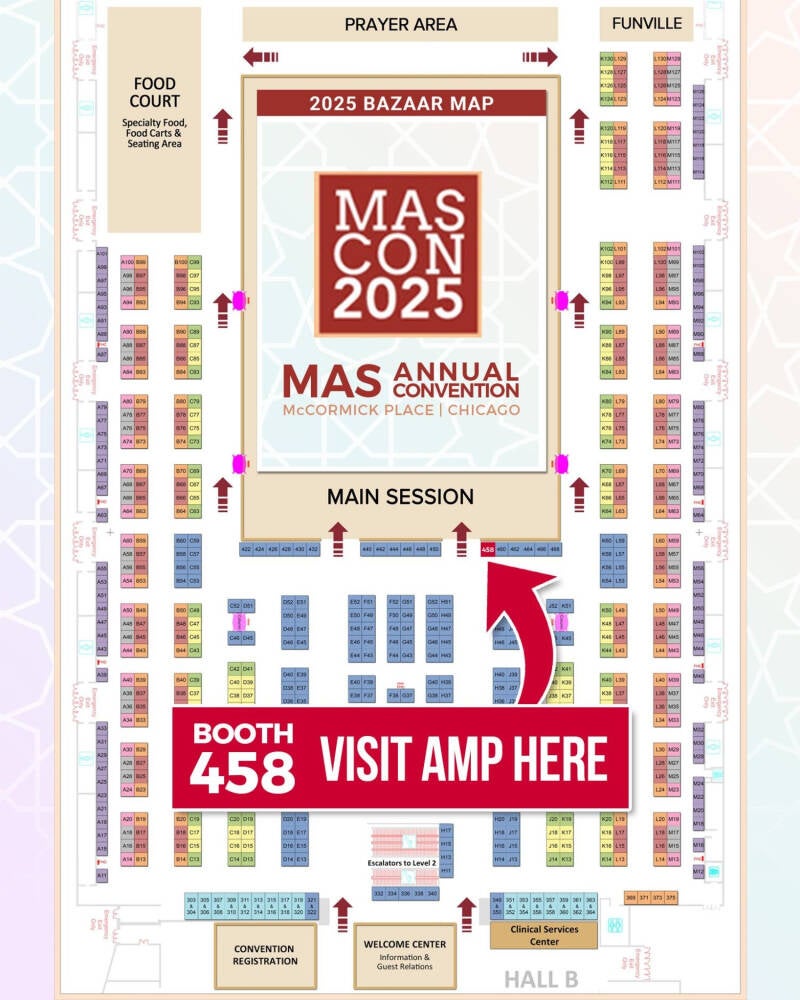
In solidarity,
American Muslims for Palestine (AMP)
2083.
Yesh Din
22 december 2025
The Yesh Din team during a visit to Beit Jala, Bethlehem.Help us fight settler violence. Support Yesh Din today.
Dear friends,
As Christmas approaches and the civil year draws to a close, we want to pause for a moment and reach out to our community.
This past year has been marked by immense pain, loss, and ongoing instability for all people living between the river and the sea. As we look ahead toward the year to come, we wish for a year of safety, recovery, and dignity for every human being in this region.
In the West Bank, this has been a year of extreme settler violence aimed at Palestinian individuals and communities; rapid expansion of illegal outposts and settlements, harsh movement restrictions throughout the West Bank, intensification of oppressive policies to sow despair within the Palestinian population, and accelerated steps towards annexation, in the Knesset and on the ground.
At Yesh Din, we continue documenting violations, seeking justice for affected communities, demanding accountability, and exposing and challenging these crimes and violations. This work is difficult, often exhausting - but it is essential. Change is not abstract. It is built through persistence and the refusal to look away or back down.
As the year ends, we invite you to join us. Your support makes it possible to continue this work and to turn values into action. Together, we can help build a future grounded in rights, accountability, and shared humanity.
Thank you for being part of the Yesh Din community, and for walking this path with us. Wishing you and your loved ones a meaningful holiday season and a new year of strength and renewal,
Ziv Stahl
Executive Director
Yesh Din
2082.
22 december 2025
In deze nieuwsbrief delen we een warme aanbeveling van twee invloedrijke stemmen om de strijd voor BDS te intensiveren. Het momentum is er, nu moet het worden omgezet in concrete verandering.
Historicus Ilan Pappé roept op om onze inzet te verdubbelen, zelfs te verdrievoudigen. Als samenleving moeten we een duidelijke boodschap afgeven aan media, directies en politici: wij eisen een rechtvaardig beleid. Journalist Mariam Barghouti benadrukt dat boycotten de meest toegankelijke manier is om bij te dragen aan de strijd voor een vrij Palestina. Meedoen kan, en moet.
Het concert van IDF-hoofdcantor Abramson heeft uiteindelijk plaatsgevonden. Maar laat niemand zich daarover illusies maken: dit was een Pyrrusoverwinning voor de Israël-lobby. Nooit eerder kreeg een oproep tot boycot zoveel media-aandacht, en nooit eerder was zo zichtbaar dat de publieke opinie is omgeslagen. Bestuurders en directies voelen dit ook; de afwegingen die zij maken zullen voortaan anders zijn.
Wij blijven ons inzetten. Organiseer. Boycot. En steun deze beweging met een donatie.
Een strijdbare groet van het docP-team; blijf BDS'en!
Palestina verdient onze moed

Zaterdag 13 december organiseerde The Rights Forum in de aula van de UvA een bijeenkomst met de Palestijnse journaliste en commentator Mariam Barghouti en met de Israëlische historicus Ilan Pappé. Beiden gaven nadrukkelijk het belang aan van BDS. Pappé zei dat BDS een (20 jaar, red.) jonge beweging is maar ze lijkt al 55 jaar […]
Concert Abramson zwaar bekritiseerd

De hoofdcantor van het Israëlische leger, die op zijn website nadrukkelijk de genocide in Palestina verheerlijkt en het Israëlische leger en de staat vertegenwoordigt, Shai Abramson, mocht nadat zijn concert in eerste instantie geschrapt werd, op 14 december tóch optreden in het Koninklijk Concertgebouw aan het Museumplein in Amsterdam. Uit protest daartegen heeft de antizionistische […]
Israël wint deelname ESF door valsspelen
Na jarenlange strijd is er eindelijk enig resultaat in de controverse rond de Israelische deelname aan het “apolitieke” culturele muziekfestival. Vijf landen waaronder Nederland hebben zich teruggetrokken omdat Israël mag blijven meedoen. VN Rapporteur Francesca Albanese gebruikt termen als “Eurovicious” en “Genovision” om de ernst van de situatie aan te geven. Op de algemene vergadering […]
2081.

21 december 2025
Have you heard about Project Esther?
Is it:
The right's plan to crush JVP
Trump's blueprint to destroy all progressive movements
An attempt to conflate anti-Zionism with antisemitism
All of the above

This Jewish Voice for Peace explainer compiles all the evidence showing Project Esther in action. Will you read it right now to know what we’re up against, and forward this email to five friends?
We have to know what we’re up against to be able to fight back.
Trump’s attacks aren’t just targeting the Palestine solidarity movement. Basic freedoms — like the right to free speech and protest — are under threat. It’s going to take regular people coming together in massive numbers to fight back.
Will you read JVP's explainer on Project Esther and forward this email to five contacts outside the Palestine solidarity movement?
Jason Farbman
JVP Digital Director
P.S. Will you support our work to fight back against Trump with a one-time contribution to Jewish Voice for Peace?
Jewish Voice for Peace is a national membership organization inspired by Jewish tradition, organizing toward Palestinian liberation and Judaism beyond Zionism. Become a JVP Member today. Update and view your contact information, contributions, and email preferences through our self-service portal.
Mailing address: JVP, 712 H Street NE, Suite 1363, Washington, D.C. 20002, United States
Donations: JVP, PO Box 589, Berkeley, CA 94701, United States
We use email to build our grassroots power – don't hesitate to share your feedback and campaign suggestions.
2080.

21 december 2025
Gaza Humanitarian Response
Situation Report No. 52
20 December 2025
(As of 18:00 on 19 December 2025, unless otherwise noted)
HIGHLIGHTS
- Since October, Child Protection partners distributed winter clothes to more than 250,000 children. Approximately 630,000 adolescents aged 11 to 17 remain in urgent need of winter items support.
- At least 2,407 children were treated for acute malnutrition in the first two weeks of December.
- Two more Temporary Learning Spaces (TLSs) have been established in Gaza city and Khan Younis, bringing the total number of functional TLSs across the Strip to 407.
SITUATION OVERVIEW
On 19 December, shelling and airstrikes continued across the Gaza Strip. In northern Gaza, gunfire and shelling, along with air strikes, were reported in Beit Lahiya, east and west Jabaliya, east Ash Shuja'iyya and At Tuffah in Gaza city. Near Ad-Durra Hospital in At Tuffah, a school sheltering displaced people was reportedly shelled, killing six and injuring five. In Deir al Balah, shelling continued being reported in east Al Maghazi and east and north-east Al Bureij Camp. The Israeli army announced the killing of a Palestinian who allegedly crossed the “Yellow Line”. Gunfire and shelling towards eastern and southeastern areas of Khan Younis reportedly killed four people, while naval fire was reported twice off the coastline. Northern and western parts of Rafah city were reportedly also impacted, alongside naval fire off the coast.
According to the Gaza Ministry of Health, six people were killed and 20 others injured in the last 48 hours.
Three residential houses collapsed in North Gaza’s Saftawi area and northwest Jabaliya Camp, while another building collapsed near Al Quds Hospital in Tal Al Hawa, Gaza city.
UNITED NATIONS-COORDINATED AID ENTRY*
On 19 December, the Zikim crossing was open, while the Kerem Shalom crossing remained closed for truck offloads, with only collections allowed. Comprehensive data on UN and partners’ aid entry into Gaza remains unavailable at the time of reporting.
Overall, four out of nine humanitarian movements in the Strip requiring coordination with the Israeli authorities were facilitated and accomplished. These included the uplifting of at least 322 pallets of menstrual hygiene management and dignity kits from Kerem Shalom and the deployment of UN2720 monitors to the same crossing. Three other missions faced delays and impediments, two of which were not accomplished – including the collection of food supplies from, and deployment of UN2720 monitors to the Zikim crossing. Another two missions were canceled by the organizers.
HUMANITARIAN RESPONSE
The below are preliminary updates shared by Clusters at the time of reporting and will be reconciled and aggregated in the coming days as Clusters receive more data from the capillary network of partners active on the ground.
Health
- On 19 December, WHO facilitated the medical evacuation of 25 critical patients and their companions to multiple countries, including Belgium, Italy, Norway and Romania. This brings the total number of patients evacuated abroad to more than 10,600, including 5,600 children, since October 2023. However, at least 16,000 patients remain in Gaza awaiting urgent evacuation to receive appropriate medical care.
Nutrition
- During the first two weeks of December, at least 2,407 children were admitted for treatment of acute malnutrition. In 2025, 90,000 children diagnosed with acute malnutrition were admitted for treatment, more than double of the 40,000 cases recorded in 2024, despite multiple displacement and recurrent service closures caused by military operations.
Protection
- On 19 December, the Protection Cluster continues expanding the pool of Emergency Protection Responders as frontliners, conducting two trainings in Gaza city and Deir al Balah. This brings the total to more than 400 frontliners trained across various areas of protection, including safe identification and referral, disability inclusion and psychological first aid.
- Under the joint protection and Prevention of Sexual Exploitation, Abuse, and Harassment (PSEAH) safeguarding initiative, mobile teams were present at 87 aid distribution points, reaching approximately 10,090 people per site. In addition, 375 people received assistance with protection and other key messaging.
- Child Protection
- On 19 December, Child Protection (CP) partners reached over 5,000 children and more than 2,500 caregivers with mental health and psychosocial support (MHPSS), positive parenting sessions, case management, referrals, emergency care arrangements, and family tracing and reunification services. This includes 300 at-risk children - of whom approximately 50 with disabilities and/or conflict-related injuries – who accessed critical social services through case management and 45 children who were reunified with their families and caregivers.
- Life-saving winterization assistance, including tents, blankets and winter clothing kits, is being distributed to at-risk families and sites heavily affected by recent storms. Since October, more than 250,000 young children received winter clothing assistance. Analysis based on the latest available population data, however, indicates a critical gap in winter clothing support for adolescents aged 11 to 17. Aggregated estimates at governorate, municipality and neighborhood levels suggest that approximately 630,000 adolescents across the Strip are in need of winter clothing assistance.
- There is equally an urgent need for assistive devices for children with disabilities, as well as recreational kits to enhance the quality and reach of MHPSS activities in communities and learning centers.
Education
- Two additional TLSs have recently been established in Gaza city and Khan Younis, accommodating approximately 1,037 school-aged children, with support from 39 teachers. Overall, 407 TLSs are currently functional across the Strip. While further scaling up remains a critical priority, it is heavily dependent on the timely delivery of essential supplies.
- Heavy rainfall over the past week has affected at least 35 TLSs, 10 more than a week ago, affecting nearly 5,100 students. Although repair and mitigation activities are underway, shortages of high-performance tents persist amid growing demand. Many of the affected TLSs are built with substandard materials that cannot withstand severe weather. With additional rainfall forecasted, the risk of further damage remains high, posing an ongoing challenge to the continuity, safety and expansion of learning opportunities.
2079.

20 december 2025
As 2025 comes to a close, we’ve passed over 800 days of Israel’s current ongoing genocide against the Palestinian people. Israel is breaking the ceasefire, blocking aid, and killing Palestinians on a near-daily basis.
The fight continues. With your support, we’re advocating in our communities and changing the political landscape day by day.
This year, the very first candidate USCPR Action endorsed, New York City Mayor-elect Zohran Mamdani, soared to victory because of his support for affordability and Palestinian rights. Meanwhile three states—Michigan, Minnesota, and North Carolina—have divested from Israel bonds.1
You’re part of this fight, Nico. When we come together, we find our collective power to push for justice. Read the latest updates below.
Your Activist Scoop
OUR GOVERNMENT'S GUILT

- Babies are freezing to death and families are struggling to survive in flooded tents in Gaza, due to Israel’s destruction of infrastructure and cruel blockade stopping most aid and supplies from entering.2
- After Trump’s prompting, Israel struck a $35 billion deal to supply natural gas from a Chevron gas field to Egypt. Learn why Chevron is complicit in genocide.3
- Trump has expanded his racist and discriminatory travel ban to stop people from Palestine and five additional countries from entering the U.S. Read more background in our travel ban explainer.4
READ MORE ABOUT TRUMP’S TRAVEL BAN
YOUR IMPACT
- You’ve collectively sent 750,000+ emails and made 38,000+ calls to elected officials through USCPR Action tools this past year. Your advocacy built the pressure to nearly triple the number of representatives supporting the Block the Bombs Act (H.R. 3565), from 21 in May 2025 to 59 representatives today.
- Break Israel Bonds campaigns are taking off across the U.S. to cut off these loans that uphold the Israeli apartheid economy. Read more in Mondoweiss.
- In Alexandria, Virginia, community members packed the room at City Council to demand Alexandria divest from genocide—a rapidly growing campaign.
- In Oakland, California, activists are protesting and pressuring the port authority for a local arms embargo to stop military cargo shipments.
READ MORE
WHAT YOU CAN DO NEXT
- Take action to demand the immediate, unconditional release of Palestinian political prisoners, including hospital director Dr. Hussam Abu Safiya and popular political leader Marwan Barghouti.
- Palestinian woman Leqaa Kordia has been imprisoned in Texas for over 9 months, the last remaining campus protester still held by ICE. Demand her release with this tool from Amnesty International.
- Watch the film All That’s Left of You when it releases in theaters this January.
- Fuel the fight ahead for Palestinian liberation in 2026. We need your help to shift the narrative with vital resources like our Congress Scorecard, and to support organizers who are mobilizing local divestment campaigns to move dollars away from genocide. Make a donation to USCPR Action now.
FREE POLITICAL PRISONERS
Thank you for taking action with us.
Onward to liberation,
AHMAD ABUZNAID
Executive Director
USCPR Action
2078.

19 december 2025
Gaza Humanitarian Response
Situation Report No. 51
19 December 2025
(As of 18:00 on 18 December 2025, unless otherwise noted)
HIGHLIGHTS
- The Integrated Food Security Phase Classification analysis finds that although famine conditions have been offset, about 1.6 million people are still expected to face high levels of acute food insecurity through mid-April next year.
- As of 17 December, Food Security partners continued distributing over 1.56 million hot meals daily and had reached 145,000 families (about 725,000 people) with monthly general food assistance.
- As of 19 December, rations are re-increasing to one food parcel, two bags of flour, and 1.5 kilograms of High-Energy Biscuits per household.
- One child was killed by Explosive Ordnance in Gaza city, with three such incidents recorded across the Strip in 24 hours. Mine Action partners reached nearly 22,000 people with Explosive Ordnance Risk Education between 14 and 18 December.
- Child Protection partners require urgent funding to sustain case management for high-risk children, expand winterization coverage, and repair damaged child protection service points and safe spaces.
SITUATION OVERVIEW
According to the latest Integrated Food Security Phase Classification (IPC) report, issued on 19 December, following the ceasefire in October, there have been notable improvements in food security and nutrition - yet the situation remains critical. Although famine conditions have since been offset, about 1.6 million people are still expected to face high levels of acute food insecurity through mid-April next year. This includes about 1,900 people in Gaza who would face catastrophic hunger (IPC Phase 5) - the highest level, and more than 570,000 people who would face emergency levels (IPC Phase 4). The report projects that through mid-October of next year, more than 100,000 children under five, as well as 37,000 pregnant and breastfeeding women, will need treatment for acute malnutrition. Presently, no child in Gaza meets the minimum dietary diversity standard, and two thirds of children are suffering from severe food poverty. The onset of winter and related diseases – combined with poor sanitation and hygiene conditions and limited access to safe and diverse foods – only increase vulnerability to malnutrition.
On the ground, shelling and airstrikes continued across the Gaza Strip on 18 December, including east of Jabalya in North Gaza governorate, and in As Sorani and At Tuffah neighbourhoods, south-east of Gaza city. The Israeli army reported that an Israeli soldier was slightly injured in northern Gaza. In Deir al Balah, gunfire and an airstrike were reported east of Al Bureij. In Khan Younis, gunfire and shelling, as well as airstrikes and helicopter fire reportedly caused casualties in eastern and southeastern areas, including Bani Suheila and Baten As Samin. Naval fire was reported off the coast west of Khan Younis city. In Rafah, helicopter and naval fire reportedly impacted Rafah city and the coast west of it.
Three Explosive Ordnance (EO) incidents on 18 December caused casualties: the first in Jabaliya, the second in Ash Sheikh Radwan neighbourhood, northwest of Gaza city, and the third in Deir al Balah’s An Nuseirat Camp, which reportedly killed a Palestinian child.
UNITED NATIONS-COORDINATED AID ENTRY*
On 18 December, UNOPS international monitors verified the collection of at least 384 pallets of UN-coordinated aid: 310 from Kerem Shalom Crossing, and 74 pallets from Zikim Crossing. These comprised inter alia 271 pallets of water, sanitation and hygiene (WASH) supplies such as water tanks, jerrycans, containers and hand gel, 53 pallets of medical supplies, including medicines and equipment, 49 pallets of shelter items such as winter blankets, tarpaulins and tents, and 11 pallets of flour. Overall, between the announcement of the ceasefire on 10 October and 18 December, at least 177,477 pallets of humanitarian cargo were offloaded, and 155,221 pallets were collected from the operational crossings. Of the total, only 1,984 pallets, or approximately 1 per cent of all uplifted aid, were intercepted during transit within Gaza.
The above data excludes bilateral donations and the commercial sector.
On 18 December, six out of 11 humanitarian movements inside Gaza requiring coordination with the Israeli authorities were facilitated, though one was not accomplished and two only partially. Four other missions faced impediments and delays, three of which were only partially accomplished and one failed. One mission was canceled. In the south, aid collection movements proceeded through Salah Ad-Deen Road, part of which was temporarily reopened for cargo uplifting following the closure of the Philadelphi corridor due to extreme weather conditions.
HUMANITARIAN RESPONSE
The below are preliminary updates shared by Clusters at the time of reporting and will be reconciled and aggregated in the coming days as Clusters receive more data from the capillary network of partners active on the ground.
Food Security
- As of 17 December, Food Security Sector partners had reached 145,000 families (about 725,000 people) with monthly general food assistance via 60 distribution points across the Strip. This represents 35 per cent of the 2.1 million people that partners aim to reach every month. While from 12 to 18 December partners had to temporarily reduce the standard family ration of two food parcels and one 25-kilogram (kg) flour bag (covering 75 per cent of minimum caloric needs), with sufficient flour stock available, the ration is increasing as of 19 December to one food parcel, two bags of flour, and 1.5 kg of High-Energy Biscuits per family, bringing coverage back up to approximately 75 per cent of the minimum caloric needs.
- Hot meal distribution continues at pace. As of 17 December, 1,566,000 meals were prepared and delivered daily by 25 partners through 206 kitchens – 362,000 meals by 45 kitchens in northern Gaza and 1,204,000 by 161 kitchens in southern Gaza.
Protection
- Child Protection
- On 18 December, Child Protection partners provided mental health and psychosocial support (MHPSS), positive parenting sessions, child protection case management, community-based protection activities, referrals, emergency care arrangements, and family tracing and reunification, reaching over 4,000 children, including nearly 50 children with disabilities and more than 2,000 caregivers. Over 250 children at high risk, including unaccompanied and separated ones, children without parental care, and survivors of violence, abuse, and neglect, received specialized case management and follow-up support.
- More than 40 child-friendly spaces, safe spaces, and child protection service points remain damaged or partially functional due to flooding, collapsed tents, and torn tarpaulins, causing repeated service disruptions.
- As part of the winterization response, partners distributed winter clothing kits to over 3,000 children, winter shoes to more than 2,000 children, and blankets, hygiene and dignity kits, diapers, and tarpaulins to over 200 vulnerable children and caregivers.
- Urgent funding is required to sustain case management for high-risk children, expand winterization coverage—especially for adolescents—repair damaged child protection service points and safe spaces, and ensure continuity of critical child protection services as winter conditions worsen.
- A five-day joint Child Protection and Gender-Based Violence (GBV) training was conducted from 14 to 18 December for 20 caseworkers from Child Protection and GBV partners to strengthened frontline responses for child survivors. The training focused on ethical, survivor-centered case management, enhancing caseworkers’ capacity to identify, manage, and refer complex and high-risk cases, including GBV-related cases involving children, amid rising caseloads and severe operational constraints.
- Mine Action
- On 18 December, Mine Action partners conducted three explosive hazard assessments in Deir al Balah and Gaza city, including in support of rubble removal efforts.
- Explosive Ordnance Risk Education (EORE) sessions continued across Gaza, Deir al Balah and Khan Younis governorates, reaching almost 22,000 people between 14 and 18 December.
2077.

19 december 2025
While the U.S. government continues to bankroll Israel’s atrocities in Palestine, life is getting harder for regular, working-class people here at home.
Instead of giving into fear and division, we’re leaning into hope and action by joining The People’s Table, a growing network of organizations across the country defending, protecting, and feeding our people.
Get Involved with the People's Table Today
Since the beginning of Israel’s genocide against Palestinians in Gaza in October 2023, the U.S. has given more than $30 billion in taxpayer-funded weapons to Israel to enable its countless war crimes in Gaza and across Palestine.
At the same time, the Trump administration is playing politics with people’s lives and disrupting programs that so many of us depend on to keep our families fed. Millions of people across the country are going hungry and losing access to healthcare as SNAP benefits continue to be withheld and Medicaid is being gutted.
Ignoring the demands and desires of the people, this administration continues to insist there are no funds for food assistance, healthcare, or any of the systems that help us survive. People are having to make impossible decisions between putting food on the table, paying their rent, or taking their kids to the doctor.
We know they have money to feed our people, but they would rather spend it on deportations and bombs.
Our community resources are being poured into supplying weapons abroad, forcing us to sign the check on tax subsidies, bailouts for corporations, and escalations of ICE operations separating families and disrupting communities.
But while our government abandons us, we won’t let our people go hungry.
In cities across the country—from Los Angeles to New York, the Hudson Valley to Jackson, Mississippi—people are showing up for each other by setting up mutual aid distribution sites providing families with care packages of food and essential items.
Join The People’s Table and demand that our government stop funding genocide and start investing in community needs by taking the actions below:
- Learn more about The People’s Table, find local resources and sign up to get involved in efforts in your community today.
- Write to Congress now to demand that they fund bread, not bombs, and cosponsor H.R.3565, the Block the Bombs Act to stop weapons to Israel.
The people are clear – we do not want our tax dollars going to genocide and military occupation. We demand that our money and resources be used to feed our families, care for the sick, and get people off the streets and into housing!
In solidarity,
Alia E.
Adalah Justice Project
2076.

19 december 2025
Gaza Humanitarian Response
Situation Report No. 50
18 December 2025
(As of 18:00 on 17 December 2025, unless otherwise noted)
HIGHLIGHTS
- Malnutrition treatment dropout numbers improved markedly, with the rate of children leaving the programme before recovery gradually dropping from 27 per cent in September to 6.5 per cent in November. This positive trend is largely attributed to reduced population displacement.
- Since the ceasefire, health partners have re-opened or established 55 health service points across the Gaza Strip, including 37 in northern Gaza.
SITUATION OVERVIEW
On 17 December, reports of shelling and airstrikes continued across the Gaza Strip, including east of Jabaliya, Al Sudaniya, and Jabaliya Al Balad in North Gaza governorate, causing two casualties. Shelling was reported east of Ash Shujaiyah and At Tuffah neighbourhoods in Gaza city, including a misfired mortar which reportedly injured several Palestinians and is under investigation. In central and southern Gaza, gunfire, shelling and helicopter fire were reported east of Al Bureij and Al Maghazi as well as near Kissufim in Deir al Balah, in Bani Suheila, Qaa Qurein, Umm Al Kilab and Al Fukhkhari in Khan Younis, as well as in Rafah.
According to the Ministry of Health in Gaza (MoH), one person was killed, and 13 others injured in the last 24 hours in the Gaza Strip.
The Health Cluster reports the death of a one-month-old baby due to hypothermia, the second reported case since the start of the winter season.
UNITED NATIONS-COORDINATED AID ENTRY*
On 17 December, at least 4,018 pallets of aid administered by the UN and its partners were offloaded at Gaza’s crossings, based on data retrieved from the UN 2720 Mechanism dashboard at 18:00 on 18 December. About 66 per cent of these pallets contained food supplies. Shelter constituted 22 per cent; water, sanitation and hygiene items - 8 per cent and health supplies made up 4 per cent of all cargo. At least 184 truckloads were offloaded at Kerem Shalom Crossing.
On the same day, UNOPS international monitors verified the collection of at least 951 pallets of UN-coordinated wheat flour from Zikim Crossing between 09:15 and 10:30. The monitors also report that an additional 123 pallets of aid comprising plastic garbage bins, safety gloves and shoes were left on the Zikim platform and did not enter Gaza. Due to inclement weather impacting road conditions, the monitoring at Kerem Shalom Crossing could not take place.
Overall, between the announcement of the ceasefire on 10 October and 17 December, at least 173,598 pallets of humanitarian cargo were offloaded, and 155,104 pallets were collected from the operational crossings. About 1.5 per cent of all uplifted aid was intercepted during transit within Gaza.
The above data excludes bilateral donations and the commercial sector.
On 17 December, two out of seven humanitarian movements inside Gaza requiring coordination with the Israeli authorities were facilitated; another three movements were initially approved but then faced impediments due to poor road condition on Philadelphi corridor and were not accomplished. Two missions to collect dump trucks and forklifts from the Kerem Shalom Crossing were cancelled due to the announcement from the Israeli authorities that dual-use items would not be authorized for entry that day.
HUMANITARIAN RESPONSE
The below are preliminary updates shared by Clusters at the time of reporting and will be reconciled and aggregated in the coming days as Clusters receive more data from the capillary network of partners active on the ground.
Health
- Since the ceasefire, health partners have scaled up operations, with 55 health service points re-opened or newly established across the Gaza Strip, including 37 in northern Gaza.
Shelter
- On 17 December, Shelter partners continued targeted assistance across the Strip:
- About 3,476 blankets were distributed to 746 families in Gaza city and North Gaza, and 1,032 blankets were provided to 172 families in Khan Younis.
- A total of 1,930 tarpaulins were distributed to 386 families in Gaza city and North Gaza, helping reinforce damaged shelters and provide protection against harsh weather conditions.
- More than 1,000 mattresses were distributed to 172 families in Khan Younis, targeting families living in displacement sites and shelters damaged by conflict.
- To improve winter preparedness, winter clothing kits were provided to 100 families in Gaza city and North Gaza, while clothing assistance through cash-based transfers reached 540 families in the same locations.
- As part of an intersectoral response to rainstorm damage, 463 tents were distributed to affected families, including 443 tents in Gaza city and 20 tents in Deir al Balah, offering urgent shelter solutions for families whose homes were damaged by heavy rainfall.
Nutrition
- Partners continue screening for acute malnutrition and providing treatment. Cluster partners have re-opened three additional sites to strengthen ongoing detection and treatment efforts: one primary health care centre (PHCC) in Rafah, one nutrition site in Addaraj Shelter in Gaza city, and another PHCC in the North Gaza governorate.
- Malnutrition treatment programme retention rates have shown significant improvement, with the rate of children dropping out before completing treatment gradually decreasing from 27 per cent in September to 12 per cent in October and 6.5 per cent in November. This positive trend is largely attributed to reduced population displacement.
- A pilot programme for managing acute malnutrition among children 5 and older has been launched through eight partners in 13 sites across the Strip. The initiative aims to screen for acute malnutrition and provide targeted supplementation and treatment for severe cases. Partners are supporting this effort through capacity-building and supply provision.
- Efforts to prevent hypothermia and strengthen Infant and Young Child Feeding (IYCF) support are ongoing in coordination with the Health Cluster. Nutrition Cluster has developed IYCF winterization guidance in English and Arabic and shared it widely with all Nutrition and Health Cluster partners.
Water, Sanitation and Hygiene
- Work is currently underway to clean the main gravity sewer line in Jabaliya, North Gaza Governorate. After more than two years of war, all manholes had been backfilled. Maintenance and cleaning activities are ongoing, and a mobile pump is being used to remove wastewater from the sewer lines and accumulated sewage.
- The Cluster continued dispatching hygiene items to partners for distribution to 300,000 people across the Strip, including 99,600 bars of soap, 62,800 bottles of shampoo, 62,800 bottles of dishwashing liquid, 32,000 packs of laundry powder, 10,400 adult diapers, 15,000 jerry cans, and 4,200 anti-lice kits.
- In Al Mawasi, Khan Younis, the project connecting Internally Displaced Persons (IDPs) camps to community water tanks now serves 38,000 people, with Phase II underway to reach an additional 40,000 people. This initiative makes water collection safer and easier while reducing reliance on water trucking.
- A new project to repair the Al Asqoula booster station in Gaza city has begun with debris removal. This station transfers water from the Mekorot line to the Yarmouk reservoir and surrounding neighbourhoods.
Protection
- To mitigate risks and improve living conditions, teams expanded Explosive Ordnance Risk Education (EORE) sessions in Gaza city for IDPs and returnees, continued community-based risk education in Khan Younis despite access challenges, scaled up winterization assistance in Deir al Balah, and provided winter relief and protection support to returnee families in North Gaza to ensure safer and more dignified returns.
- As a result of these efforts, on 18 December, protection partners reached over 9,000 people with essential services, while more than 4,000 families received winter relief and other critical assistance. This included 5,018 people participating in EORE sessions in Gaza city, emergency assistance for over 2,300 displaced families in Deir al Balah, and support for 1,893 returnee families in the North Gaza governorate. In addition, 38 people were referred to specialized psychosocial services, and 53 women received legal protection and documentation assistance, resulting in 156 legal documents, 24 birth certificates and three temporary ID cards.
- Child Protection
- As of 17 December, reports from 13 partners confirmed damage to over 36 child-friendly spaces and service points across the Strip. Damage includes collapsed or flooded tents, torn tarpaulins, damaged flooring, roof leaks and access challenges - particularly in low-lying areas with poor drainage and prolonged tent use. Activities were suspended or reduced between one to seven days depending on the area and activity, affecting more than 30,000 children.
- Despite these challenges, between 15 and 17 December, partners reached over 5,000 children (including 90 with disabilities) and 3,000 caregivers through mental health and psychosocial support activities, positive parenting, case management, awareness sessions, referrals and emergency care. Over 300 children at risk received support, including unaccompanied and separated children and survivors of violence and neglect.
- During the same period, winterization assistance included distribution of winter clothing kits for more than 5,000 children, winter shoes for more than 2,000 children, and distribution of blankets, hygiene and dignity kits, diapers, tarpaulins and family tents for approximately 100 children and caregivers.
- Prevention of Gender-Based Violence
- Partners working to address Gender-Based Violence (GBV) continue to support the multisectoral response for families affected by the recent storms. In total, partners distributed 13,000 dignity kits to women and girls affected by the storms.
- Between 14 and 17 December, partners also delivered 6,000 dignity kits to women and girls’ safe spaces (WGSSs) across Gaza.
- Alongside these distribution efforts, a series of trainings focused on addressing GBV in Emergencies (GBViE) were delivered, reaching approximately 30 partners between 15 and 17 December. On 15 December, case workers received training on GBV case management to strengthen survivor support. Partners continue to deliver multisectoral services through WGSSs in Khan Younis, Gaza city and the North Gaza governorate, collectively reaching around 3,500 people between 15 and 17 December.
- However, storm damage to WGSS tents has temporarily disrupted some activities. Urgent repairs to restore full functionality are required.
- Mine Action
- On 17 December, two Mine Action partners conducted three explosive hazard assessments in Deir al Balah in support of rubble removal efforts and partner activity, while EORE continued across Gaza, Deir al Balah and Khan Younis governorates.
2075.

19 december 2025
Taybeh, The Last Palestinian Christian Town
Taybeh is a small village about 12 km northeast of Ramallah and is the only entirely Christian town remaining in the West Bank. The town, whose center is filled with whitewashed homes, narrow alleys and stairways, is home to significant historic and religious landmarks including the hilltop ruins of a castle and the ancient St. George Church, all testament to a rich Christian heritage surviving for centuries.
Modern Taybeh is known for its bold spirit of enterprise. In 1994 local entrepreneurs launched Taybeh Brewery, the first Palestinian microbrewery, and over time expanded into winemaking as well. The brewery has become more than a business: it’s a symbol of cultural resilience and pride. Every autumn, the town hosts a festivity modelled on Oktoberfest, drawing locals and visitors alike to share in music, food, and a taste of Palestinian-made beer.
But today Taybeh is under serious threat. In 2025, the village has faced repeated attacks by illegal Israeli settlers, including fires set near homes and on sacred sites, property destruction, and attempts to seize agricultural lands that form the economic backbone of the community. Many of the town’s residents and religious leaders warn that these attacks are part of a broader push to displace Palestine’s Christian minority and erase their historic presence from the land.
Attacks and infringements are not new. In 2019 and 2020, settlers set up similar illegal outposts around the town, often accompanied by arson attacks on crops, theft of equipment, and deliberately releasing cattle into the fields to destroy harvests.
Father Bashar Fawadleh, parish priest of the Church of Christ the Redeemer in Taybeh, said in an interview (with CNA): “The town, which the Gospel of John (11:54) refers to as ‘Ephraim’ — the place Jesus withdrew to before his passion — is no longer safe for its people today… We do not live in peace but in daily fear and siege.”

The final webinar in our Threads of Resistance series is today, December 19th at 12pm EST-- a powerful and inspiring way to go into the holidays!
In "Religious Voices for Palestine," we will come together to discuss solidarity with Palestine through a spiritual and ethical lens. In addition to exploring how faith communities interpret justice, liberation, and moral responsibility in the context of Palestine, we will hear from Palestinian Christian leader Atallah Hanna, Archbishop of Sebastia about how the Christian Palestinian community is being impacted by the ongoing genocide, military occupation, and land annexation.
We are also excited to be joined by Buddhist teacher Kaira Jewel Lingo. In her words:
"We’re not freeing Palestine, Palestine is freeing us... When this protest chant emerged in the early days of the current genocide in Gaza, it illuminated the inherent interconnectedness that the Buddha taught. When we show up for another being’s freedom, it frees us too – from the sense of separation that is at the root of all suffering."
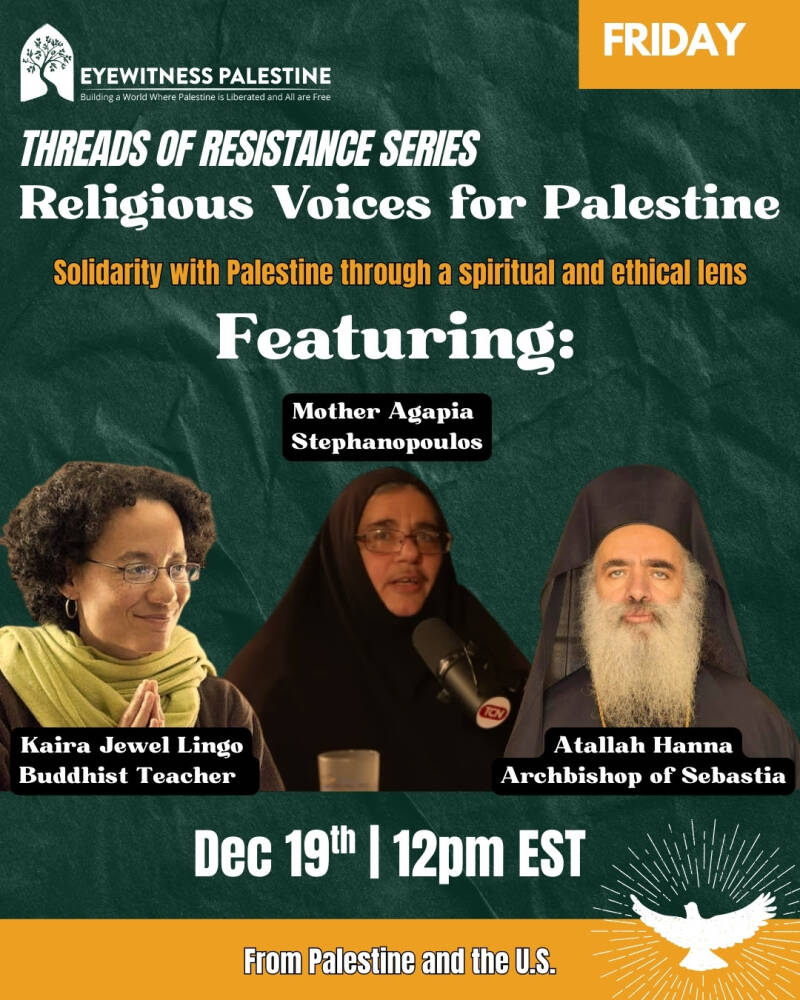
If you’re in the Springfield or Jamaica Plain, MA area, join us for in-person events today 12/19 and tomorrow 12/20, featuring Huwaida Arraf—flotilla steering committee member, co-founder of the International Solidarity Movement, activist, lawyer, and former Eyewitness Palestine board member—alongside Chris Smalls, who was recently aboard the Handala, where he was kidnapped by the IOF, beaten, and detained for several days. We'll also be joined by outspoken Orthodox nun and activist Mother Agapia, who moved to Jerusalem in 1996.
This is an opportunity to hear firsthand testimony, ask questions, and ground our solidarity in lived experience at a critical moment. We would love to see you there as we share stories, reflections, and a vision for meaningful solidarity. Reserve your spot today.

2074.

19 december 2025
Bij deze ontvangt u de laatste reguliere vrijdagse nieuwsbrief van The Rights Forum van 2025. Volgende week vrijdag zijn wij in verband met de Kerstdagen gesloten. Wel zijn we er weer op maandag 29 december met een eindejaarseditie. Via deze weg willen we u alvast fijne feestdagen wensen, en u hartelijk bedanken voor uw loyale steun in het afgelopen jaar.
Dankzij die steun hebben we in 2025 veel kunnen doen. Van de Rode Lijn-demonstraties tot onze Gaza-kieswijzer, en van inspirerende en urgente bijeenkomsten met gasten als Francesca Albanese, Ilan Pappé en Mariam Barghouti tot onze inzet in de F-35-rechtszaak. Het zijn activiteiten die zonder onze achterban simpelweg niet mogelijk zouden zijn geweest.
Tegelijkertijd staan we in deze dagen stil bij de mensen in Gaza. Terwijl hier Kerst wordt gevierd, proberen zij – na meer dan twee jaar genocide – te overleven in tenten, in regen en kou, met schrijnende tekorten aan voedsel, water en medicijnen. Het contrast is nauwelijks te bevatten en stemt tot diepe solidariteit en blijvende actie.
Ook in het nieuwe jaar zullen wij ons blijven inzetten voor hun lot, en voor dat van alle Palestijnen. Met uw steun blijven wij ons uitspreken, informeren en actievoeren voor rechtvaardigheid en mensenrechten. Dank dat u daarin aan onze zijde staat.

[c] Pascal Mannaerts
Pappé & Barghouti | ‘Palestina verdient onze moed en kan zich onze lafheid niet veroorloven’
Afgelopen zaterdag organiseerden wij een bijzonder evenement met de Palestijnse journalist Mariam Barghouti en de Israëlische historicus Ilan Pappé. Hun woorden waren confronterend, huiveringwekkend én inspirerend.
Strijd tegen wanhoop
Barghouti en Pappé spraken onder meer over de medeplichtigheid van Europese media en politieke elites, over het probleem van zionisme, en de onwil in Europa om te praten over wat Israël is en hoe het is ontstaan. Het is een realiteit om somber en moedeloos van te worden, maar daar waarschuwden Barghouti en Pappé voor. ‘Israël wil dat we wanhopen’, zei Barghouti.
Het bezoek aan Nederland gaf haar juist energie en strijdvaardigheid. ‘Ik zie hier zoveel goede inspanningen, hoe klein ook, en dat herinnert ons eraan dat we gezien worden. Israël probeert ons altijd te vertellen dat we nooit gezien zullen worden.’
Bekijk hier het hele evenement terug. Ontkracht de leugens
Aan het einde van de bijeenkomst gaf Pappé het publiek een opdracht mee: het ontkrachten van leugens. ‘Er is de leugen dat de genocide voorbij is. Er is de leugen dat op de Westoever de genocide niet op een andere manier doorgaat. De leugen dat er de afgelopen twee jaar een oorlog gaande was die is gestopt met een staakt-het-vuren. Dit zijn allemaal verzinsels door de mainstream media en politici. We moeten het gesprek aangaan op basis van de feiten op de grond.’
Dat zijn moeilijke gesprekken, die serieuze consequenties voor reputaties en carrières met zich mee kunnen brengen, erkende Pappé. Maar, ‘Palestina verdient onze moed, en kan zich onze lafheid niet veroorloven.’
Lees meer over het evenement
Internationale rechtsorde verder onder druk: VS stelt wéér sancties in tegen Strafhofrechters
De Amerikaanse ondermijning van de internationale rechtsorde gaat steeds verder. Deze week stelde de VS sancties in tegen nog eens twee rechters van het Internationaal Strafhof (ICC) in Den Haag.
Het Strafhof heeft de maatregel scherp veroordeeld. ‘Deze sancties zijn een schaamteloze aanval op de onafhankelijkheid van een onpartijdige rechterlijke instelling’, schrijft het Hof. ‘Wanneer rechterlijke functionarissen worden bedreigd omdat zij de wet toepassen, komt de internationale rechtsorde zelf in gevaar.’
Lees meer over de nieuwe sancties
Uit Gaza | Het bedrog van het bestand: als het bombarderen stopt en een andere oorlog begint
Het staakt-het-vuren in Gaza dat regelmatig in het nieuws is, is geen vredesdeal. Dat schrijft Rita Baroud, een Palestijnse journalist uit Gaza en Safe Haven Fellow aan het NIAS, in haar nieuwe essay voor The Rights Forum.
'Het wordt een "wapenstilstand" genoemd, maar in werkelijkheid is het een instrument ontworpen om de wereld tot zwijgen te brengen en zijn geweten te sussen – mensen te laten geloven, al is het maar even, dat de oorlog voorbij is. Maar terwijl op de schermen het geluid van de explosies verstomt, begint een andere oorlog: dieper, stiller en veel pijnlijker: de oorlog van verlies en verdriet, de oorlog die niemand hoort.'

Rita Baroud geeft een toespraak tijdens de Rode Lijn demonstratie in Amsterdam, 5 oktober 2025. [c] SOPA Images Limited via Alamy'
Vanuit Amsterdam schrijf ik, wetend dat afstand niet hetzelfde betekent als veiligheid. Elke wapenstilstand daar ontketent een nieuwe oorlog in ons hier – een oorlog van herinnering, van schuld, van machteloos meeleven. Omdat wij de waarheid kennen die de wereld probeert te vergeten: dat de bezetting niet is gestopt, dat de apartheid voortduurt, dat de oorlog tegen het bestaan van de Palestijnen nooit is geëindigd – alleen stiller is geworden, prettiger voor wie niet wil horen.'
'Hoe doorbreken we deze cirkel? Door de stilte te verdrijven. [...] Het staakt-het-vuren is geen rustpauze; het is een tijd om het verzet voort te zetten – door onze herinneringen, door onze getuigenissen, door onze aanwezigheid, en door woorden die leugens blootleggen.'
Lees het hele essay
Glazen Huis van Verzet | Samen voor Congo, Palestina en Sudan
Van vrijdag 19 tot en met maandag 22 december organiseren de Rotterdam Palestina Coalitie, Stichting Charity from the Heart, Yalla for Sudan, en de Congolese gemeenschap het Glazen Huis van Verzet.
Het Glazen Huis is een vierdaagse manifestatie waarbij de organisatoren vier dagen lang live radio maken en stilstaan bij het onmetelijke onrecht in Congo, Palestina en Sudan. Tijdens de actie worden verhalen voorgelezen van burgers, slachtoffers, journalisten, hulpverleners, kunstenaars en anderen uit deze landen en daarbuiten. Met de actie halen de organisatoren geld op voor noodhulp.
Hoe kunt u helpen?
● Doneer op de GoFundMe-pagina.
● Verspreid de actie via sociale media, of door het erover te hebben met vrienden en familie.
● Kom langs bij het Glazen Huis op het Schouwburgplein in Rotterdam.
Uit onze agenda
zaterdag 20 december t/m zaterdag 27 december
DEMONSTRATIES EN WAKES
UTRECHT DOORDEWEEKSE DAGEN 08.30 - 09.30 (donderdagen vanaf 08.00) | Dagelijks stilteprotest voor Palestina, tegen genocide en bezetting (Neude, langs het fietspad)
DEN BOSCH ZA 20 DEC 12.00 | Demonstratie Never Again is Now! (Burgemeester Loeffplein)
GRONINGEN ZA 20 DEC 13.00 | Tweewekelijkse wake van Vrouwen in het Zwart (Waagplein)
HAARLEM ZO 21 DEC 14.00 | Wekelijks protest tegen de onderdrukking van de Palestijnen (Grote Markt)
HUIZEN WO 24 DEC 11.30 | Wekelijkse sit-in voor Gaza (Gemeentehuis)
NIJMEGEN ZA 27 DEC 14.00 | Maandelijkse publieke wake, uit protest tegen Israëls voortdurende misdaden tegen het Palestijnse volk (Koningsplein - Marienburg)
CULTURELE EN ANDERE EVENEMENTEN
HEERLEN ZA 20 DEC 13.00 | Sponsorloop voor Palestina, voor jong en oud (Vertrek vanaf Station Heerlen)
HUMAN, NPO 2 en NPO Start ZO 21 DEC 22.05 | Uitzending ‘Een gitzwarte nacht', over de impact die de nacht na de wedstrijd Ajax - Maccabi Tel Aviv op Nederland en haar inwoners heeft gehad
AMSTERDAM MA 22 DEC 18.00 | Christmas for Palestine
Onze agenda wordt doorlopend aangevuld. Bekijk de hele agenda
2073.

18 december 2025
Political Retaliation Over Law: Trump Undermines Protections Against Crimes Against Humanity
American Muslims for Palestine (AMP) strongly condemns the decision by U.S. Secretary of State Marco Rubio to impose sanctions on two judges of the International Criminal Court (ICC) from Mongolia and Georgia, who earlier this week voted against Israel’s appeal challenging the Court’s jurisdiction to investigate suspected crimes committed in Gaza.
This is not the first time the Trump administration has targeted the ICC in an attempt to obstruct its work under its founding charter. In March of this year, the administration imposed sanctions on two judges (one French and one Canadian) as well as two prosecutors, citing their involvement in investigations or arrest warrants against American or Israeli nationals.

Rubio’s justification for these sanctions exposes the blatant collusion of the U.S. government with Israel in shielding it from accountability for war crimes and genocide in Gaza. He claimed “we will not tolerate ICC violations that unlawfully subject American and Israeli citizens to the ICC’s jurisdiction,” and accused the Court of “engaging in politicized actions targeting Israel in a dangerous precedent for all nations.” In parallel, Israel’s representative to the United Nations, Danny Danon, congratulated President Donald Trump and Secretary Rubio for imposing sanctions, alleging that the ICC’s “politicization and persecution of Israel crosses red lines.”
These new U.S. sanctions follow the ICC Appeals Chamber’s rejection of Israel’s objection to arrest warrants issued in November 2024 against Prime Minister Benjamin Netanyahu and former Defense Minister Yoav Gallant, who were charged with war crimes and crimes against humanity in Gaza.
The Trump administration’s harassment of ICC judges and prosecutors is not only blatantly dishonest, but it also demonstrates its disregard for international law and even for U.S. laws that prohibit military support to states or entities committing crimes against humanity. Such actions add to the grave and legitimate doubts that already exist in regard to Washington’s credibility as a mediator and guarantor in ceasefire agreements—agreements Israel has continued to violate daily for over two months.
Claims that the ICC is acting out of political bias are a deliberate distortion meant to shield Israel from accountability, not a reflection of the court’s mandate or record. The crimes under investigation have been exhaustively documented by international human rights bodies, UN agencies, and independent observers. By harassing ICC officials, the Trump administration is engaging in overt political retaliation that undermines both international legal norms and U.S. statutes prohibiting support for governments committing crimes against humanity.
AMP calls on the Trump administration to rescind these sanctions, to uphold international law and U.S. law, and to end its selective and politicized approach to respecting international legal norms.
In solidarity,
American Muslims for Palestine (AMP)
2072.
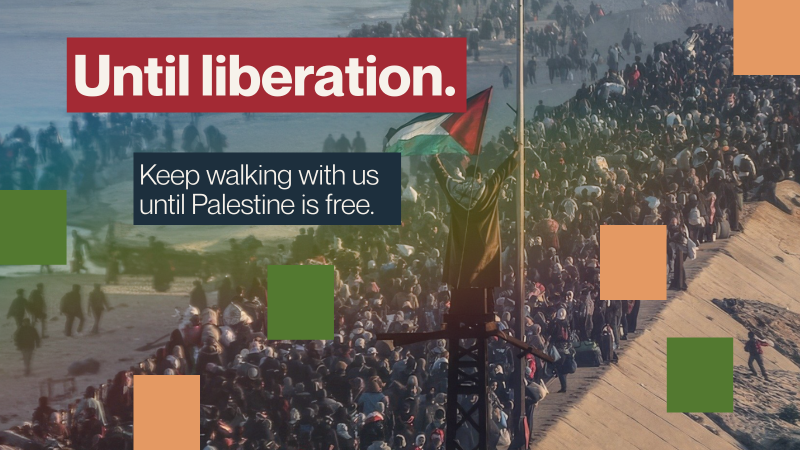
18 december 2025
As this year ends, Palestine faces one of the most dangerous moments in our history. In Gaza, our people face and resist ongoing genocide, starvation, siege, and mass destruction — now compounded by a US-Israeli colonial plan to impose illegal foreign control and a post-genocide order without justice or accountability. Across the West Bank, raids, mass arrests, and settler militias acting with impunity continue to terrorize communities and displace families off their land.
Normalization with despotic Arab regimes, under these circumstances, can only be perceived as a “reward” for genocidal Israel, and instead of sanctions and accountability, governments rush to rehabilitate a rogue apartheid state.
As part of their desperate attempts to rehabilitate Israel’s genocidal regime in a world that has largely isolated it, the US and Europe are escalating their authoritarian repression against the global solidarity networks, led by the BDS movement and its Palestinian leadership. From FIFA to Eurovision to other “international” forums that they dominate, they are destroying what is left of international law’s credibility to save their favorite settler-colony.
And yet, despite everything, this year unveiled something powerful: people power works. Millions rose up worldwide. BDS campaigns convinced trade unions, churches, universities, artists, and even some corporations to distance themselves from apartheid. Israel’s impunity is gradually cracking in unprecedented ways.
This is the moment to hold the line, and push harder.
We cannot allow genocide, colonization, foreign control, and normalization to dictate our future.
That is why I’m asking you — urgently and from a place of shared struggle — to stand with us now.
In the BDS movement, we continue to channel our grief and rage into principled and strategic energy to end the genocide, dismantle settler-colonialism and apartheid, and hold all perpetrators and enablers accountable. Your support powers our most impactful efforts:
-
Stopping arms shipments and military cooperation with Israel.
-
Challenging complicit corporations.
-
Mobilizing unions, students, churches, and institutions to end complicity and divest.
-
Supporting global organizing to isolate apartheid and stop normalization.
This work is strategic, coordinated, and effective — but it can only continue with your solidarity. Your contribution builds the pressure needed to defend our people’s rights and move us closer to freedom, justice, and equality.
2071.

18 december 2025
Humanitarian Situation Update #349
Gaza Strip
18 December 2025

Palestinian families receive winterization assistance in Deir al Balah. Photo by: OCHA
Key Highlights
- Severe storm conditions have resulted in reported deaths, flooding incidents that affected nearly 55,000 households, and the evacuation of 370 families from shoreline sites.
- Despite improved food access and restored operations, ongoing access and procedural constraints led to reduced food rations in early December to maximize coverage, the World Food Programme reports.
- Access constraints facing Emergency Medical Teams have eased, with denial rates decreasing to about 20 per cent, compared with 30 - 35 per cent before the ceasefire, according to the Health Cluster. There are 343 EMT staff in Gaza, including 73 international staff and 270 national staff.
- In a statement by the Humanitarian Country Team in the Occupied Palestinian Territory, UN agencies and NGOs call for the immediate lifting of impediments to humanitarian access and NGO operations.
Context Overview
- The Israeli military remains deployed in over 50 per cent of the Gaza Strip, beyond the so-called “Yellow Line,” which remains largely unmarked on the ground and where access to humanitarian facilities and assets, public infrastructure and agricultural land remain severely restricted or prohibited. For example, in North Gaza, out of six once functional hospitals, four are inaccessible: the Indonesian, Al Awda and Beit Hanoun hospitals are beyond the so-called “Yellow Line” and Kamal Adwan Hospital is immediately adjacent to it, according to the World Health Organization (WHO). Across the Gaza Strip, Health Cluster data indicates that 35 health facilities are located east of the so-called "Yellow Line," including eight hospitals and 26 primary health care centres (PHCs) that are non-functional while the Emirati field hospital in Rafah is functional but inaccessible. Detonations of residential buildings and bulldozing activities continue to be reported, including east of and near the so-called “Yellow Line.” Access to the sea remains prohibited and the detention of Palestinian fishers at sea continues to be reported, including the reported detention of four fishers by Israeli forces off the coast of Khan Younis on 14 December. Across the Gaza Strip, airstrikes, shelling and gunfire continue to be reported, resulting in casualties.
- Storm Byron, which struck Gaza on 11 December, resulted in widespread flooding, rain-related damage, and severe hardship for hundreds of thousands of displaced Palestinians across the Gaza Strip. As tents were flooded, thousands of families have lost their temporary shelters or experienced loss of clothing, bedding and other essential belongings. Palestinian Civil Defense (PCD) reported that their teams were able to evacuate some families from dilapidated buildings at risk of collapse and continued to respond to distress calls, mainly in relation to collapsed buildings, water leakages, flooded tents and the displacement of families. On 17 December, PCD highlighted that they had received over 5,000 distress calls, 17 already damaged residential buildings have collapsed, and over 90 sustained precarious damage. On the same day, The Ministry of Health (MoH) in Gaza reported that a total of 12 people died following the collapse of walls and damaged houses and one child died due to hypothermia (a two-week-old child who died on 15 December).
- The Site Management Cluster (SMC) has activated daily monitoring of flood-related incidents across managed displacement sites to facilitate rapid, joint response to flooding alerts. As of 16 December, SMC partners had received alerts of flooding incidents affecting 132 sites, impacting nearly 55,000 households across all five governorates, with Gaza city recording the highest number of reported incidents, followed by Khan Younis and Deir al Balah. SMC warns that the overall impact is likely significantly higher, particularly in high-risk, unmanaged sites, with hundreds of thousands of people living in low-lying, coastal or debris-filled areas exposed to flooding. According to SMC, since 10 December, at least 370 families were evacuated from shoreline sites to East Hamad city in Khan Younis (see more information below).
- According to the Ministry of Health (MoH) in Gaza, between 10 and 17 December, 14 Palestinians were killed, 84 were injured and seven bodies were recovered from under the rubble. This brings the casualty toll among Palestinians since 7 October 2023, as reported by the MoH, to 70,668 fatalities and 171,152 injuries. According to the MoH, the total number includes 277 fatalities who were retroactively added between 5 and 12 December after their identification details were approved by a ministerial committee. MoH reported that since the ceasefire, 394 Palestinians have been killed, 1,075 injured, and 634 bodies retrieved from under the rubble.
- According to the Israeli military, between 10 and 17 December, as of noon, no Israeli soldiers were killed in Gaza. The casualty toll among Israeli soldiers since the beginning of the Israeli ground operation in October 2023 stands at 471 fatalities and 2,992 injuries. According to Israeli forces and official Israeli sources cited in the media, more than 1,671 Israelis and foreign nationals have been killed, the majority on 7 October 2023 and its immediate aftermath. As of noon on 17 December, the remains of one hostage is in the Gaza Strip.
- No medical evacuations were reported between 9 and 17 December. In a press briefing, Dr. Rik Peeperkorn, WHO Representative in the Occupied Palestinian Territory (OPT), stated that, according to Gaza MoH records, 1,092 patients had died while awaiting medical evacuation between July 2024 and 28 November 2025, noting that this figure was likely underreported and not fully representative, as it was based solely on reported deaths. More than 18,500 patients, including 4,096 children, in Gaza still require medical evacuation, while only 260 patients along with 800 companions have been evacuated since the ceasefire. WHO called on more countries to welcome patients from Gaza, and for medical evacuation to the West Bank, including East Jerusalem, to be restored.
- In November, over 57,500 cases were logged through World Food Programme (WFP) feedback channels in Gaza, including hotlines, help desks and chatbots. This is compared with over 44,400 cases logged in October through the same channels. According to WFP, the increase is likely linked to the scale-up of operations following the ceasefire, including the expansion or resumption of activities, in addition to the restoration of connectivity services by the telecom operator. Cases were predominantly received from Khan Younis (22,901), followed by Gaza city (17,029) and Deir al Balah (15,792); 79 per cent of all cases were reported by male callers. More than 80 per cent of the cases were related to food and cash assistance by WFP, including distribution schedules, eligibility criteria and assistance duration. Shelter-related cases, as received via WFP feedback channels, increased sharply from 1,240 in October to 3,630 cases in November. Most of these cases involved requests for tents and basic repair materials.
- Between 10 October and 16 December, the Cash Working Group (CWG) partners distributed Multi-Purpose Cash Assistance (MPCA) to over 138,700 households, compared with 40,440 in September prior to the ceasefire. Each household received 1,250 NIS (approximately US$378) in digital payments, in line with the Minimum Expenditure Basket (MEB) transfer value. Cumulatively, more than 305,000 households in the Gaza Strip have received at least one MPCA transfer in 2025. According to the CWG, cash-out commissions continued to decline, decreasing from 14 - 16 per cent in late November to a stable 12 per cent between 4 and 7 December, marking the lowest level recorded in 2025.

Humanitarian Access
- Between 10 October and 16 December, according to the UN2720 Mechanism, more than 119,000 metric tons (MT) of UN-coordinated aid were offloaded at Gaza’s crossings, of which over 111,000 MT were collected during the same period. Of the total dispatched, 55 per cent was via the Israel route (including through Ashdod and Ben Gurion), 30 per cent via the Egypt route, eight per cent via the West Bank route, and two per cent via the Cyprus Maritime Corridor. Humanitarian cargo coming from Jordan constituted about five percent of the total aid dispatched via the “back-to-back” modality while “government-to-government” modality remains suspended. As of 16 December, more than 172,000 MT of pre-cleared aid positioned across the region by 56 humanitarian partners are in the pipeline for transfer into Gaza, of which about 72 per cent are food supplies, according to the UN2720 Mechanism.
- Between 10 October and 16 December, some 9,000 MT of aid supplies were rejected by Israeli authorities for entry into Gaza, mainly requests submitted by local and international NGOs on the grounds that the organizations were not authorized to bring relief items into Gaza, items considered by Israeli authorities to fall outside the “humanitarian” category, or items classified as “dual-use.” In November, such rejected requests included frozen meat, tropical fruit, biscuits, vehicles, power equipment, specialized machinery, multipurpose tents, and learning and recreational materials for children.
- Humanitarian convoys by the UN and its partners inside Gaza continue to require coordination with Israeli authorities to and from crossings and in or near other areas where Israeli forces remain deployed. Between 10 and 16 December, humanitarian organizations coordinated 47 missions with the Israeli authorities, of which 30 were facilitated, 10 were impeded, and four were denied, while three missions were cancelled. During the same period, heavy rain reduced the accessibility for convoy movements along Al Rasheed Road, the Philadelphi Corridor to Kerem Shalom Crossing, and Al Rasheed Road to Zikim Crossing. The southern section of Salah ad Din Road remains closed, further constraining movement options. Overall, between 10 October and 16 December, 57 per cent of the 556 requested missions were facilitated, nine per cent were denied, 22 per cent were impeded and 12 per cent were cancelled. Missions requiring prior coordination with the Israeli authorities included cargo uplifts and monitoring; road repair works; search-and-rescue missions; assessment and clearance missions; staff rotations; medical evacuations and patient transfers; vehicle retrievals; and winterization distribution or assessments, among others.
- According to WFP, while access to food has significantly improved, with WFP food operations and distribution networks restored across Gaza, “persistent access restrictions, inconsistent procedures, and sudden changes across all corridors continue to put at risk all the progress made.” This has led to reduced food rations in early December to maximize coverage, WFP reported. For the December general food assistance cycle, as of 15 December, Food Security Sector (FSS) partners have assisted about 550,000 people but had to reduce the family ration of two food parcels and one 25-kilogramme (kg) flour bag (which covered 75 per cent of the minimum caloric needs) to one food parcel, one bag of flour and 1.5 kg of high-energy biscuits per family (which cover 50 per cent of the minimum caloric needs). Calling for unfettered access to tackle winter hunger in Gaza, WFP’s Deputy Country Director in Palestine noted: ‘’We still have all the issues that we’ve been talking about for months and months – the logistical challenges, the fact we’re very limited in terms of the number of roads we can use, that we still have a very high level of insecurity, that bureaucratic processes are still impeding humanitarian delivery.’’ She highlighted that there are items that aid actors cannot bring into Gaza because they are considered “dual-use” items, such as tents with aluminium frames, mobile storage units, and spare parts for trucks.
- A joint international and Palestinian NGOs report on humanitarian access constraints across the OPT found that humanitarian access remains severely obstructed, preventing predictable and scalable aid delivery across the Gaza Strip. The report highlights that 73 per cent of the 37 NGOs working in Gaza and surveyed reported having vital cargo blocked from entering Gaza due to restrictions by Israeli authorities, with repeated rejections affecting both life-saving supplies (food, shelter, health) and essential operational equipment, such as generators, solar panels, batteries, and water filtration units. In addition, 25 out of 37 NGOs reported security risks arising from airstrikes or shelling near their operations, limiting their ability to operate safely. In parallel, 24 out of 37 NGOs reported disruptions caused by the presence of unexploded ordnance, further restricting movement and access to affected communities.
- On 17 December, UN agencies and more than 200 international and local NGOs under the Humanitarian Country Team urged the international community to take immediate and concrete actions to press the Israeli authorities to lift all impediments to humanitarian access and NGO operations across the OPT, especially in the Gaza Strip. They warned that restrictive policies, including a new international NGO (INGO) registration system with vague and politicized criteria, are undermining relief efforts and risk the collapse of the humanitarian response. The statement emphasizes that many essential supplies, such as food, medicine, hygiene items and shelter materials, remain stuck outside Gaza, that dozens of INGOs face deregistration and forced closure by year’s end, and that the loss of NGO capacity would severely disrupt lifesaving services, including health care, nutrition treatment, water and sanitation, and emergency shelter, at a time when needs are acute and alternatives cannot fill the gap.
Shelter and Winterization
- Winter conditions have exacerbated safety risks linked to war-damaged structures and makeshift tents, leaving thousands of displaced families highly exposed to cold weather and heavy rainfall. According to the Shelter Cluster, since 10 December, 17 buildings are estimated to have collapsed and more than 42,000 tents or makeshift shelters are estimated to have sustained full or partial damage, particularly in 320 displacement sites and 43 areas, affecting at least 235,000 people. Rainstorms have additionally resulted in temporary disruptions to some humanitarian operations, such as the temporary closure of 16 community kitchens for one day and damage sustained by 35 safe spaces and service points for children. According to child protection partners, caregivers continue to report difficulties keeping children warm at night, rising stress levels and reduced participation in activities, while frequent movement in search of safer shelter is contributing to caregiver fatigue and increasing requests for additional winter items, counselling and access to safe spaces.
- Despite challenges, partners continue to bolster emergency interventions where possible, including through the distribution of a range of shelter items (e.g. tents, blankets and winter clothing) to families and hospitals, reinforcing fragile shelters with sandbags, supporting local authorities in the evacuation of families from high-risk areas, conducting repairs of water and sewage systems, and expanding efforts to pump accumulated water and wastewater. In parallel, all partners continue to prioritize assistance to the most affected families. For instance, based on Shelter Cluster referrals, FSS partners have distributed hot meals and/or high-energy biscuits to more than 5,000 families affected by flooding, including families relocated from the shorelines to Hamad city, in northwestern Khan Younis.
- According to the International Committee of the Red Cross (ICRC), long-term shelter solutions are urgently needed to address deplorable conditions. As weather forecasts indicate further heavy rainfall and colder northerly winds early next week, humanitarian needs are anticipated to grow. Yet, available resources continue to fall short of addressing existing emergency needs. For example, the water, sanitation and hygiene (WASH) Cluster notes that partners face critical shortages of jetting and vacuum trucks, sewage pipes, manholes and cement which are needed to further scale up support to flood-prone areas and repair wastewater systems. The Shelter Cluster reports that, as of 17 December, only about 1,100 tents of those that have entered Gaza through UN coordination are available in stock, while about 1.3 million people remain in need of urgent shelter assistance.
Access to Healthcare
- WHO is working to help keep newborns, children, and mothers warm and safe in hospitals and is supplying breastfeeding support items and materials for skin-to-skin care to protect pre-term and low-birth-weight infants during the harsh winter months. The Agency further reports that needs are growing. Within the context of dire shelter conditions, poor access to water and sanitation services and winter weather, children under five, the elderly and people with chronic illnesses are particularly at risk of contracting acute respiratory infections, hepatitis and diarrheal diseases.
- According to the Health Cluster, between 30 November and 6 December, health partners carried out over 186,600 consultations, of which 20 per cent were related to communicable diseases. Acute respiratory infections (ARI) accounted for 56 per cent (over 21,700 consultations) of the total consultations while acute water diarrhea accounted for 31 per cent (over 10,600) of the total consultations. During the same period, skin diseases have increased to over 6,800 cases from over 5,700 cases the previous week. These included Chickenpox, ectoparasitic infestations common in overcrowded settings with limited access to water and hygiene services, and Impetigo, which is a bacterial infection common among children and often linked to poor hygiene and skin injuries.
- Severe weather has additionally disrupted health service delivery, with several facilities affected by heavy rainfall and flooding, according to the Health Cluster. At Nasser Medical Complex, for instance, flooding in the Internal Medicine Emergency Department required the temporary relocation of patients and services to the hospital’s main building, placing additional pressure on other departments that are already overstretched.
- According to the Health Cluster, access constraints facing Emergency Medical Teams (EMTs) have eased, with denial rates decreasing to approximately 20 per cent compared with 30 - 35 per cent before the ceasefire. Since October 2023, EMTs, both national and international, have played a critical role in sustaining the health response in Gaza, deploying specialized doctors and clinical staff to fill staffing gaps caused by massive losses and displacement. They have delivered millions of medical consultations, tens of thousands of emergency surgeries, and trauma and non-communicable disease care. As of 17 October, there are approximately 343 EMT staff in Gaza, including 73 international staff and 270 national staff.
- Since 10 October, Health Cluster partners have supported the re-opening or establishment of 55 health service points across the Gaza Strip, including 37 in Gaza city and North Gaza governorate. Some tertiary-level services have resumed on a limited basis, including at Al Shifa Hospital in Gaza city. Also in Gaza city, the International Medical Corps field hospital has recently installed 200 beds to function at full operational capacity, providing surgical, medical, pediatric, neonatal and maternal health services, with the ability to support up to 45 deliveries per day. Moreover, the Palestine Red Crescent Society (PRCS) repaired and resumed patient care at Al Quds Hospital, with four PRCS hospitals providing emergency and support services to a monthly average of about 106,000 patients, as of October 2025. This is in addition to tens of thousands of people assisted by PRCS through first aid delivery, clinics and medical points, and the distribution of essential relief items, including food, water, hygiene kits, blankets and mattresses.
- Overall health system functionality remains severely constrained, however. Only half of hospitals and less than half of primary health care centres are currently partially functional and face shortages of essential medical equipment and supplies. According to WHO, although approval rates for supplies improved, the process of getting medicines and medical equipment into Gaza remained unnecessarily slow and complex. WHO also faced challenges in bringing into Gaza laboratory reagents and critical lab machine components, as many items were classified as “dual use” and denied entry. For a population of over two million people, there are still no functioning magnetic resonance imaging (MRI) machines in Gaza, WHO noted, emphasizing that medical supplies must be given a blanket approval to enter Gaza and be expedited so urgent needs could be addressed.
Funding
- As of 18 December, Member States disbursed approximately $1.6 billion out of the $4 billion (40 per cent) requested to meet the most critical humanitarian needs of 3 million out of 3.3 million people identified as requiring assistance in Gaza and the West Bank, including East Jerusalem, under the 2025 Flash Appeal for the OPT. Nearly 88 per cent of the requested funds is for the humanitarian response in Gaza, with just over 12 per cent for the West Bank. In November, the oPt Humanitarian Fund managed 128 ongoing projects, totalling $73.5 million, to address urgent needs in the Gaza Strip (89 per cent) and the West Bank (11 per cent). Of these projects, 61 are being implemented by international NGOs, 51 by national NGOs and 16 by UN agencies. Notably, 58 out of the 77 projects implemented by international NGOs or the UN are being implemented in collaboration with national NGOs. For more information, please see OCHA’s Financial Tracking Service webpage and the oPt HF webpage.
2070.

18 december 2025
Gaza Humanitarian Response
Situation Report No. 49
17 December 2025
(As of 18:00 on 16 December 2025, unless otherwise noted)
HIGHLIGHTS
- On 16 December, hygiene kits were delivered to 93 learning spaces across the Gaza Strip, benefiting over 114,900 children and helping improve sanitation conditions during the rainy season. Three new Temporary Learning Spaces were established in northern Gaza, bringing the total currently operational to 408.
- Child Protection partners have reached over 300,000 children with winter clothing, shoes, blankets and other essential winter items. Yet, current assistance remains limited to children under 10, leaving a significant gap for adolescents aged 11 to 17 years.
SITUATION OVERVIEW
On 16 December, shelling and airstrikes continued across the Gaza Strip, with most incidents reported east of the so-called “Yellow Line.” In North Gaza governorate, firing was reported east of Jabaliya and Jabaliya Camp, while an airstrike impacted Beit Lahia. In eastern Gaza city, beyond shelling, an airstrike was reported in At Tuffah neighbourhood. Several houses collapsed in Al-Daraj area, Beach Camp and Al Shifaa street after heavy rainfall, with injuries reported. In Deir al Balah, shelling was reported east of Al Bureij and Al Bureij Camp. In Khan Younis, gunfire and shelling, along with airstrikes, affected areas including Bani Suheila in the east and Al Mawasi in the southwest. Gunfire and airstrikes impacted northern and northeastern parts of Rafah city, while two Palestinians were reportedly killed in recent days for reportedly approaching Israeli positions in western Rafah.
According to the Ministry of Health in Gaza (MoH), one person was killed and one other injured in the last 24 hours in the Gaza Strip.
OCHA estimates that nearly 55,000 families have been impacted so far by the most recent rains across Gaza, with their belongings and shelters damaged or destroyed in the storm across 411 sites. Shelter Cluster partners are continuing assessments and verification of reported incidents and appeals to respond to families in need of shelter and non-food item (NFI) support.
On 16 December, Site Management Cluster (SMC) partners reported 132 flood-related incidents, with 91 occurring in Khan Younis, 30 in Deir al Balah, six in Gaza city, and five North Gaza governorate. Flooding has caused widespread destruction of shelters, leaving thousands exposed to harsh winter conditions and at risk of further displacement. Particularly concerning are 22 sites sheltering over 4,000 people from 821 families, where flooding has been so severe that these families no longer have any shelter. Conditions are especially dire in makeshift sites and collective centers, where inadequate shelter and the high likelihood of repeated flooding pose serious protection and health risks. SMC partners continue to mobilize residents for clean-up and sandbagging to reduce further flooding. These efforts come amid severe shortages of waterproof tents, with many shelters on bare ground that continue to absorb water. Families also face dropping temperatures, limited heating materials, and scarce fuel and gas supplies.
As of 17 December, the Health Cluster confirmed 12 storm-related deaths: one due to hypothermia and 11 due to collapsing buildings.
UNITED NATIONS-COORDINATED AID ENTRY*
On 16 December, at least 3,221 pallets of aid administered by the UN and its partners were offloaded at Gaza’s crossings, based on data retrieved from the UN 2720 Mechanism dashboard at 20:00 on 17 December. About 44 per cent of these pallets contained food supplies. Shelter constituted 28 per cent; water, sanitation and hygiene items - 17 per cent; health supplies - 7 per cent, non-food - 2 per cent, and other items made up nearly 2 per cent of all cargo. At least 141 truckloads were offloaded at Kerem Shalom Crossing and one at Zikim.
On the same day, UNOPS international monitors verified the collection of at least 2,973 pallets of UN-coordinated aid from Kerem Shalom Crossing. Supplies collected comprised 2,106 pallets of food assistance, including canned vegetables, chicken and chickpeas, fortified biscuits, lentils, flour, rice and date bars; 251 pallets of winter items including blankets, clothes and shoes; 187 pallets of tents and tarpaulins; 98 pallets of mattresses; 106 pallets of medical items, including medicines and laboratory supplies, and 24 pallets of WASH items.
Overall, between the announcement of the ceasefire on 10 October and 16 December, at least 169,736 pallets of humanitarian cargo were offloaded, and 152,681 pallets were collected from the operational crossings. Two per cent of all uplifted aid was intercepted during transit within Gaza.
The above data excludes bilateral donations and the commercial sector.
On 16 December, three out of seven humanitarian movements inside Gaza requiring coordination with the Israeli authorities were facilitated; another two faced impediments but were eventually completed. Two interlinked missions to Zikim crossing to collect and undertake the monitoring of the collection were also denied.
HUMANITARIAN RESPONSE
The below are preliminary updates shared by Clusters at the time of reporting and will be reconciled and aggregated in the coming days as Clusters receive more data from the capillary network of partners active on the ground.
Food Security
- As of 15 December, Food Security partners had reached 110,000 families (about 550,000 people) with the monthly general food assistance via 60 distribution points across the Strip.
- Partners are actively working to strengthen transport and storage measures to mitigate the impact of severe weather on food stocks. Extra measures are being applied to check stock before dispatch and distribution, as some spoilage and damage may have occurred.
- The sector emphasizes that emergency agricultural support is critical at this time, particularly given the increased access to farmland following the ceasefire and the time-sensitive nature of the planting season. Partners aim to scale up interventions to support the local food supply chain, but lack of funding and access to inputs is undermining these efforts.
- There is an urgent need to sustain the modest humanitarian gains achieved in food security and nutrition and to significantly expand emergency livelihood activities. This is particularly critical as unemployment exceeds 80 percent, leaving most households in Gaza without income to meet basic needs.
Shelter
- Between 11 and 16 December, Shelter Cluster partners reached about 30,000 families affected by the recent rainstorm with shelter and NFI assistance. Distributed items include8,350 tents, more than 29,000 tarpaulins, 35,000 bedding items, and around 2,400 clothing vouchers/ kits, and kitchen sets across the Strip.
Protection
- Child Protection
- Child Protection partners have reached over 300,000 children with winter clothing, shoes, blankets and other NFIs. However, current assistance remains limited to children under 10, leaving a significant gap for adolescents aged 11 to 17 years, who are among the most vulnerable, particularly in areas with damaged shelters. In parallel, partners report a growing number of complex child protection cases, including severe injuries, violence, abuse, neglect, gender-based violence related cases and children requiring alternative care.
- As of 17 December, 177 child protection safe spaces and service points were operational across the Strip. However, more than 35 child-friendly spaces and safe spaces have been damaged by severe weather conditions. As a result, activities have been suspended or reduced for up to one week, affecting an estimated 30,000 children and over 15,000 caregivers.
- Ongoing heavy rain, strong winds and flooding continue to disrupt child protection services. Reported impacts include flooded tents, torn tarpaulins, collapsed or blown-away structures, damaged flooring, and access challenges, particularly in low-lying areas with poor drainage and clay soil, and at sites where tents have been in prolonged use.
- Mine Action
- On 16 December, Mine Action partners conducted five explosive hazard assessments in Deir al Balah in support of rubble removal efforts and for partner activity support, while explosive ordnance risk education (EORE) continued across Gaza, Deir al Balah and Khan Younis governorates.
- On the same day, a Training of Trainers on EORE was conducted for multiple humanitarian agencies.
Education
- On 16 December, hygiene materials were distributed to 93 learning spaces across the Strip. These spaces serve more than 114,900 children (57 per cent girls). These supplies are particularly critical during the winter rainy season, as they help improve sanitation conditions and reduce health risks overcrowded and weather-affected spaces.
- On the same day, three new temporary learning spaces (TLSs) were established in northern Gaza: two in Gaza city and one in North Gaza governorate. This brings the total number of operational TLSs across the Strip to 408. A total of 10 high-performance tents (HPTs) were installed - four measuring 72 square metres and six measuring 48 square metres - creating safe and conducive learning environment for enrolled students, many of whom are accessing education for the first time. Demand for additional HPTs remains very high, particularly due to recurrent rains, as these structures offer greater resilience to harsh weather.
- To date, there has been little progress on the entry of education supplies, including stationery, despite sustained advocacy efforts. Local procurement options remain extremely limited and prohibitive. Families cannot afford these materials, and partners lack the resources to meet the needs of the targeted population within their constrained budgets.
All figures solely refer to UN and partner assistance dispatched through the UN-coordinated system. They are preliminary and will be reconciled in the course of the ceasefire. Supplies entering through bilateral donations and the commercial sector are not reflected.
2070.

17 december 2025
Gaza Humanitarian Response
Situation Report No. 48
16 December 2025
(As of 18:00 on 15 December 2025, unless otherwise noted)
HIGHLIGHTS
- Trained health educators and hygiene promoters are delivering key messages on preventing neonatal hypothermia through maternity hospitals, primary health care centres, mobile teams and communities across Gaza. On 16 December, a two-month-old infant reportedly passed away after being admitted to intensive care for hypothermia.
- Between 15 and 16 December, over 4,700 displaced people across 44 designated emergency shelters in three Gaza governorates were affected by flooding following the recent heavy rains.
- Since 10 December, over 19,500 candidates from the 2023-24 and 2024-25 student cohorts have registered for the Tawjihi exams, with about 95 per cent already sitting for the tests.
SITUATION OVERVIEW
On 15 December, shelling and airstrikes continued across the Gaza Strip, with most incidents reported east of the so-called “Yellow Line.” Shelling and airstrikes were reported in east Gaza city, including At Tuffah neighbourhood. Meanwhile, several buildings reportedly collapsed in Tal Al Hawa and Ash Sheikh Radwan neighbourhoods following heavy rains, resulting in injuries. In Deir al Balah, shelling was reported east of Al Bureij Camp. In Khan Younis, gunfire and shelling, along with airstrikes, were reported in the east and northeast of the governorate, while shelling was reported towards Iqleemi area in the south-west. Gunfire and airstrikes also reached areas in eastern Rafah city and Al Mawasi in the west, where one person was reported injured.
According to the Gaza Ministry of Health (MoH), two people were killed and six others injured in the last 24 hours in the Gaza Strip.
On 15 December, 10 Palestinian prisoners were reportedly handed over to the International Committee of the Red Cross.
Following heavy rainfall between 15 and 16 December, 44 designated emergency shelters - 21 in Khan Younis, 22 in Gaza city and one in North Gaza governorate - were severely flooded, due to blocked drainage channels. This caused temporary disruptions in the delivery of drinking water and food, and some families were forced to relocate to bathrooms, administrative rooms, and temporary learning spaces due to damaged tents and soaked belongings. In total, 4,721 displaced people were affected, and more than 691 tents were damaged or impacted by flooding. Site management teams responded promptly by mobilizing residents to clean blocked manholes, rainfall gullies, rainwater discharge pipes and pump water from flooded areas into the drainage system. Colder temperatures and recurrent rainstorms are exacerbating the situation for many vulnerable families, particularly due to limited availability of essential winterization supplies.
Site Management partners monitoring population movements observed 1,235 displacement crossings from the south to Gaza city, of which 547 were through Al Rasheed and 688 through Salah ad Deen roads.
UNITED NATIONS-COORDINATED AID ENTRY*
On 15 December, at least 3,146 pallets of aid administered by the UN and its partners were offloaded at Gaza’s crossings, based on data retrieved from the UN 2720 Mechanism dashboard at 19:00 on 16 December. About 72 per cent of these pallets contained food supplies. Shelter constituted 25 per cent; water, sanitation and hygiene items - 2 per cent; health supplies - 0.5 per cent and protection items made up 0.2 per cent of all supplies. At least 84 truckloads were offloaded at Kerem Shalom Crossing and 53 at Zikim Crossing.
On the same day, UNOPS international monitors verified the collection of at least 594 pallets of UN-coordinated aid from Kerem Shalom Crossing. The monitors did not receive permission to access the Kerem Shalom platform and conducted their monitoring tasks from outside the platform. Supplies collected comprised 122 pallets of food assistance, including canned vegetables and chicken, tomato paste, cooking oil and spices; 181 pallets of blankets; 112 pallets of hygiene and cleaning supplies; 80 pallets of adult diapers; 57 pallets of wood pellets; 24 pallets of winter clothes, and 8 pallets of tents.
Overall, between the announcement of the ceasefire on 10 October and 15 December, at least 169,512 pallets of humanitarian cargo were offloaded, and 151,057 pallets were collected from the operational crossings. Two per cent of all uplifted aid was intercepted during transit within Gaza.
The above data excludes bilateral donations and the commercial sector.
On 15 December, four out of nine humanitarian movements inside Gaza requiring coordination with the Israeli authorities were facilitated; another three faced impediments but were eventually completed. A WHO mission to Kerem Shalom to collect medical supplies and cold-chain medicines could not be accomplished, as access to the platform was not granted. UNOPS monitors were equally not given permission to enter the platform (see above).
While since the ceasefire, the number of UN-coordinated aid trucks entering Gaza has increased, access constraints across corridors and within Gaza persist, hampering the UN and partners’ ability to bring in the required levels of assistance.
At Ashdod Port, scanning throughput increased in late November until a scanner malfunction in early December prompted the suspension of operations for nearly a week. Scanning operations resumed on 11 December at reduced capacity and reached full capacity on 15 December. Offloading operations via the Egypt corridor remain challenging with humanitarian aid not being prioritized vis-à-vis other cargo. On 10 December, after more than three months of suspension, the Allenby crossing reopened for the entry of humanitarian cargo into Gaza. Movements remain limited to back-to-back convoys, while the government-to-government modality remains suspended. Meanwhile, back-to-back convoys continue via the Jordan River, though capacity remains limited.
Inside Gaza, all humanitarian cargo collections from Kerem Shalom continue to be routed through Philadelphi Corridor onwards to the congested Al Rasheed Road, while the use of Salah Ad Deen Road for transportation of humanitarian cargo remains interdicted since 26 October.
HUMANITARIAN RESPONSE
The below are preliminary updates shared by Clusters at the time of reporting and will be reconciled and aggregated in the coming days as Clusters receive more data from the capillary network of partners active on the ground.
Health
- According to reports received by the Health Cluster, a two-week-old infant passed away on 16 December after having been admitted to the Intensive Care Unit of Nasser Medical Complex in Khan Younis with hypothermia two days ago.
- Partners scaled up winterization response, including by providing warm clothing and protective materials to safeguard newborns, infants and young children from cold-related risks in health facilities. All maternity units and mother-baby friendly zones have been equipped with winterization kits as well as blankets for newborns and children of various age groups, ensuring coverage for the next four months.
- Forty trained health educators and over 115 hygiene promoters are being deployed across maternity hospitals, primary health-care centers, mobile teams, and communities in Gaza to raise awareness on preventing neonatal hypothermia, recognizing danger signs, and taking immediate actions such as proper layering and skin-to-skin contact. Information materials are also being distributed to pregnant women, new mothers, and caregivers of children under two.
- A primary healthcare facility has reopened in Gaza city, bringing the total number of health service points that were newly established or reopened since the ceasefire to 52, including 34 in northern Gaza.
Water, Sanitation and Hygiene
- On 15 December, the Cluster dispatched hygiene items to partners for onward distribution to 200,000 people across the Strip. These included 309,880 bars of soap, 132,520 bottles of shampoo, 120,270 units of dishwashing soap, 112,270 packs of laundry powder, 15,300 adult diapers, 12,000 jerry cans, 6,945 dignity kits, 1,500 anti-lice kits, 300 handwashing stations, and nearly 1 million rolls of toilet paper.
Shelter
- On 14 December, Shelter partners distributed more than 7,720 tarpaulins and 12,420 bedding items to families in need across the Strip. On the same day, over 9,580 tarpaulins and 11,230 bedding items entered the Strip. Overall, since the start of the ceasefire, 67,890 tents, 372,530 tarpaulins and 318,120 bedding items were collected from the crossings through the Shelter Cluster and bilateral donations.
Protection
- On 15 December, protection partners reached 1,165 people through protection services, including 600 with community-level Explosive Ordnance Risk Education (EORE), 175 caregivers with positive parenting support and 120 women with mental health and psychosocial support (MHPSS). Partners provided winterization packages to over 1,000 displaced families, as well as additional distribution of shelter, winter, dignity and hygiene items to vulnerable households in high-risk areas, in coordination with Shelter/NFI efforts.
- Despite operational constraints, adult-focused MHPSS, community-based protection activities, staff well-being support, and remote protection outreach through hotlines continued, with strong linkages to referral pathways and other sectors.
- Child Protection
- Between 14 and 15 December, Child Protection partners continued delivering life-saving services across the Strip, reaching over 10,000 children and more than 4,000 caregivers through MHPSS, case management, child protection awareness, referrals, community outreach and winter assistance. Partners delivered winter clothing to more than 7,800 children, and over 4,100 blankets to approximately 2,000 families. In addition, 814 hygiene kits, 300 dignity kits for adolescent girls, and 15 family tents were provided to high-risk households. Additional winter supplies, such as diapers and tarpaulins, were also distributed.
- As of 15 December, nine partners reported rainstorm damage to more than 30 child-friendly spaces, safe spaces and service points, including flooded tents, torn tarpaulins and compromised structures. Activities have been suspended or reduced from one to more than three days, affecting an estimated 25,000 children and over 10,000 caregivers. Priority needs include tent repair or replacement, winterization materials, drainage and flooring support and psychosocial assistance. Most partners expect to resume activities within 48 hours to one week, depending on repairs and weather conditions.
- Mine Action
- On 15 December, Mine Action partners conducted one explosive hazard assessment in Deir al Balah in support of rubble removal efforts, while EORE continued across Gaza, Deir al Balah and Khan Younis governorates.
- On the same day, a Training of Trainers on EORE was conducted for multiple humanitarian agencies.
Education
- A total of 19,500 students from the 2023-24 and 2024-25 cohorts registered to sit the General Secondary Education (Tawjihi) exams, which started on 10 December. Approximately 95 per cent of registered candidates have already been able to take the exams, which are scheduled to conclude on 20 December. This initiative aims to ensure that all eligible candidates complete their examinations and transition to higher education.
2069.

17 december 2025
I love the tradition of placing our menorahs in the window during Hanukkah. With my seven year old, I like to discuss what we want the flickering lights of our candles to signify — to us, and to our neighbors.
At JVP, we often say that the safety and freedom of all people are bound up together. Right now, this idea is not abstract; it is life or death, and we all have to act like it.
Read the Rabbinical Council statement

We fight on for a true ceasefire and permanent end to the genocide
There is no better example of the commitment to the sanctity of all human life and the principle of solidarity than the courage shown by Ahmed al-Ahmed: a bystander to the terrifying antisemitic attack in Sydney this week where gunmen opened fire on Jews celebrating the first night of Hanukkah, and killed at least 15 people. No community should have to face this kind of violence.
Ahmed was having lunch nearby when the Hanukkah celebration turned to horror and chaos. Without hesitation, he ran toward the men with guns. Ahmed risked his life, sustaining multiple gunshots, to save the lives of many more.
Ahmed’s example is one of many that gives me hope in these terrifying times where antisemitic, anti-Palestinian, Islamophobic, racist, anti-immigrant, anti-trans, and so many other kinds of oppressive and lethal violence threaten our communities. When Jews are hurt, it must strengthen our resolve — yes, to dismantle antisemitism, and equally, to show up for every community under threat.
I want the lights of my menorah to signify: We belong to each other.
But the Israeli regime and its backers push the opposite story, immediately weaponizing this tragedy to fuel the continued genocide of Palestinians and attempt to repress the movement for Palestinian freedom. Prime Minister Benjamin Netanyahu said that the mass killing in Bondi was fueled by Australian prime minister Albanese’s call for a Palestinian state. It is a vile and predictable pattern that Israel would attempt to distort and use an act of antisemitism to further the impunity with which they continue to starve and kill Palestinians. It is our responsibility to resist this with everything we have.
For 800 days, the Israeli military and government has waged an endless campaign of mass slaughter and starvation. This week, at least 14 Palestinians in Gaza, including several children, were killed as deadly structural collapses and flooding destroyed the makeshift shelters Palestinians have been forced into, while Israel continues to block mobile homes and shelters from entering Gaza. Israeli soldiers — in the midst of carrying out a genocide — light menorahs they have constructed from the literal rubble, like in Beit Lahia, Gaza, on the ruins of the Indonesian Hospital, where they lit a menorah made of empty missile casings.
Their menorahs are weapons of domination and war.
I’m grateful for the JVP Rabbinical Council, who found words for my disgust and rage. They write: “Today, the Hanukkiah — a symbol of hope and divine presence — has been repurposed into an accoutrement to the guns, tanks and missiles of genocide; a perversion of the ethical core of Jewish tradition.”
But our rabbis also remind us we have a choice at this moment, that we can contest for meaning against this betrayal of our tradition: “Hanukkah invites us to use the flames of the Hanukkiah to inspire sacred solidarity. It challenges us to transcend the illusion of power inherent in the violence of empire and nation-statism, reminding us that true strength lies in our collective ability to resist imperial brutality.”
What do we want the lights of our candles to mean, to us and to our neighbors? I ask my son.
Tonight, as I light my menorah I am doing so as an act of defiance — a rejection of supremacy, domination and death. A rejection of both antisemitism and its brutal weaponization against Palestinians. Let us rededicate to doing everything in our power to end the genocide of Palestinians, and build a Judaism rooted in collective liberation and safety for all.
As I put the menorah in the window, I am drawing courage from Ahmed al-Ahmed’s example. May our flames be a recommitment: We will put everything on the line to fight for one another.
Chag Hanukkah Sameach,
Stefanie Fox
2068.

17 december 2025
What Justice Looks Like
On January 29, 2026, it will be two years since five-year-old Hind Rajab and her family were murdered in cold blood by the Israeli army as they tried to flee the genocide unfolding in Gaza.
Two years since those responsible assumed there would be no accountability.
Two years of genocide, live-streamed to the world, still unchecked—sustained by an international order paralyzed by special interests and the architecture of Zionism.
Yet something began to shift in the days that followed Hind’s murder. A sense of collective responsibility emerged—and with it, our work.
The Hind Rajab Foundation (HRF) was born of a legal demand: a refusal to allow genocide to dissolve into grief or, worse, impunity.
Hind’s murder crystallized the question that defines our time: What does justice look like in the face of an ongoing genocide?
Over the past two years, HRF has offered a clear, concrete answer.
We have:
-
Tracked more than 18,000 Israeli soldiers, officers, and political leaders suspected of grave breaches of international law.
-
Initiated 60+ criminal and universal-jurisdiction complaints across 27 national jurisdictions, targeting Israeli perpetrators of war crimes, crimes against humanity, and genocide in Gaza.
-
Pursued senior Israeli political, military, and security leadership and entire military units, and submitted multiple ICC filings, including Article 15 communications on the targeted killing of journalists.
-
Laid the legal groundwork for the prosecution of Israeli soldiers under universal and extraterritorial jurisdiction, including a mass ICC complaint identifying 1,000 Israeli soldiers, supported by 8,000+ verified evidence files.
-
Filed advanced institutional, financial, and logistical complicity complaints against EU financial institutions, national banks, defense and logistics firms, and senior state officials—including the EU Bank, European Investment Bank (EIB), ABN AMRO, corporate directors linked to arms and logistics supply chains, and senior European political officials.
-
Coordinated with Europol and national war-crimes units to support enforcement actions wherever suspects travel, irrespective of nationality.
-
Partnered in The Hague Group to align HRF’s legal strategy with coordinated, state-level international action.
This work is not abstract. It is not rhetorical. It is not symbolic.
It is legal, forensic, strategic—and in motion.
Justice, in this moment, means activating international law precisely where it has failed the Palestinian people. It means refusing to allow Gaza—or Palestine—to be erased.
Hind Rajab’s story has evolved from tragedy into legal precedent, from mourning into method. Her case launched a movement that today reaches courtrooms across the globe.
Justice does not end when memory fades — it begins when law confronts impunity.
As January 29 approaches, we enter our third year of legal resistance.
2067.

17 december 2025
Mijn naam is Rita Baroud.
Ik ben 23 jaar, journalist, en ik kom uit Gaza.
Daar overleefde ik 575 dagen van genocide. Ik verloor mijn thuis, mijn collega’s, mijn vrienden.
Sinds kort schrijf ik voor The Rights Forum en woon ik in Nederland.In de afgelopen twee jaar zijn meer dan 270 journalisten in Gaza vermoord. Omdat ze de waarheid vertelden.
Toen buitenlandse journalisten niet meer naar binnen mochten, werden wij gewone burgers de ogen en stemmen van de wereld.
We filmden, schreven en spraken, wetend dat elke dag onze laatste kon zijn.
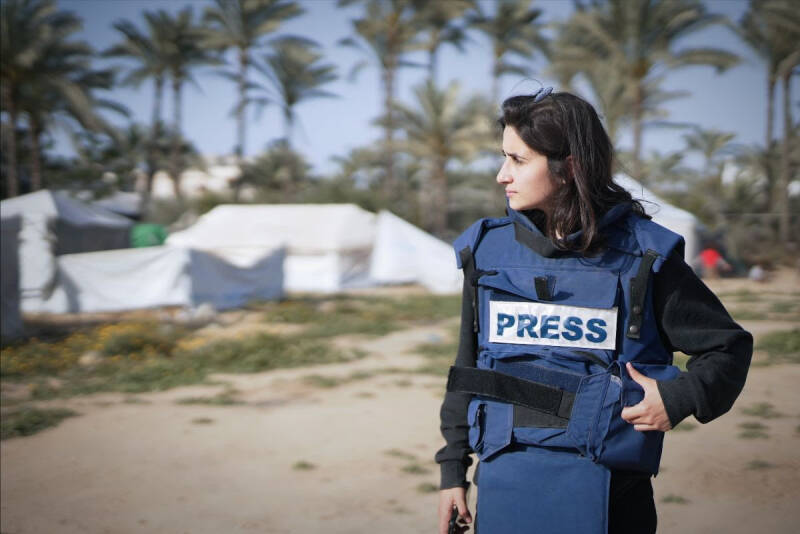
Ik werd geen journalist uit ambitie, maar uit noodzaak. Iemand moest vertellen wat er gebeurde.
Waarom ik hier ben
Ik kreeg de kans om te vertrekken — een kans die miljoenen anderen nooit kregen. Juist omdat ik kon gaan, voel ik de plicht mijn stem te gebruiken.
Niet om medelijden te vragen, maar om actie te eisen.
Daarom zet ik mijn werk als journalist voort bij The Rights Forum.
Om de Nederlandse politiek te confronteren met haar medeplichtigheid.
Om gerechtigheid te eisen voor mijn volk.
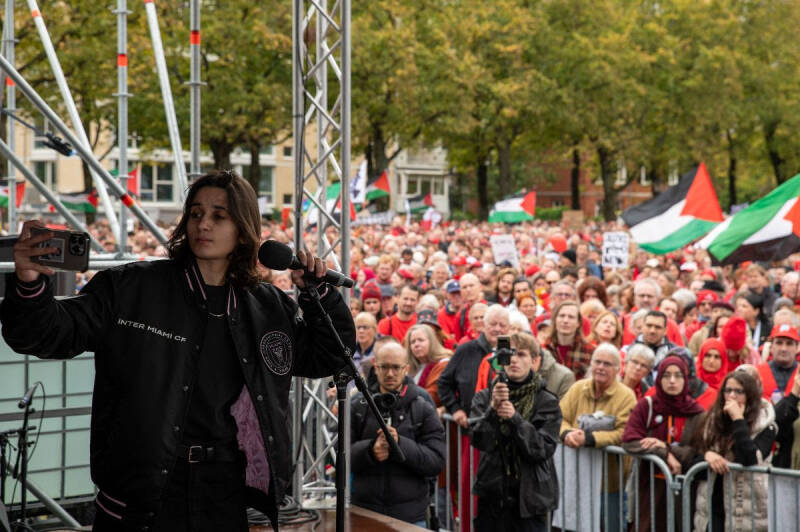
Op het podium van de Rode Lijn demonstratie op 5 oktober: “Hoeveel levens moeten er nog verloren gaan voordat de wereld handelt?”
De illusie van een staakt-het-vuren
Het ‘staakt-het-vuren’ dat is afgekondigd, is in werkelijkheid niets meer dan een illusie. De mensen zijn moe, hele steden zijn verwoest en er is niets meer over dan uitgeputte zielen.
Geen ziekenhuizen, geen gebouwen, geen leven – alleen puin.
De Westelijke Jordaanoever is inmiddels een weerspiegeling van Gaza vóór de genocide. Gaza blijft een openluchtgevangenis en een laboratorium om wapens te testen. Sinds het 'staakt-het-vuren' zijn honderden Palestijnen gedood.
Juist nu moeten we blijven strijden. Daarom doe ik een beroep op jou.The Rights Forum strijdt tegen bezetting, apartheid en genocide. In de rechtszaal, in de politiek en in het maatschappelijk debat.
Dat kunnen wij alleen doen dankzij de steun van onze donateurs.
Met jouw bijdrage kunnen wij:
■ doorgaan met rechtszaken tegen wapenexport en militaire samenwerking met Israël;
■ politici en bedrijven ter verantwoording roepen;
■ de verhalen uit Palestina blijven brengen — eerlijk, menselijk en ongecensureerd.Ik geloof dat we samen een verschil maken — dat solidariteit niet alleen een woord is, maar een daad.
2066.

17 december 2025
West Bank Monthly Snapshot
Casualties, Property Damage and Displacement
November 2025


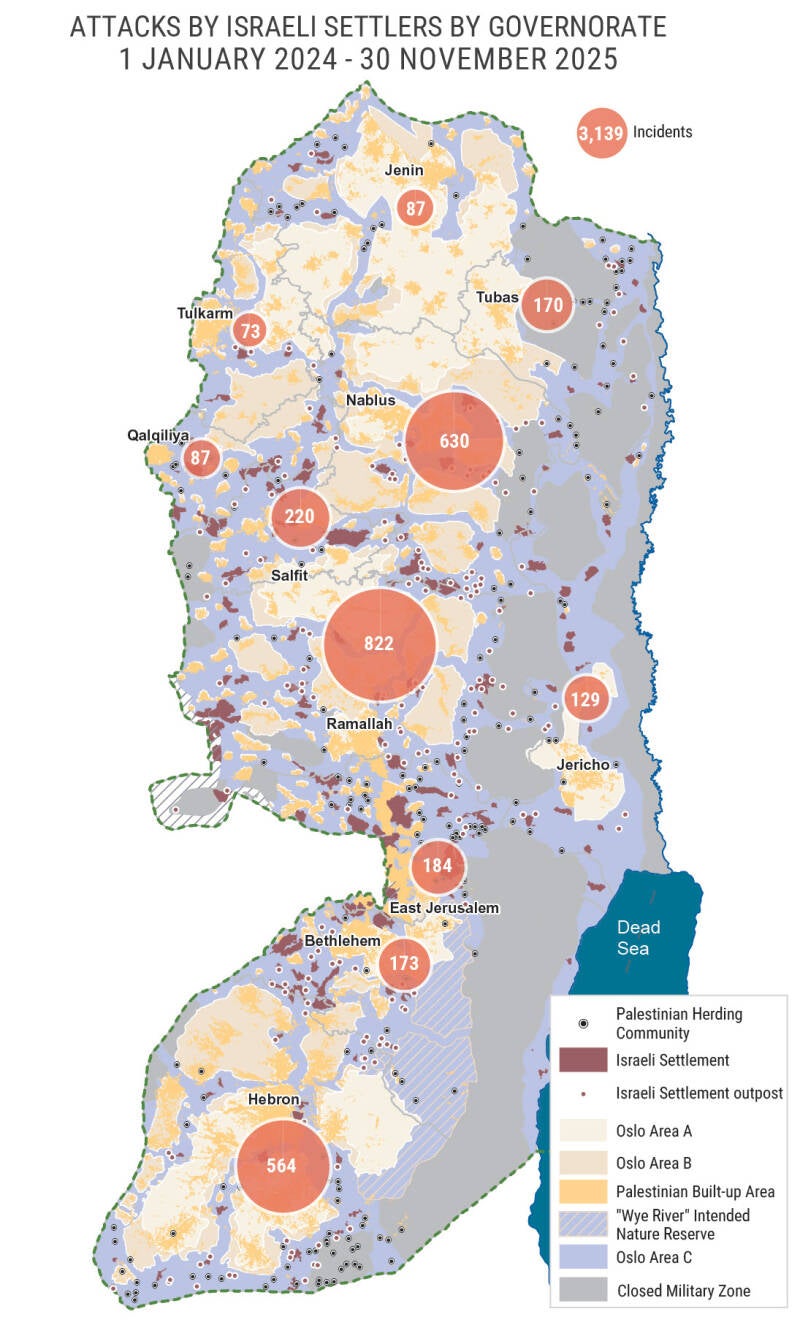
*Disclaimer:
- This report reflects information available as of the time of publication. The most updated data and more breakdowns are available at ochaopt.org/data.
- In Israel, 14 Israelis were killed by Palestinians from the West Bank in attacks that also resulted in the killing of 6 Palestinians (January 2024 - October 2025); and a Palestinian was killed in an attack by Israelis in West Jerusalem in May 2025. These are counted separately, as this report covers incidents that took place in the West Bank.
- Casualties in the West Bank have been documented by OCHA since 2005, settler violence since 2006, and demolitions and displacement since 2009.
- Palestinians or Israelis whose immediate cause of death or the perpetrator’s identity remain disputed, unclear, or unknown, are counted separately, so are casualties as a result of “friendly fire” and Palestinian prisoners from the West Bank who have died in Israeli custody. Figures also do not include UXOs, mishandling of weapons, hit-and-run incidents, internal Palestinian clashes, and incidents where the perpetrator's nationality is disputed.
2065.
17 december 2025
Yesterday, Trump banned Palestinians from traveling to the U.S. The administration issued a full travel ban on Palestinians and other country, which means that all Palestinian passport holders can no longer enter the U.S. Our Executive Director Issa Amro visited the U.S. earlier this year, but now he will not be able to travel back in the foreseeable future.
Would you like to meet Palestinian Human Rights Defender Issa Amro? Even if you can't make it all the way to Hebron, we are hosting a webinar where you can hear from Issa himself and get the chance to ask him questions. Even though Issa can no longer travel to speak in America, you can all still speak with him!
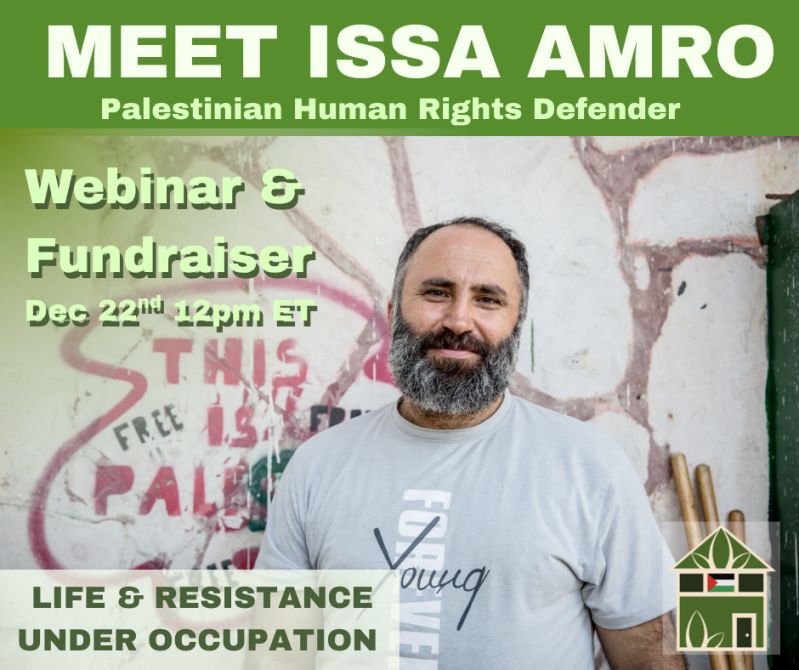
Ahmad Film House
We have opened our new community cinema! Ahmad Film House is a space where local Palestinians and internationals can come together to screen movies and documentaries.
We will also begin a project to train and encourage local Palestinians, specifically including women and children, to create their own short films to document their lives and tell their stories. Ahmad Film House is a place of education for both internationals and local Palestinians, and a way to build resilience among the residents of the area who are struggling to remain in their homes in the face of harsh conditions imposed on them.
On December 2nd, we launched an opening of Ahmad Film House, named in honor of our lost friend and brother Ahmad Amro. We invited locals and internationals to join us in screening a preview of the upcoming documentary Issa's House. We celebrated the beginning of Hebron's new and only cinema and we are now raising funds to help fully equip it and keep it running as a cinema community space.
For those of you who are currently in Palestine, you are invited to join us on December 25th for a movie screening of the satirical "Coexistence, My Ass," an award winning documentary film starring Noam Shuster, a long time activist in Israel-Palestine.
This coming year, we are also working on finding even more opportunities for showing the 'Om/Mother photo exhibition. Women from the restricted area of Tel Rumeida were given analogue cameras to document their lives, creating an assemblage of ephemeral private moments that showcase the power and value of life while living under occupation. This year, we exhibited their work both locally and internationally and organized for the women themselves travel to the opening of the exhibitions, see their work exhibited and giving speeches about their lives.
Until Next Time
Please stay in tune for any new updates on the situation and on our work. We are looking forward to seeing you next time—and to see you in Hebron one day.
2064.

16 december 2025
Islamophobia Won’t Silence Palestinian Advocacy, Nor Hide Israel’s Crimes
[WASHINGTON D.C., DECEMBER 16, 2025] — Americans for Justice in Palestine Action (AJP Action) condemns the escalating use of Islamophobic tactics by American Zionist organizations, far-right figures, and allied lawmakers who are deliberately targeting American Muslims to deflect attention from Israel’s genocide in Gaza and its ongoing apartheid and military occupation of Palestine.

Reporting by Drop Site News recently uncovered that Israel’s own Ministry of Foreign Affairs has commissioned extensive message-testing after their internal research showed that large segments of the global public now view Israel as a genocidal, apartheid state. Rather than addressing the mass killing, starvation, and genocide of Palestinians in Gaza, the research identified fearmongering about “Radical Islam” as the most effective way to blunt criticism and regain political support. This confirms what Palestinian advocates have long stated: Islamophobia is being deliberately weaponized as a public-relations shield for genocide, apartheid, and occupation.
Israel and the Zionists' use of Islamophobia and criminalization of pro-Palestinian advocates is nothing-short of an admittance of guilt. Since they cannot justify their actions to the broader public, they have chosen to distract from their actions and have sought to suppress the First Amendment rights of Americans. As outrage over Israel’s war crimes grows, its defenders are increasingly pivoting to Islamophobia and the criminalization of Palestinian advocacy to avoid accountability.

Recent calls by U.S. lawmakers for the mass expulsion, deportation, and collective punishment of American Muslims exemplify this dangerous turn. These remarks are overtly dehumanizing and racist; they portray Muslim communities as an internal threat rather than as citizens exercising constitutionally protected rights.
AJP Action has witnessed this tactic firsthand. During AJP Action and American Muslims for Palestine (AMP)’s joint lobby day in October, far-right extremist Laura Loomer launched Islamophobic attacks against Muslim advocates engaged in constitutionally protected advocacy in Washington, D.C., seeking to delegitimize Muslim political participation and intimidate communities demanding justice for Palestine. The incident reflects a broader pattern in which Islamophobia is used to silence dissent, suppress civic engagement, and deflect accountability for Israeli state violence.
Let us be clear: criticism of Israel is not about religion. It is about accountability for genocide in Gaza, illegal settlements, apartheid laws, and decades of military occupation. No amount of Islamophobic fearmongering will erase Israel’s responsibility for mass civilian death, forced displacement, and the systematic destruction of Palestinian life.
AJP Action rejects the attempt to pit Jewish safety against Muslim existence, or to frame Palestinian advocacy as extremism. American Muslims, Palestinians, and their allies have the full constitutional and human right to speak, organize, and demand an end to U.S. complicity in Israel’s crimes without being smeared, surveilled, or threatened.
These tactics are failing. The truth about Israel’s actions in Gaza is no longer containable, and scapegoating Muslims will not stop the growing global movement for Palestinian freedom, dignity, and self-determination.
In solidarity,
Americans for Justice in Palestine Action
2063.

16 december 2025
Calling for US$4.06 billion to fund
humanitarian response in the Occupied Palestinian Territory in 2026
16 December 2025
We are writing on behalf of the Humanitarian Country Team in the Occupied Palestinian Territory to announce the release of the Flash Appeal for 2026.

The appeal reflects the needs and resources requirements identified through discussions with Clusters, UN Agencies, international and national NGOs, and the Red Cross/Red Crescent Society in collaboration with Palestinian line ministries.
The United Nations and its partners estimate US$4.06 billion is required to deliver time sensitive, life-saving support to 3 million people in need of humanitarian assistance across OPT in 2026.
The priority in the Occupied Palestinian Territory (OPT) is to scale up the humanitarian response, capitalizing on any improvement in access conditions to prevent further loss of life, morbidity, and trauma. The response aims to deliver life-saving assistance and ensure appropriate protection mitigation and response across Gaza and the West Bank. This will be done by leveraging the comparative advantage, systems and structures of the United Nations-coordinated system, NGO partners, community networks, logistics and distribution systems.
While there have been improvements in the volume of supplies brought into Gaza and the ability of aid actors to expand the delivery of critical services since the ceasefire took effect on 10 October, humanitarian actors continue to face a range of bureaucratic impediments, access restrictions, and anti-UN rhetoric, which collectively constrain humanitarian space and the ability to operate at scale.
Genuine efforts to enable humanitarian assistance to and throughout the Occupied Palestinian Territory (OPT) will require full compliance by parties with international humanitarian law, including the protection of civilians, and critical changes in the operating environment.
Best regards,
OCHA Team
2062.

16 december 2025
As we gather around tables with family and friends this holiday season, many of us will also find ourselves in those gaslighting conversations about Palestine: “From the river to the sea is a call for genocide” or “Solidarity with Palestine is inciting antisemitism crimes”.
These are typical logical fallacies—bad faith questions, distorted arguments, false binaries, and reductionist claims designed to obstruct meaningful conversation and often justify a colonial ideology and excuse genocidal acts.
With our Communicating Palestine Guide, we’ve got you covered with explainers and tools to recenter the conversation where it should be: on reality and the moral clarity to fight for justice, freedom and dignity.
For a full breakdown of common fallacies, examples, and practical tips to respond:
Explore our Tackling Fallacies Tool
Your Holiday Tips to Tackling Fallacies:
1. Name the fallacy: Call out the tactic, which is often rooted in racist assumptions.
2. Reject the premise: Don’t accept distorted starting points or questions designed to trap or mislead.
3. Recenter the conversation: Bring the focus back to the facts, context, and assymetries or inequalities
4. Avoid defending yourself: Deflection personalises the issue; always return to the structural.
5. Don’t attack back: Avoid focusing on the person deploying the fallacy and engaging in a personal attack.
6. Stay grounded: Keep your message authentic, unapologetic, and rooted in justice.
We are changing the face of Palestinian diplomacy, for a stronger, organized and influential Palestinian liberation movement internationally. Your ongoing support is critical to sustain our impact and remain independent.
2061.

16 december 2025
Gaza Humanitarian Response
Situation Report No. 47
15 December 2025
(As of 18:00 on 14 December 2025, unless otherwise noted)
HIGHLIGHTS
- The Bani Suhaila Mekorot water pipeline in Khan Younis has been repaired after access was granted for teams to carry out repair work. (SitRep #45 refers)
- Partners providing water and sanitation services deployed 15 mobile wastewater pumps to flood-prone hotspots and carried out earthworks, including embankments, temporary drains, and sandbagging to reduce localized flooding. Nonetheless, a shortage of jetting and vacuum trucks continues to constrain the overall response.
- Stock limitations have led Food Security Sector partners to reduce the size of monthly food rations distributed to households.
SITUATION OVERVIEW
Between 13 and 14 December, reports of airstrikes, shelling, and gunfire continued east and west of the so-called “Yellow Line.” In North Gaza, gunfire was reported east of Jabalya and Al Fallouja, killing one person, while airstrikes and naval fire were reported near As Sudaniya area. In Gaza city, shelling and airstrikes reportedly hit At Tuffah and Az Zaitoun, including a strike near Al Nablusi Square that killed four people in a vehicle, including a senior Hamas commander, while one individual was killed and 25 others injured in the immediate area of the airstrike. In Deir al Balah governorate, shelling and helicopter fire were reported in Al Bureij area, and a senior Hamas officer was reportedly killed in Al Maghazi. In Rafah, gunfire and airstrikes were reported in Rafah city, northern Rafah, and south-west of Al Mawasi area, with naval fire reportedly injuring one person off the coast.
According to the Gaza Ministry of Health, 11 people were killed and 51 others injured in the last 48 hours.
Since 11 December, heavy rainfall has resulted in multiple casualties. The World Health Organization said that thousands of families are sheltering in tents that offer little protection from harsh winter conditions, significantly increasing the risk of acute respiratory infections, hepatitis, and diarrheal diseases due to exposure and inadequate water and sanitation. The agency added that it continues to face challenges in bringing essential laboratory reagents and diagnostic equipment into the Strip, as many items are denied entry for being classified as dual-use.
On 13 December, the Site Management Cluster (SMC) reported deteriorating conditions across the Gaza Strip due to heavy rainfall and cold temperatures. Approximately 465 families (more than 2,700 people) are currently sheltering in makeshift tents within Designated Emergency Shelters (DESs), as living conditions continue to worsen for the most vulnerable. The SMC is conducting daily monitoring and reporting of flood-related incidents across managed sites. As of 14 December, 61 sites have been affected, impacting around 30,000 people. The scale of this winter’s flooding is severe, with widespread damage likely affecting hundreds of thousands in high-risk areas; however, actual figures may be higher due to limited coverage. Of the affected sites, 26 are in Deir al Balah, 25 in Khan Younis, and 10 in Gaza city. Reported damage includes torn tents affecting 39 families, the destruction of 32 tents due to strong winds, two reported injuries, and the displacement of 16 families.
UNITED NATIONS-COORDINATED AID ENTRY*
On 14 December, at least 2,545 pallets of aid administered by the UN and its partners were offloaded at Gaza’s crossings, based on data retrieved from the UN 2720 Mechanism dashboard at 17:00 on 15 December. About 68 per cent of these pallets contained food supplies, with the other largest quantities being water, sanitation and hygiene items (10.5 per cent), shelter (8 per cent) and health supplies (6 per cent). At least 70 truckloads were offloaded at Kerem Shalom Crossing and 37 at Zikim Crossing.
Between 12 and 14 December, UNOPS international monitors verified the collection of at least 10,076 pallets of aid; 8,960 from Kerem Shalom Crossing and 1,116 from Zikim Crossing. These comprised inter alia 7,207 pallets of food assistance, including flour, rice, date bars, fortified biscuits, food parcels, canned food, sugar, canned chickpeas and salt; 878 of medical items, including medicines, consumables, laboratory supplies, orthopedic supplies and adult diapers; 572 of tents and tarpaulins; 493 of blankets; and 457 of WASH supplies, including water tanks, hand-washing stations, soap, buckets and bins.
Overall, between the announcement of the ceasefire on 10 October and 14 December, at least 166,155 pallets of humanitarian cargo were offloaded, and 146,832 pallets collected from the various crossings. Only two per cent of all uplifted aid was intercepted during transit within Gaza.
The above data excludes bilateral donations and the commercial sector.
Between 13 and 14 December, 10 out of 12 humanitarian movements inside Gaza requiring coordination with the Israeli authorities were facilitated. A mission to the UN Logistics Base in Rafah faced delays in receiving green light and then had to be partially aborted as a segment of the road was inaccessible. One mission to assess wastewater treatment facilities in Al Bureij, Deir al Balah, was denied outright.
HUMANITARIAN RESPONSE
The below are preliminary updates shared by Clusters at the time of reporting and will be reconciled and aggregated in the coming days as Clusters receive more data from the capillary network of partners active on the ground.
Food Security
-
-
- As of 13 December, Food Security Sector partners had assisted more than 80,000 families (about 400,000 people) with general food distributions as part of the December monthly food assistance cycle. Since 12 December, due to limited stock caused by ongoing impediments across supply corridors, partners have been unable to maintain the standard family ration of two food parcels and one 25-kilogram flour bag (covering 75 per cent of minimum caloric needs). For the remainder of the month, the ration has been reduced to one food parcel, one flour bag, and 1.5 kilograms of high-energy biscuits, covering approximately 50 per cent of minimum caloric needs per family.
- On 13 December, 7.6 kilograms of high-energy biscuits per household were distributed to more than 1,000 families who were affected by the rainstorm and referred by Shelter Cluster partners.
- On 14 December, the distribution of veterinary kits resumed after being temporarily paused due to adverse weather conditions between 10 and 13 December. Since the start of the distribution on 9 December, approximately 400 herders have received kits along with fodder.
-
Water, Sanitation and Hygiene
-
-
- In Khan Younis, the Bani Suhaila Mekorot water pipeline was repaired after access to the facility was granted by the Israeli authorities and the team was able to repair the damage (SitRep #45 refers). The Al Satar reservoir is now supporting water trucking operations as of 15 December.
- WASH partners have deployed 15 mobile wastewater pumps to flooded hotspot areas across the Strip, while earthworks such as embankments, temporary drains, and sandbagging are underway to reduce localized flooding.
- Stormwater, drainage, and wastewater systems are being cleared in anticipation of further floods on 15 December, though efforts are limited by the shortage of jetting and vacuum trucks.
- A temporary medical waste control facility is now operational in Gaza city at the Sheik Eileen wastewater treatment site within the Netzarim corridor. Cluster partners have secured 106,000 square metres of land in the Netzarim area to establish the Abu Jarad Controlled Dumping Site, which will receive approximately 300,000 cubic metres of waste from Feras and Al Yarmouk dump sites, along with 1,500 cubic metres of daily waste from Gaza city and the North Gaza governorate.
-
Shelter
-
-
- Between 11 and 13 December, Shelter Cluster partners distributed 3,800 tents, 4,590 tarpaulins and more than 9,400 bedding items to around 4,800 families across the Gaza Strip.
- Shelter stock inside Gaza remains critically limited. The recent delivery of approximately 2,400 tents has increased the total stock to an estimated 6,000–7,000 tents, which are scheduled for immediate distribution to priority locations.
-
Protection
-
- Protection services largely remained operational despite severe weather and access constraints, with continued delivery of risk education, psychosocial support, psychological first aid, and community-based protection activities across Gaza city, North Gaza, and Deir al Balah. Protection activities, including emergency winterization and Mental Health and Psychosocial Support (MHPSS) interventions, are being scaled up across the Gaza Strip.
- Between 13 and 14 December, protection partners reached 12,200 people with emergency winterization and in-kind assistance, such as clothing, blankets, and menstrual hygiene products, 420 with cash assistance linked to protection vulnerability, while over another 400 participated in adult group-based psychosocial support sessions. MHPSS activities reached 1,246 people, and 450 people accessed disability rehabilitation services. Risk education was provided to 281 people, and 182 people participated in community-based protection activities. Psychological first aid was provided to 119 adults and caregivers, and 47 people received individual psychosocial counseling. Case management services supported 74 active cases across both days, and four cases were referred for further protection assistance.
- Heightened protection risks linked to winter conditions and shelter damage were reported, including psychological distress, exposure to cold, and poor living conditions in tents. Operational strain intensified due to delays in essential supplies, limited safe spaces, staff workload and burnout risks, and logistical constraints.

- Child Protection
- Between 13 and 14 December, Child Protection partners continued scaling up life-saving winterization support in storm-affected areas, delivering around 30,000 winter clothing kits to vulnerable children. Blanket distributions were expanded, with approximately 50,000 blankets dispatched for community use, including 18,000 allocated to 10 key hospitals to meet urgent needs.
- To address shelter and protection concerns, about 1,500 high-quality family tents were distributed to families with children, including 300 provided immediately after the storm to households directly affected. Partners continue to identify and assist children at risk, supporting 200 children - around 50 with disabilities or conflict-related injuries - through established referral pathways for critical social services. Mental health and psychosocial support activities have reached at least 5,000 children and 1,500 caregivers.
- Damage to child-friendly and safe spaces has been reported due to the recent storm, and assessments are underway to resume services safely. There is an urgent need for assistive devices for children with disabilities and recreational kits to strengthen MHPSS activities in communities and safe spaces.
- Mine Action
- On 14 December, Mine Action partners conducted one Explosive Hazard Assessment in Deir al Balah in support of rubble removal efforts, while Explosive Ordnance Risk Education (EORE) continued across three governorates: Gaza city, Deir al Balah and Khan Younis.
- On the same day, a Training of Trainers on EORE was conducted for multiple humanitarian agencies.
Education
- Between 12 and 14 December, 13 new Temporary Learning Spaces (TLS) were established, accommodating approximately 5,000 school-aged children. This brings the total number of operational TLS across the Strip to 405, serving around 226,400 learners. Despite this progress, demand remains extremely high, as current coverage represents only 34 per cent of the school-aged population.
- The recent heavy rains have significantly affected the learning environment, with at least 25 TLS affected, disrupting learning for 4,027 children. While partners are aware of flood mitigation measures, their ability to reduce the impact remains limited due to resource constraints and the location of some TLS in flood-prone areas. Efforts are ongoing to repair damaged sites and reopen them as quickly as possible.
Site Management Cluster
- In response to the impact of the recent floods due to heavy rainfalls, residents in 27 flood-affected locations were mobilized for community-driven maintenance, clearing blocked water channels, placing sandbags around tents to prevent water intrusion, and coordinating with municipal authorities to unblock sewage lines in Designated Emergency Shelters.
- SMC partners implemented flood mitigation measures, including using recycled flour sacks as sandbags and deploying winter and site improvement toolkits to support over 100 sites, including those outside direct SMC management.
Emergency Telecommunications
- On 14 December, the Emergency Telecommunications Cluster (ETC) delivered Basic Security Communications training to seven UN Security Management System personnel in Deir al Balah, strengthening their ability to communicate effectively during field missions. So far in 2025, 50 staff from five UN agencies have completed the training, with additional sessions planned.
2060.

15 december 2025
The fight against genocide is not over.
Since the October 10th ceasefire deal, Israel has killed hundreds of Palestinians in near-daily attacks—while advancing plans that entrench U.S. and Israeli domination in Palestine.
And yet, the movement for Palestinian freedom is more powerful than ever.
For decades, the dam that upholds Israel’s apartheid regime has held—built on lies, surveillance, military power, and the silence of complicit governments.
Now, that dam has finally cracked.
At Adalah Justice Project, my focus is turning this historic moment into long-term political power. We’re equipping social justice movements with strategy, research, and coordinated campaigns that can transform public outcry into concrete change. In ten years, we can build enough people-power to stop mass harm before it starts.
But to do that, I need a commitment from you.

2060.

15 december 2025
Did you know JVP just launched two new media projects, giving a platform to anti-Zionist Jews and allies fighting for a free Palestine?
Now, we want to hear from you to know the best way to keep you updated on JVP and the wider movement.
How would you prefer to get your news about Palestine and the Palestine solidarity movement?
I like to listen to the newsI want to hear insights from JVP leadershipI like to read the news
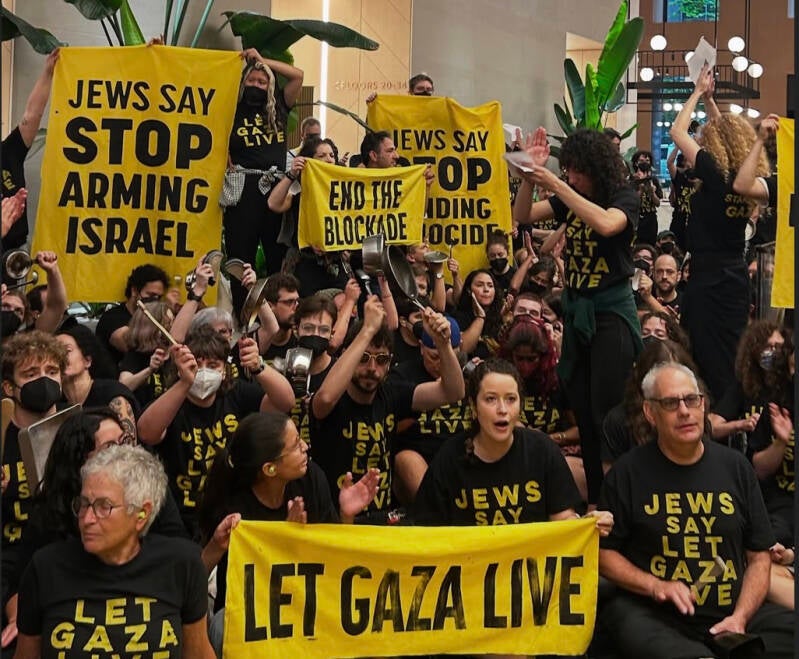
For the last few years, I’ve watched as the mainstream media has failed to report the truth: dehumanizing Palestinians, denying and minimizing Israeli war crimes, and downplaying the vast numbers of U.S. Jews standing in opposition to genocide.
It’s no surprise that our voices are being ignored by the corporate media. So much of it is directly aligned with right-wing interests, from the Jeff Bezos-owned Washington Post to CBS appointing the rabidly anti-Palestinian Bari Weiss as its new Editor-in-Chief.
Now more than ever, establishing and supporting independent media outlets is critical to making our voices heard. The Voice Memo, JVP Radio, and The Wire are of the movement and for all of us.
Onwards,
Liv Kunins-Berkowitz
Sr. Media Coordinator
2059.
15 december 2025
I know many of us are carrying an immense amount of anger and heartbreak as we continue to watch Gaza and the rest of occupied Palestine endure unimaginable violence. It’s easy to feel overwhelmed, frustrated, and even helpless. These past few years have been devastating, but they have also revealed something powerful: a growing global movement built on the conviction that real change comes from purposeful, strategic action.
We, the people, refuse to accept the world that the powers-that-be are trying to impose: a world where genocide can be live streamed and met with silence, where human rights protections and international law are ignored, where brutality is rewarded and might makes right. That world is not only immoral; it is dangerous for all of us.
This is why Eyewitness Palestine’s work matters so deeply, and why I’m asking you to support it today. When people are given the opportunity to witness the truth—and the tools to act on it—they feel empowered to change the world.
The movement for Palestinian liberation is growing stronger, and Eyewitness Palestine has been central to that growth. Since last year, EP has led a medical mission to Gaza and organized four delegations to the West Bank and '48 Palestine, bringing mental health practitioners, organizers, educators, and elected officials to witness the realities on the ground, provide material support, and build direct relationships with communities living and resisting under brutal military occupation and settler-colonial rule. These experiences transform helplessness into clarity, and clarity into action.
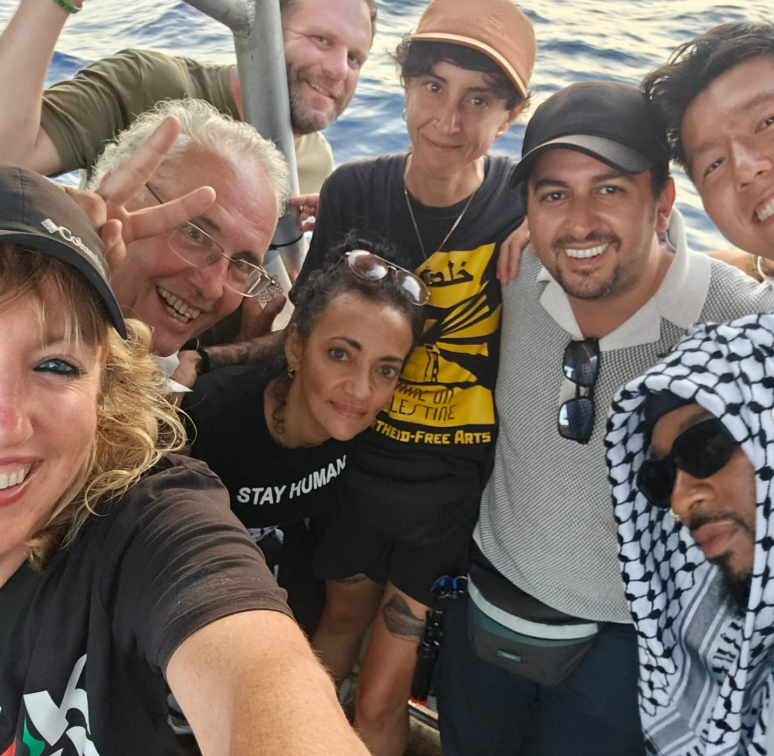

Onboard the 'Handala' Gaza Freedom Flotilla
The impact of witnessing the truth is undeniable. Public understanding of Israel’s system of oppression—and of U.S. complicity in it—is deeper than ever before. Delegates return home energized, informed, and ready to organize their communities. More than 2,000 people have now traveled to Palestine with EP, returning home informed, energized, and ready to organize. Each delegate becomes part of an expanding network of solidarity that is shifting public discourse and fueling collective action across the country.
Eyewitness Palestine is poised to do even more in 2026, but they need our support.
If you believe in this movement, in the power of witnessing, and in the necessity of truth-telling, I ask you to donate today. Your support sustains the organizing, education, and solidarity work that moves us closer to freedom and justice for Palestine. Israel invests billions of dollars in propaganda to manufacture consent and obscure its crimes. You and I push back every day with our hearts, our minds, and with the truth. And today, by supporting Eyewitness Palestine, we can take concrete action to amplify our impact.
Together, we refuse silence. Together, we build power. Together we keep going until Palestine is free.
2058.

14 december 2025
Across the country, JVP chapters and our partners are organizing to demand their state and municipal fund managers divest from and do not reinvest in Israel Bonds — essentially investments in Israeli genocide and apartheid.
How much do you know about recent Israel Bonds victories? Let us know which state just divested from Israel Bonds:
North Carolina Michigan Minnesota All of the above
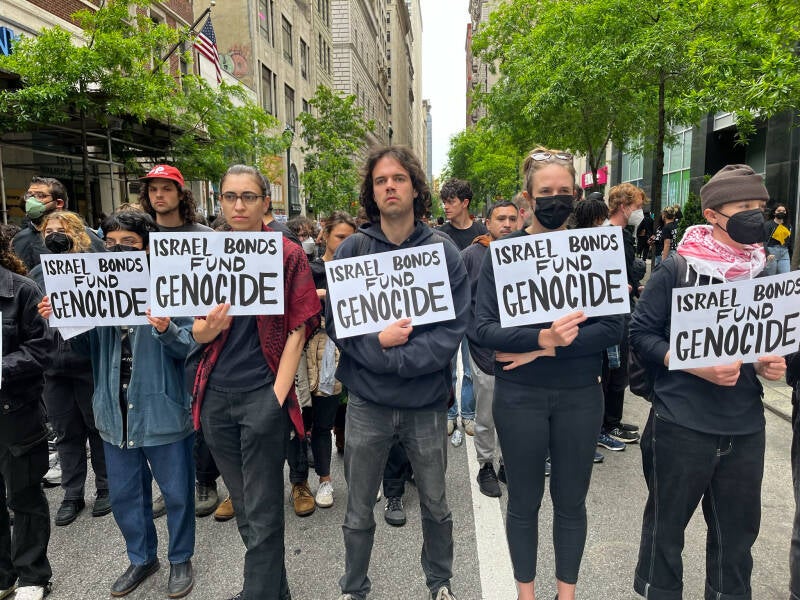
This organizing targets the engine enabling Israel’s violence against Palestinians: material support from our own institutions in the U.S. And the momentum is growing.
The movement is proving that divestment is a winnable goal, and providing crucial lessons in strategy as we scale up our fight even further.
Recent wins could pave the way for bigger divestment victories, such as the ongoing fights in New York State, Ohio, and Miami-Dade County, where Israel Bonds holdings all total in the hundreds of millions of dollars.
It’s no coincidence that the genocidal Israeli government and its allies in the U.S. have fought our divestment efforts tooth and nail for decades. They’re fighting us this hard because divestment cuts off critical financial support for the Israeli state, and it sends a powerful message that impunity for Israel’s crimes is coming to an end.
Onwards,
Dani Noble
Campaigns Manager
2057.

14 december 2025
This year, our community of dedicated supporters came together to fund a powerful movement—a movement rooted in our vision of a free Palestine and ending all U.S. military funding to Israel.
Just last month, over 90 local organizers from across the country gathered in Dallas for USCPR’s fourth annual Palestine Local Campaigns Convening. Supported by generous donors like you, the convening built new relationships among organizers, strengthened grassroots groups in key cities, and refined strategies on divestment and corporate pressure campaigns.
Through USCPR’s Youth Fellowship program, we continued investing in the next generation of grassroots leaders. In 2025, 18 organizers joined our fellowship program where they learned key skills and strategies to strengthen campaigns in their communities around the U.S.
Building on years of united divestment work, USCPR focused this year on basebuilding with environmental justice activists and faith communities to amplify the call to boycott Chevron. This BDS campaign exposes Chevron’s complicity in climate destruction and Israel’s genocide of the Palestinian people.
Over the past year, we’ve also activated thousands of supporters to take action against Maersk, which has shipped millions of pounds of U.S. military cargo to Israel.
Together, we’re shifting the narrative and building the people power we need to move dollars away from the genocide machine.
To learn more about what your support has helped us accomplish, please review our online Annual Report. As you read through it, I hope you’ll feel as proud as I do of all that we’ve accomplished together.
READ USCPR'S 2025 ANNUAL REPORT
2056.

14 december 2025
Gaza Humanitarian Response
Situation Report No. 46
13 December 2025
(As of 18:00 on 12 December 2025, unless otherwise noted)
HIGHLIGHTS
- Since 12 December, Food Security Sector partners started providing more than 5,000 cooked meals at 30 displacement shelters and sites affected by the rainstorm in Gaza city, Deir al Balah, and Khan Younis.
- Flooding at the Nasser Medical Complex temporarily relocated patients and disrupted services in the Internal Medicine Emergency Department.
- Since the ceasefire came into effect, 51 heath service points were newly established or resumed operations across the Gaza Strip.
- The International Medical Corps field hospital in Gaza city has recently finished installing all its 200 beds, providing surgical, medical, pediatric, neonatal, and maternal care, as well as integrated primary healthcare services.
SITUATION OVERVIEW
On 12 December, reports of airstrikes, shelling and gunfire continued both west and east of the so-called “Yellow Line,” including towards Jabalya An Nazla in North Gaza, where one Palestinian was reportedly killed, and in Ash Shuja’iyeh and At Tuffah areas in Gaza city, east of Al Bureij camp in Deir al Balah, east and south-east of Khan Younis, and Rafah city and other areas of the governorate.
In North Gaza, several already-damaged buildings in Beer An Naaja area collapsed due to heavy rainfall, with multiple casualties reported. Similar building collapses were reported in Beit Lahiya and as well as in the Ash-Sheikh Radwan and Ar-Rimal neighbourhoods of Gaza city.
UNITED NATIONS-COORDINATED AID ENTRY*
On 12 and 13 December, all Gaza’s crossings were closed for offloading cargo.
Collection of humanitarian cargo from the platforms into Gaza, however, proceeded. While no comprehensive information is available yet, at least 330 pallets of post-partum and dignity kits were uplifted from Kerem Shalom Crossing, alongside 44 truckloads of wheat flour and food rations from Zikim Crossing. Both cargo collection missions, as well as the deployment of UN2720 international monitors to the Kerem Shalom and Zikim crossings, were facilitated by the Israeli forces during the reporting period.
The above data excludes bilateral donations and the commercial sector.
HUMANITARIAN RESPONSE
The below are preliminary updates shared by Clusters at the time of reporting and will be reconciled and aggregated in the coming days as Clusters receive more data from the capillary network of partners active on the ground.
Health
- Several health facilities have been affected by heavy rainfall. For example, flooding at Nasser Medical Complex’s Internal Medicine Emergency Department required the temporary relocation of patients and services to the hospital’s main building, placing additional pressure on other departments until dewatering is completed and a longer-term solution is identified. The Health Cluster is working closely with the WASH Cluster to address this issue.
- Since the ceasefire announcement on 10 October, health partners have scaled up operations, with 51 Health Service Points (HSPs) re-opened or newly established across the Gaza Strip, including 33 in Gaza city and the North Gaza governorates.
- During the first week of December, health partners provided approximately 183,000 consultations across the Gaza Strip, over 15 per cent of them in the north.
- The new International Medical Corps field hospital in Gaza city has recently installed its maximum capacity of 200 beds, providing surgical, medical, pediatric, neonatal, and maternal care, accommodating up to 45 deliveries per day. Services are supported by a Level II Neonatal Intensive Care Unit with eight incubators, a 20-bed pediatric inpatient unit, a 10-bed Stabilization Centre, a 16-bed ICU and a high-dependency unit, and three operating theatres. The facility also delivers integrated primary health care services, including treatment of non-communicable diseases through a dedicated clinic, physiotherapy, mental health, and protection services.
- While denial rates for Emergency Medical Teams (EMTs) have decreased to 20 per cent, down from 40–50 per cent previously, significant challenges remain due to limited infrastructure and shortages of specialized equipment and supplies, which continue to constrain the ability to perform complex procedures and specialized care.
Food Security
- Bread production and distribution continue to improve through 19 UN-supported bakeries producing around 180,000 2-kilogramme bread bundles daily, complemented by more than 420,000 loaves from one partner. The bread is distributed either for free to more than 400 shelters and community sites or sold via more than 110 contracted retailers at a subsidized price of 3 NIS (US$0.92) per bundle.
- Since 12 December, partners have begun providing more than 5,000 cooked meals at 30 displacement shelters and sites affected by the rainstorm in Gaza city, Deir al Balah and Khan Younis, in addition to ongoing daily cooked meal provision in other locations. Most of the partners’ kitchens that were temporarily closed due to severe weather conditions on 11 December resumed their operations on 12 December.
Protection
- Child Protection
- On 12 December, approximately 800 children were reached through Mental Health and Psychosocial Support (MHPSS) activities delivered in community-based child-friendly and safe spaces. Approximately 50 at-risk children, including children with disabilities and conflict-related injuries, were identified and assisted to access critical child protection and social services through direct support, referrals, and follow-up mechanisms.
- Life-saving winterization assistance continued in areas heavily affected by recent storms, with around 200 children and their families reached with essential supplies, including tents, blankets, and winter clothing kits, helping to mitigate exposure-related protection risks.
- There remains an urgent need for assistive devices for children with disabilities, as well as recreational kits to improve the quality of MHPSS activities in communities and learning centres.
- Mine Action
- On 12 December, Mine Action partners conducted one Explosive Hazard Assessment in Gaza city in support of rubble removal efforts, while Explosive Ordnance Risk Education continued across three governorates: Gaza city, Deir al Balah and Khan Younis.
2055.
14 december 2025
Reservist refusers were historically the center of Israeli resistance to war and occupation, from the first Lebanon war to the second intifada. They’ve always been there: an internal wave to be reckoned with, a threat to all war efforts. However, over the last decade, few reservists refused publicly as the movement lost steam and coherence. After October 7thwe realized that we would not be able to end the genocide and the occupation without a strong reservist refuser movement. Many of my friends, in the midst of the nationalist uproar, were quick to join the reserves. But they also had doubts, fears, and questions about their service, especially as the genocide continued. From that we started to prepare and build the support infrastructure needed for reviving this movement, and to give resources to the sea of reservists who needed someone to give them a way out.
We started by working to establish “Ani Siravti”, a group of reservists who refused in 2003, and campaign about why they would refuse again. The goal was to seed the possibility that soldiers refuse. After a couple of months, it led to the first reservist's refusal letter and then the establishment of “Soldiers for the Hostages”, a group of soldiers who refused to take part in the war in Gaza. Before the ceasefire, they had over 365 public refusers, the highest number in decades. This resistance was one of the forces that brought the ceasefire. All that was possible due to the funding, strategising and emotional support they received from us, from you.
Now, we enter a new phase, using the momentum to sustain the movement and build it so there will always be a mass of reservist refusers to oppose wars, and to end the occupation. This phase is exciting and challenging, and we need to act fast; that is why we need your support. We need to build upon the existing infrastructure, keep refusers in the movement and continue to expand our circles. We plan to hire an organizer who will do exactly that, a refuser who will make sure the reservist refuser movement will always keep moving forward. We are asking for your support at this time because internal dissent is more important than ever. Help us seize this opportunity to challenge the Israeli war machine from within.
In solidarity,
Didi Remez
Executive Director
Refuser Solidarity Network
2054.

13 december 2025
Gaza Humanitarian Response
Situation Report No. 45
12 December 2025
(As of 18:00 on 11 December 2025, unless otherwise noted)
HIGHLIGHTS
- The Bani Suhaila Mekorot water pipeline in Khan Younis remains non-functional, with no possibility to assess and repair it due to repeated access denials.
- The heavy rainfall and flooding of 11 December affected over 1,800 people across 18 displacement sites, based on the latest community alerts received by the Site Management Cluster.
- At least 16 community kitchens affected by the rainstorm were temporarily closed.
- Partners leading on water, sanitation and hygiene services have been implementing emergency flood mitigation measures and dewatering interventions across numerous displacement sites, while distributing hygiene supplies to approximately 25,000 people.
SITUATION OVERVIEW
On 11 December, reports of airstrikes, shelling and gunfire continued across the Gaza Strip, including towards east of Gaza city, north-east of the Al Bureij camp in Deir al Balah, east and south-east of Khan Younis, towards Rafah city and in North Gaza in Jabalya where a strike reportedly hit a house resulting in the killing of one Palestinian and injury of five others.
Heavy rainfall contributed to the collapse or partial collapse of several buildings and residential structures in Gaza city that had been previously damaged by the hostilities over the past two years. In Ash Shati' (Beach) Camp, one person was killed due to a wall collapse.
On 10 December, the Site Management Cluster activated its community alert reporting system to monitor the impact of severe weather across the Strip. Alerts received on 11 December indicate that heavy rainfall and flooding affected over 1,800 people from 360 households in 18 displacement sites across all five governorates. The largest numbers were reported in Gaza city, followed by Khan Younis and Deir al Balah. Affected families urgently needed replacement tents, tarpaulins, and sealing-off kits. Site Management partners are distributing sandbags to reduce further flood risks, while rapid needs assessments and close monitoring are underway. The Shelter and Water, Sanitation and Hygiene (WASH) clusters are also proactively assessing and responding to needs (see below).
UNITED NATIONS-COORDINATED AID ENTRY*
On 11 December, at least 3,034 pallets of aid administered by the UN and its partners were offloaded at Gaza’s crossings, based on data retrieved from the UN 2720 Mechanism dashboard at 18:00 hrs on 12 December. About 47 per cent of these pallets contained food supplies, followed by shelter (24 per cent), water, sanitation and hygiene items (13 per cent), nutrition (9 per cent) and health (7 per cent). At least 115 truckloads were offloaded at Kerem Shalom and 33 at Zikim.
On the same day, UNOPS international monitors verified the collection of at least 4,414 pallets of aid, all from Kerem Shalom Crossing, as the Kissufim and Zikim crossings were closed and no uplifting took place there. These comprised inter alia 2,386 pallets of food assistance, including flour, date bars, rice, pasta, canned vegetables and chicken, and cooking oil, 429 of family tents, 80 of sealing-off kits, 399 of blankets, 223 of post-partum kits, 727 of hygiene supplies, including adult and baby diapers, shampoo, lice treatment, hygiene kits and hand sanitizer, 120 of jerrycans, water tanks and buckets, 30 of medical equipment.
Overall, between the announcement of the ceasefire on 10 October and 11 December, at least 163,745 pallets of humanitarian cargo were offloaded, and 140,545 pallets collected from the various crossings. Only two per cent of all uplifted aid was intercepted during transit within Gaza.
The above data excludes bilateral donations and the commercial sector.
On 11 December, three out of seven humanitarian movements inside Gaza coordinated with the Israeli authorities were facilitated. Two missions to Kerem Shalom Crossing faced impediments, including a delay of more than five hours in granting UN2720 international monitors access to the platform. Two other missions to collect humanitarian cargo and deploy UN2720 monitors to Kissufim Crossing were cancelled after the Israeli authorities notified that the crossing would remain closed that day.
HUMANITARIAN RESPONSE
The below are preliminary updates shared by Clusters at the time of reporting and will be reconciled and aggregated in the coming days as Clusters receive more data from the capillary network of partners active on the ground.
Food Security
- In the first 10 days of December, Food Security Sector partners reached 73,000 households (about 365,000 people) with the monthly cycle of general food assistance via 60 distribution points across the Strip. This represents 17 per cent of the 2.1 million people that partners aim to reach with household-level food distributions each month.
- As of 10 December, 1,571,000 meals continued to be prepared and delivered daily by 26 partners through 208 kitchens - 366,000 meals by 45 kitchens in the north and 1,205,000 meals by 163 kitchens in south-central Gaza.
- On 11 December, at least 16 community kitchens affected by the rainstorm were temporarily closed. Many partners’ staff and food item movement were also hindered or delayed due to the heavy rain.
- The distribution of veterinary kits that started on 9 December has been put on hold due to weather conditions since 10 December.
Water, Sanitation and Hygiene
- The Mekorot water pipeline from Israel in Bani Suhaila, Khan Younis, remains non-functional, as Israeli authorities again denied access to the site to assess and repair the damage.
- Following the heavy rainfall, WASH actors have been providing emergency services across numerous displacement sites across the Gaza Strip and remain on standby for immediate interventions as needed. In North Gaza, for instance, flood protection measures included sand embankments and trenching in the three displacement camps. Similar flood mitigation measures and dewatering interventions are ongoing also in the Gaza city and Khan Younis governorates. Priority gaps for the WASH response are the vacuum and jetting trucks that have been long-standing requests for entry into Gaza.
- Although water levels in Wadi Al Salqa rose by 70 cubic metres, no flooding affecting internally displaced people (IDPs) was reported, and most at risk displaced populations previously located downstream have been relocated.
- The Cluster continued to dispatch hygiene items to partners, including 4,000 dignity kits, 3,000 jerry cans, 2,000 soap bars of soap, chlorine and cleaning kits to support 25,000 people cumulatively.
Shelter
- Following the winter storm on 11 December, incident assessments are being conducted across different IDP sites to refer and assist families with immediate needs. In one day, Shelter partners reported reaching:
- 422 households in northern Gaza, of whom 264 received one tent each, 158 received one tent and four blankets each, and 222 received three tarpaulins each. This includes referred cases from the Beit Lahiya municipality affected by the latest storm.
- 896 families in Deir al Balah, including 651 that received a tent and two tarps each and 245 that received one tent and four blankets each.
- 359 households in Khan Younis, among them 131 received one tent and four blankets each, while another 228 households located on the shoreline in the Al Mawasi area received tents after their makeshift shelters were destroyed or severely damaged.
- Partners also distributed 2,115 tarpaulins to 705 households previously assessed as needing shelter assistance in Deir al Balah, and bedding kits to 394 households in Khan Younis.
Protection
- On 11 and 12 December, partners reached 1,150 people with Mental Health and Psychosocial Support (MHPSS) services and 121 people with legal support to obtain civil and housing, land and property rights related documentation. More than 1,200 consultations were conducted across community-based service points.
- In recent days, partners have been processing increasing requests for civil documentation, Sharia-related affidavits, and legal consultations, triggered by displacement and loss of documents.
- Child Protection
- On 11 December, despite weather-related disruptions, Child Protection partners distributed 10 emergency tents to high-risk protection cases with urgent shelter needs, 36 winter clothing kits and 50 menstrual hygiene management kits to adolescent girls and reached approximately 450 children and 400 caregivers with structured group MHPSS sessions. Between 11 and 12 December, over 250 caregivers and 200 children across the Strip were also reached through child protection awareness sessions focusing on protection risks, reporting mechanisms, and prevention of child–family separation.
- Mine Action
- On 11 December, Mine Action partners conducted one Explosive Hazard Assessment in Gaza city in support of rubble removal efforts, while Explosive Ordnance Risk Education continued across three governorates – Gaza city, Deir al Balah and Khan Younis.
2054.

12 december 2025
De Amerikaans-Palestijnse journalist Mariam Barghouti, die werkt vanuit Ramallah op de Westelijke Jordaanoever, is op uitnodiging van The Rights Forum in Nederland. Op zaterdag zit ze samen met de eveneens door The Rights Forum uitgenodigde Israëlische historicus Ilan Pappé in een door ons georganiseerd panel. We spraken haar alvast in een café in Den Haag.
Welke getuigenissen wil je in Nederland delen?
‘Het meest opvallende is de intensiteit van alles wat er gebeurt. Ik denk niet dat mensen beseffen hoezeer de Israëli’s zich gesterkt voelen. Niet alleen het leger, de milities, maar Israël als geheel, als samenleving. Het is zó gewelddadig op de Westelijke Jordaanoever – het is een weerspiegeling van Gaza vóór de genocide. Het is een openluchtgevangenis en een laboratorium om hun wapens op ons te testen.’

Mariam Barghouti spreekt op een conferentie in Londen, juli 2017. © Mark Kerrison via Alamy
Waarom greep en grijpt het westen niet in, niet in Gaza en niet op de Westoever?
‘Belangen. Economische belangen, oliepijpleidingen, wapenindustrie. Maar het is ook Europees antisemitisme. Want Israël werd opgericht vanwege Europees antisemitisme en wat Europa de Joden en andere groepen heeft aangedaan. Wij, Palestijnen, betalen de prijs. Als Europa stopt met het steunen van Israël, zal het met zichzelf in het reine moeten komen en moeten afrekenen met zijn racisme. Dat weigert Europa.'
Wat zou de internationale gemeenschap moeten doen als ze nu bij zinnen komt?
‘Ten eerste: een wapenembargo. Niet alleen het leger gebuikt de wapens die aan Israël worden geleverd maar de kolonisten ook steeds vaker, en die hebben geen hiërarchie en hoeven aan helemaal niemand verantwoordelijkheid af te leggen.
‘We hebben ook een systeem nodig waarin verantwoording wordt afgelegd. Hoe Netanyahu nog steeds wordt geaccepteerd in diplomatieke kringen, kan ik niet bevatten. En in het westen zouden volksvertegenwoordigers moeten luisteren naar hun kiezers, die zeggen dat ze hier geen onderdeel meer van willen zijn. Volksvertegenwoordigers moeten beginnen hun taak serieus te nemen.'
Lees het hele interview
Volg ons evenement met Mariam Barghouti en Ilan Pappé via livestream!
Ons evenement van aanstaande zaterdag was binnen een dag uitverkocht, waardoor veel geïnteresseerden helaas naast een ticket grepen. Gelukkig zal de lezing ook via livestream te volgen zijn. Onderaan deze pagina kunt u zich daarvoor aanmelden. Zaterdagochtend ontvangt u dan per mail de link naar de livestream.
Amerikaanse sancties maken leven Strafhofrechter onmogelijk – en Europa werkt eraan mee
Amerikaanse sancties maken de levens van rechters en aanklagers van het Internationaal Strafhof in Den Haag onmogelijk. Negen rechters en aanklagers van het Strafhof zijn getroffen door de sancties, onder wie hoofdaanklager Karim Khan. Het komt hoofdzakelijk als vergelding voor het aanklagen van Israëlische premier Benjamin Netanyahu en voormalig minister van Defensie Yoav Gallant.
De sancties verbieden het Amerikaanse bedrijven en personen om zaken te doen met of diensten te verlenen aan de Strafhof-medewerkers, waardoor veel simpele praktische zaken opeens onmogelijk worden.
‘Het is alsof je wordt teruggeworpen naar de jaren negentig’, zegt een Franse Strafhofrechter, Nicolas Guillou in een recent interview. ‘Amerikaanse bedrijven worden ingezet om rechters en openbare aanklagers te intimideren die zich inzetten voor gerechtigheid in hedendaagse gewapende conflicten.’

Het Internationaal Strafhof in Den Haag. © Aleksei Gorovoi via Alamy
Europa laat het gebeuren
Dat de Amerikanen rechters van het Strafhof hun leven onmogelijk maken is één ding. Dat Europese landen het laten gebeuren is misschien nog wel schokkender.
‘In normale wereld zou dit een enorm schandaal in Europa moeten zijn’, schreef politiek commentator Arnaud Bertrand op X. ‘De Amerikanen straffen een Europees staatsburger [rechter Guillou, red.] vanwege zijn werk in Europa, bij een in Europa gevestigde instelling die Europa mede heeft opgericht en financiert’.
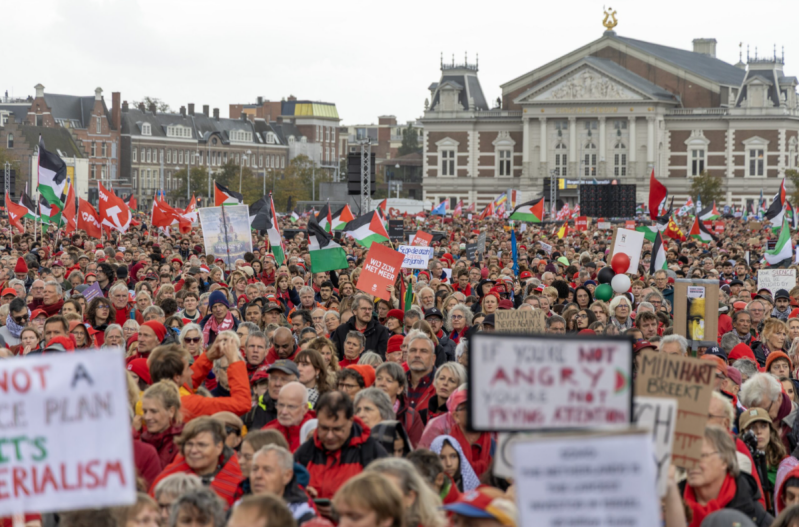
Protest bij Concertgebouw tegen de vertegenwoordiger van het Israëlisch leger
De anti-zionistische joodse groep Erev Rav organiseert komende zondagavond een Chanoeka-ceremonie bij het Concertgebouw in Amsterdam, uit protest tegen de geplande optredens van Shai Abramson, de 'cantor' [voorzanger] van het Israëlische leger.
De ceremonie van Erev Rav is onderdeel van een groter protest – Geef Genocide Geen Podium – dat op zondagavond 14 december gepland staat en waar ook onder meer de groepen Plant een Olijfboom, New Neighbours en de Internationale Socialisten aan deelnemen.
'De aanduiding "de Israëlische cantor" is een omfloerste omschrijving die de afgelopen maanden gebruikt is door groepen die voor de komst van Abramson pleiten en die door bijna alle Nederlandse media is overgenomen,' schrijft Itai Bar in een opiniestuk op onze website.
'Shai Abramson is de chef voorzanger van het Israëlische leger, een officiële functie, ‘IDF Chief Cantor’ in het Engels. Hem anders voorstellen is misleidend. Hem in krantenkoppen niet met zijn functie te omschrijven, maar slechts met zijn nationaliteit – zoals onder meer de Volkskrant, Het Parool en de NOS deden – eveneens.
Demonstratie Geef Genocide Geen Podium
Waar: Museumplein Amsterdam, tegenover het Concertgebouw
Wanneer: zondag 14 december 2025
Tijd: 18.30 - 21.00 uur
Meer informatie
Meulenbelt wint P.C. Hooft-prijs: ‘Mijn schrijven is altijd activisme geweest’
Auteur en activist Anja Meulenbelt heeft de P.C. Hooft-prijs voor beschouwend proza gewonnen, de belangrijkste prijs in de Nederlandse letteren, zo is woensdag bekend gemaakt. Meulenbelt zet zich al zeker drie decennia in voor de Palestijnse zaak en een deel van haar oeuvre gaat over Palestina. Journalist Fréderike Geerdink belde haar namens The Rights Forum om haar te feliciteren.

Sponsorloop voor Palestina in Heerlen
Parkstad voor Palestina organiseert op zaterdag 20 december een sponsorloop in Heerlen om geld in te zamelen om de mensen in Palestina te ondersteunen. Het ingezamelde geld komt via Stichting Plant een Olijfboom bij hen terecht en zal gebruikt worden voor water, voedsel, medicijnen, kleding, speelgoed, hygiëne- en schoolpakketten. Tijdens de sponsorloop is het de bedoeling dat ouders, kinderen en vrienden een wandeling door het centrum van Heerlen maken van 2,5, 5, 7,5 of 10 kilometer.
Vertrek vanaf: Station Heerlen
Tijd: 13.00 tot 16.00 uur
Uit onze agenda
zaterdag 13 december t/m zaterdag 20 december
DEMONSTRATIES EN WAKES
UTRECHT DOORDEWEEKSE DAGEN 08.30 - 09.30 (donderdagen vanaf 08.00) | Dagelijks stilteprotest voor Palestina, tegen genocide en bezetting (Neude, langs het fietspad)
LEUVEN ZA 13 DEC | Nomadisch Monument voor Gaza (Hal 5, Leuven, België)
HAARLEM ZO 14 DEC 14.00 | Wekelijks protest tegen de onderdrukking van de Palestijnen (Grote Markt)
AMSTERDAM ZO 14 DEC 18.30 | Demonstratie ‘Geef genocide geen podium!’ (Museumplein, voor het Concertgebouw)
DEN HAAG DO 18 DEC 12.00 | Sit-in van Rijksambtenaren bij het ministerie van Buitenlandse Zaken, Rijnstraat 8
STATIONS IN NEDERLAND DO 18 DEC 18.00 | Wekelijkse lawaaidemonstratie op stations in heel Nederland: Stations Alkmaar (17.30) Almere Centrum, Amersfoort, Amsterdam CS, Arnhem, Assen, Best, Driebergen-Zeist, Ede/Wageningen, Enschede, Gouda, Groningen, Hengelo, Hilversum (17.30), Leiden, Maastricht, Nijmegen, Purmerend (17.00), Sassenheim (17.00 uur), Tiel, Tilburg, Utrecht, Zaandam (17.00), Zutphen
Let op: The Rights Forum probeert de verschillende acties in Nederland zo goed mogelijk bij te houden, maar dat is niet altijd goed mogelijk. Houd de sociale media-pagina's van de plaatselijke solidariteitsorganisaties in de gaten voor de meest actuele informatie.
DEN BOSCH ZA 20 DEC 12.00 | Demonstratie Never Again is Now! (Burgemeester Loeffplein)
GRONINGEN ZA 20 DEC 13.00 | Tweewekelijkse wake van Vrouwen in het Zwart (Waagplein)
CULTURELE EN ANDERE EVENEMENTEN
LIVESTREAM ZA 13 DEC 34.00 | The Rights Forum in Conversation with Ilan Pappé and Mariam Barghouti. Het evenement is uitverkocht, maar is te volgen via livestream. Meld je hier aan.
ROTTERDAM VR 19 T/M MA 22 DEC | Het Glazen Huis van Verzet: samen voor DR Congo, Palestina en Sudan (Schouwburgplein)
AMSTERDAM VR 19 DEC 13.00 | Bijeenkomst in het kader van de Internationale Dag voor de Mensenrechten (Stichting Argan, Jan Tooropstraat 6A)
HEERLEN ZA 20 DEC 13.00 | Sponsorloop voor Palestina, voor jong en oud (Vertrek vanaf Station Heerlen)
Onze agenda wordt doorlopend aangevuld.
2053.
12 december 2025
Deze nieuwsbrief staat in het teken van zang en culturele boycot.
Een Eurovisieboycot begint vorm te krijgen! Maar het Koninklijk Concertgebouw in Amsterdam heeft een initiële boycot van een genocide verheerlijkende artiest teruggedraaid! Hoofdcantor van de IDF Shai Abramson mag gewoon optreden. Daartegen ondersteunen wij natuurlijk protest.
Een strijdbare groet van het docP team; blijf BDS-en!
Na jarenlange strijd is er eindelijk enig resultaat in de controverse rond de Israëlische deelname aan het "apolitieke" culturele muziekfestival. Vijf landen waaronder Nederland hebben zich teruggetrokken omdat Israël mag blijven meedoen. VN Rapporteur Francesca Albanese gebruikt termen als “Eurovicious” en “Genovision” om de ernst van de situatie aan te geven. Op de algemene […]

Geef genocide geen podium
Het Koninklijk Concertgebouw geeft zondag 14 december een podium aan de hoofdcantor van het IDF (Israëlische leger). Iemand die publiekelijk de vernietiging van Gaza viert. Een klap in het gezicht van de Palestijnse gemeenschap in Nederland.
Daarom ondersteunt BDS Nederland het grote protest dat aanstaande zondag 14 december plaatsvindt tijdens het concert. Kom in groten getale je onvrede uiten zodat het niet onopgemerkt blijft, ook binnen niet.
Organisatoren van het protest zijn onder meer Erev Rav, PGNL, New Neighbours Utrecht, Culturele Boycot Israël, en andere initiatieven.
Culturele initiatieven kunnen nog steeds de petitie tot cancelen van het concert tekenen.
1952.

12 december 2025
Gaza Humanitarian Response
Situation Report No. 44
11 December 2025
(As of 18:00 on 10 December 2025, unless otherwise noted)
HIGHLIGHTS
- An eight-month-old infant passed away due to the severe cold in the Mawasi area of Khan Younis, while heavy rains and flooding are currently affecting hundreds of households. The UN and partners on the ground have set up a system for rapid, joint response to flooding alerts, working side-by-side to distribute tents, tarpaulins, warm cloths, blankets and dignity kits.
- Three additional Temporary Learning Spaces able to accommodate over 800 children were established over the past two days, as work continues to set up ten more learning spaces in southern Gaza.
SITUATION OVERVIEW
Persistent heavy rainfall and extremely low temperatures are compounding dire conditions, at a time when there is no access to gas or electricity, extremely limited wood supplies, and limited distribution of shelter items to displaced people due challenges with the entry of supplies. On 10 December, at least 465 households (2,731 people) residing in 260 tents were affected by flooding, with the figure continuing to rise. Tragically, an eight-month-old infant passed away due to the severe cold in the Mawasi area of Khan Younis. In a single day, more than 1,500 people were observed to have moved from Khan Younis to Gaza city.
In the areas at highest risk of flooding, all family tents experienced flooding to varying degrees, forcing many families to seek temporary refuge in Designated Emergency Shelters (DES) after fleeing inundated areas. Site Management Cluster partner assessments confirmed that all tents and some classrooms inside DESs were flooded. The sanitation and hygiene committees have been actively clearing gullies and manholes, marking their second effort this week to mitigate the impact of the rainfall. Along the seashore, all families that had not previously moved were displaced by flooding and are now being accommodated by relatives at external sites. Coordination between municipal winter emergency committees and Site Management teams is ongoing throughout the Gaza Strip, especially in high-risk sites and DESs, to manage and alleviate the effects of this rain cycle. The need for winterization items including tents, tarps, winter clothing, blankets, and other non-food items remains extremely high.
Across Gaza, UN agencies and partners on the ground have set up a system to respond jointly to flooding alerts as they come in, working side-by-side to distribute all available supplies. As of 17:00 hrs on 11 December, they had already processed 161 flooding alerts since the morning and carried out assessments covering more than 16,000 families in different areas.
Sporadic airstrikes, shelling and gunfire continued to be reported across all Gaza governorates, with the majority recorded in the Gaza city area, east of the “Yellow Line”. The Israeli Defence Forces reported the killing of one Palestinian who allegedly crossed the “Yellow Line” jointly with a second individual, posing a threat to the soldiers. According to the Gaza Ministry of Health, four people were killed and 10 injured in the past 24 hours, bringing the total reported casualties since the start of the ceasefire to 383 deaths and 1,002 wounded.
UNITED NATIONS-COORDINATED AID ENTRY*
On 10 December, at least 3,905 pallets of aid administered by the UN and its partners were offloaded at Gaza’s crossings, based on data retrieved from the UN 2720 Mechanism dashboard at 17:00 on 11 December. About 54 per cent of these pallets contained food supplies, followed by shelter (22 per cent), health (13 per cent), water, sanitation and hygiene items (10 per cent), and operational equipment (1 per cent).
On the same day, UNOPS international monitors deployed at Gaza’s crossings verified the collection of at least 2,996 pallets of aid – 1,703 from Kerem Shalom between 09:19 and 14:15, and 1,293 from Zikim between 07:55 and 10:55. These comprised inter alia 1,689 pallets of food assistance, including flour, food parcels, date bars and canned chicken, 875 of hygiene materials and cleaning supplies, 346 of infant food and nutrition supplements, 70 of blankets and 24 of medicines.
Overall, between the announcement of the ceasefire on 10 October, and 9 December, at least 158,242 pallets of humanitarian cargo were offloaded, and 136,735 pallets collected from the different crossings. Only 2 per cent of all uplifted aid was intercepted during transit within Gaza.
The above data excludes bilateral donations and the commercial sector.
On 10 December, six out of eight humanitarian movements submitted for coordination with the Israeli authorities were facilitated. For the second time this week, an assessment mission aimed to physically verify the locations of UN armoured vehicles that were last known to be at the UN Logistics Base in Rafah was denied outright. Another cargo collection mission from Kerem Shalom had to be cancelled by the organizers.
HUMANITARIAN RESPONSE
The below are preliminary updates shared by Clusters at the time of reporting and will be reconciled and aggregated in the coming days as Clusters receive more data from the capillary network of partners active on the ground.
Water, Sanitation and Hygiene
- To facilitate a rapid response to the heavy rainfall, WASH partners adapted operations in camps allocating focal points and mobile pumps for each Governorate in advance of the storm.
- Emergency construction of an earth embankment at Al-Rantisi Hospital to protect the exposed building foundations is underway.
- Construction and placement of WASH services is ongoing in the Khan Younis flood relocation site at Hamad City.
Shelter
- On 10 December, Shelter partners reached 2,887 households with shelter and non-food items assistance. The distributed items include: 1,770 tarps to 590 households in Khan Younis, 5,576 tarps to 1,592 households in Deir al Balah, 170 tents in Gaza City and Khan Younis, in addition to 535 clothing vouchers to 535 households in North Gaza and Gaza City.
- The Shelter Cluster is coordinating closely with several partners to activate a rapid response to many referrals from different partners, IDP sites, and relevant stakeholders considering the current winter storm in Gaza.
Protection
- Child Protection
- Recent storms damaged at least 10 Child Safe Spaces. In Gaza city, Child protection partners continued winter-response efforts; a total of 6,000 clothing kits were distributed for children across different age groups on 10 December, with safeguarding measures in place at all distribution points.
- Between 9 and 10 December, 520 children and 335 caregivers were reached with Mental Health and Psychosocial support (MHPSS) sessions and recreational activities in Child Safe Spaces and shelters. This included structured group sessions, individual MHPSS, individual counselling, and Teaching Recovery Techniques. During the same period, more than 100 children participated in six sessions of the “Gaza We Want” initiative, which provides structured, child-focused psychosocial support aimed at restoring stability and emotional safety for displaced children.
- Families report difficulty keeping children warm at night, increasing stress and reducing participation in activities. Caregivers describe rising exhaustion as they move frequently in search of safer shelter while trying to meet basic needs. They continue to request additional winter items, counselling, and safe spaces where children can recover and reconnect.
- Mine Action
- On 10 December, Mine Action partners conducted two Explosive Hazard Assessments (EHAs) in Deir al Balah and Gaza city, including in support of rubble removal efforts, and provided Explosive Ordnance-related technical advice during one inter-agency mission.
- One Explosive Ordnance incident was recorded in Gaza city on 10 December, leading to one person killed and one injured.
- Explosive Ordnance Risk Education sessions continue, with partners reaching at least 8,541 people between 7 and 11 December in Gaza city, Deir al Balah and Khan Younis.
Education
- Since the beginning of December, approximately 191,968 children have been receiving High-Energy Biscuits and Fortified Date Bars across 232 Temporary Learning Spaces (TLSs) in the Gaza Strip.
- Three additional TLSs were established over the past two days, which can accommodate around 810 school-age children. Ten new sites have also been identified for the establishment of additional learning spaces in Deir al Balah, Khan Younis and at the Rafah–Khan Younis border; work is underway to complete these spaces and further increase enrolment.
- A lack of furniture continues to hinder efforts to improve the learning environment. Although 65 classrooms were recently lightly rehabilitated, they still lack basic items, including furniture and mats. The onset of cold winter conditions is creating harsh learning environments for children and is impacting learning spaces. Additionally, continued restrictions on the entry of basic learning materials are limiting the quality of the learning opportunities being provided.
2051.

12 december 2025
Humanitarian Situation Update #348
West Bank
11 December 2025

Tha’er Harb looking over what is left of his property after Israeli authorities demolished his home and five other structures in Khallet Al Farra area of As Samu’ for lacking Israeli-issued building permits in Area C of the southern West Bank. Photo by OCHA, 10 December 2025.
Key Highlights
- More than 1,000 people have been displaced in Area C so far in 2025 due to demolitions for lack of Israeli-issued building permits, the second highest annual total recorded since 2009.
- While Bedouin and herding communities historically accounted for most displacement in Area C due to lack-of-permit demolitions, this year, the majority of Palestinians displaced in this context were residents of towns and villages.
- The monthly average of Palestinians injured while attempting to cross the Barrier increased from nine injuries in the first eight months of 2025 to 19 injuries in the last three months.
- About 60 per cent of Palestinians injured by Israeli settlers in 2025 were in Ramallah and Hebron governorates, with one-third of all injuries concentrated in northeastern Ramallah towns and Masafer Yatta communities.
Humanitarian Developments
- Between 2 and 8 December, Israeli forces killed five Palestinians, including one child, bringing the total number of Palestinians killed by Israeli forces or settlers in 2025 in the West Bank, including East Jerusalem, to 232, including 52 children. Another Palestinian with an Israeli citizenship was shot and killed by Israeli forces in Qalqiliya governorate. During the same reporting period, 42 Palestinians, including nine children and four women, and two Israeli soldiers were injured. Of the injured Palestinians, 25 were by Israeli forces and 17 by settlers. The following are details of the incidents that resulted in fatalities:
- On 2 December, Israeli forces killed and withheld the body of a Palestinian man near Umm Safa village, in Ramallah governorate, after he stabbed and injured two soldiers when he was stopped for inspection at a flying checkpoint on Road 465. Israeli forces subsequently closed nearby checkpoints and road gates in western Ramallah governorate. Additionally, the forces broke into Beit Rima village, the hometown of the man, and searched his family’s house.
- On 5 December, Israeli forces shot and killed a Palestinian man during a raid by Israeli forces in Odala village, in Nablus governorate, where Palestinians threw stones at Israeli forces while the forces opened fire toward Palestinians.
- On 6 December, Israeli forces shot and killed two Palestinians, including a 17-year-old child and a 55-year-old municipal sanitation worker, during an alleged car ramming attack against Israeli soldiers stationed at Ash Shuhada Street checkpoint (CP 56) that leads to Hebron city. There is video footage documenting the incident. Israeli authorities have withheld the body of the boy. Between 7 October 2023 and 8 December 2025, OCHA documented the withholding of the bodies of 221 Palestinians from the West Bank by Israeli forces, of whom seven were subsequently handed over and 214 remain withheld.
- On 7 December, Israeli forces opened fire at a Palestinian vehicle near Izbat at Tabib town, in Qalqiliya governorate, killing a Palestinian man and injuring another. A third passenger was arrested. According to Israeli media, the killed man was a citizen of Israel. The Palestinian Ministry of Health subsequently confirmed that the injured man had succumbed to his wounds. The Israeli military stated that the three Palestinians had thrown stones at Israeli civilians, endangering their lives.
- Between 2 and 8 December, Israeli forces shot and injured nine Palestinians with live ammunition while they attempted to cross the Barrier to reach East Jerusalem and Israel, including eight near Ar Ram and Dahiyat al Bareed and one in Beit Hanina al Balad, both in Jerusalem governorate. The monthly average of Palestinians injured while attempting to cross the Barrier has doubled in the last three months, increasing from an average of nine injuries per month in the first eight months of 2025 (a total of 75 injuries) to 19 injuries per month between September and November 2025 (a total of 56 injuries). Since 7 October 2023, when Israeli authorities revoked or suspended most permits that had allowed Palestinian workers and others to access East Jerusalem and Israel, OCHA has documented the killing of 14 Palestinians and the injury of more than 200 others while attempting to cross the Barrier, reportedly in search of employment opportunities amid a severe economic downturn in the West Bank.
- On 5 December, Israeli forces launched a 12-hour operation in Qalqiliya city, imposed an open-ended curfew on the Kafr Saba neighbourhood, and blocked three roads with earth mounds. At least one family was forcibly evacuated after their residential building was converted into a military post. Dozens of Palestinians were detained and interrogated, multiple homes were searched, and two Palestinians (including a child and a Palestine Red Crescent Society volunteer) were injured. According to the Palestinian District Coordination Office (DCO), Israeli forces confiscated 50,000 NIS (about US$15,500) and several cheques from a labour union office before withdrawing.
- On 8 December, Israeli police accompanied by municipal officials forcibly entered the United Nations Relief and Works Agency for Palestine Refugees (UNRWA) Sheikh Jarrah compound in occupied East Jerusalem, seizing UN property, cutting communications, and replacing the UN flag with an Israeli flag, according to an official statement issued by UNRWA. Recalling the Convention on the Privileges and Immunities of the UN, UNRWA affirmed that the compound retains its status as a UN premises and, as such, the action is “a blatant disregard of Israel’s obligation as a United Nations Member State to protect [and] respect the inviolability of UN premises.” The UN Secretary-General strongly condemned the unauthorized entry into the UN Sheikh Jarrah premises held by UNRWA and stated: “As recently confirmed by the International Court of Justice, any executive, administrative, judicial or legislative action against United Nations property and assets is prohibited under the Convention on the Privileges and Immunities of the United Nations.” The UN Chief urged Israel “to immediately take all necessary steps to restore, preserve and uphold the inviolability of UNRWA premises and to refrain from taking any further action with regard to UNRWA premises, in line with its obligations under the Charter of the United Nations and its other obligations under international law, including those concerning privileges and immunities of the United Nations.” Earlier this year, Knesset legislation targeting UNRWA activity was implemented, with the compound subsequently vacated for the safety and security of staff. However, although the compound is no longer staffed or operational, it remains subject to UN privileges and immunities under the General Convention.
- These developments follow laws passed by the Israeli Knesset on 28 October 2024 that purport to prohibit UNRWA’s operations in areas Israel considers its sovereign territory, including occupied East Jerusalem, and bar any contact between Israeli officials and the Agency. In late January 2025, international personnel were forced to leave East Jerusalem, following the non-issuance and non-renewal of visas by Israeli authorities. In April 2025, Israeli forces issued closure orders to UNRWA-run schools in East Jerusalem and subsequently forcibly entered three UNRWA schools in Shu’fat refugee camp on 8 May, leading to the evacuation of the schools; a total of six schools were affected by closure orders, impacting about 800 students.
- On 10 December, according to the Palestinian Commission of Detainees’ Affairs, a Palestinian prisoner from Husan village in Bethlehem governorate, who had been detained since June 2025, died in Israeli custody. According to the UN Human Rights Office (OHCHR), between 7 October 2023 and 10 December 2025, at least 84 Palestinians, including a 17-year-old child, died in Israeli detention, including 54 from the Gaza Strip, 28 from the West Bank and two Palestinian citizens of Israel. In addition, OHCHR has documented that at least five Palestinians from the West Bank have died while in Israeli custody shortly after being shot, injured and arrested by Israeli forces; four in 2024 and one in 2025. As of November 2025, according to data provided by the Israel Prison Service (IPS) to Hamoked, an Israeli human rights NGO, there are 9,183 Palestinians in Israeli custody, including 1,254 sentenced prisoners, 3,359 remand detainees, 3,368 administrative detainees held without charge or trial, and 1,220 people held as “unlawful combatants.”
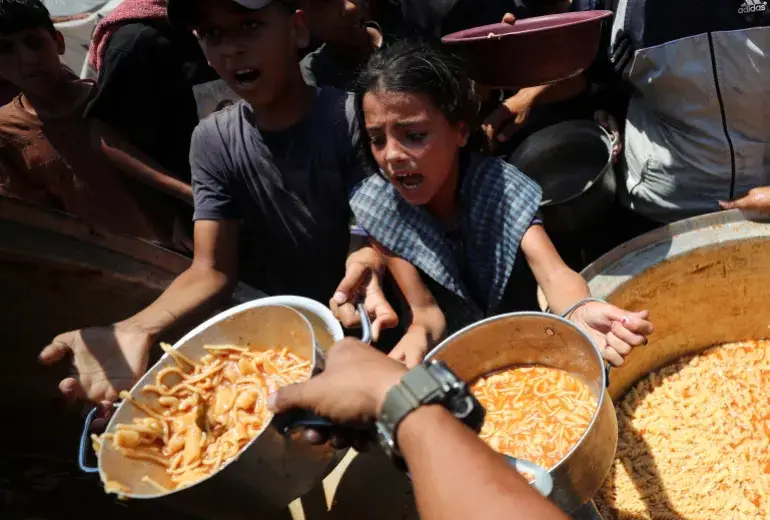
Demolitions and Displacement
- Between 2 and 8 December, OCHA documented the demolition of 15 Palestinian-owned structures for lacking Israeli-issued building permits, which are almost impossible for Palestinians to obtain. Thirteen of the structures were in five villages in Area C of the West Bank, while two were in Shu’fat refugee camp in East Jerusalem. In total, 39 people, including 23 children, were displaced, and 44 people, including 21 children, were otherwise affected. In Shu’fat camp, a family of nine people, including seven children, was displaced; it was forced to demolish its residence and another uninhabited residential structure comprising two apartments to avoid further fines, after having received demolition orders in February and October 2025 and appointing a lawyer to follow up on the case. In Area C, seven households comprising 30 people, including 16 children, were displaced and 30 others were affected following the demolition of their homes and other structures by Israeli authorities in Al Walaja (Bethlehem), Budrus (Ramallah), Haribat an Nabi herding community, Beit Ula (both in Hebron), and Hizma (Jerusalem).
- In 2025, over 1,000 people have been displaced after their structures were demolished, seized or sealed in Area C for lacking Israeli-issued building permits. This is the second highest annual number of people displaced in Area C within this context since OCHA began documenting demolition incidents in 2009. Some 65 per cent of all people displaced in Area C since 2009 have been in Bedouin and herding communities (7,639 out of nearly 12,000 people) and the remaining were in villages, towns, cities and camps. In 2025, by contrast, the majority of people displaced by lack-of-permit demolitions in Area C were in towns and villages and 27 per cent were in Bedouin and herding communities (see chart).
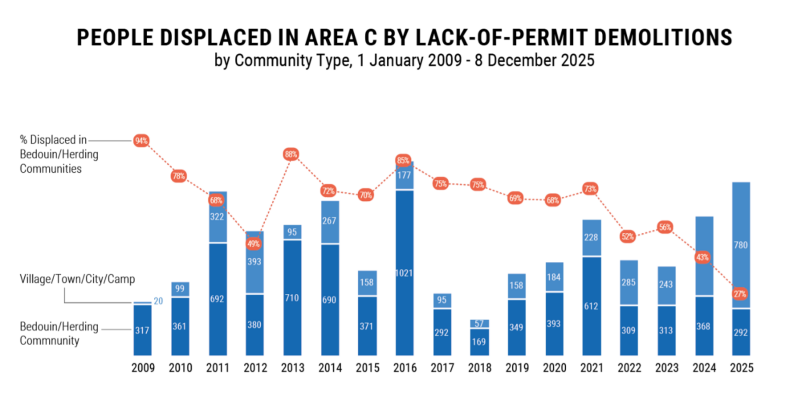
- On 2 December, Israeli forces demolished with explosives on punitive grounds an apartment located on the fourth floor of a four-storey residential building in Zawata village, northwest of Nablus city. The house belonged to the family of a Palestinian man who is in Israeli custody accused of involvement in bombing three empty buses in Bat Yam and Holon, in Israel, on 20 February 2025. The explosion rendered the apartment uninhabitable and caused damage to the rest of the building. As a result, two families comprising 11 people, including four children, were displaced.
- Between 1 January 2009 and 8 December 2025, OCHA documented the displacement of over 1,000 Palestinians due to the demolition or sealing of 215 structures on punitive grounds across the West Bank, including East Jerusalem. About 40 per cent of these structures (87) were demolished or sealed after 7 October 2023, displacing 420 Palestinians, including 166 children. In 2025, and as of 8 December, Israeli authorities punitively demolished or sealed 42 structures across the West Bank, compared with 25 structures in 2024 and 37 structures in 2023. In his report to the General Assembly on 20 September 2021, the UN Secretary-General emphasized: “Punitive house demolitions and withholding of bodies may amount to collective punishment (A/HRC/46/63, paras. 9–10), in violation of international humanitarian law. Such measures impose severe hardship on people for acts they have not committed, resulting in possible violations of a range of human rights, including the rights to family life, to adequate housing and to an adequate standard of living.”
- On 2 December, Israeli forces temporarily evacuated three families from a residential building in Ya’bad town, in Jenin governorate. On the same day, in Jenin refugee camp, Israeli forces detonated two houses in the Al Ghubaz neighbourhood and burnt a third in the Hadaf neighbourhood, affecting three families. Separately, demolitions are ongoing in relation to 24 structures in Jenin Camp, estimated to comprise over 70 residential units, slated for demolition by the Israeli military on 25 November. All affected families had already been displaced during the early stages of the operation in Jenin Camp that began in January 2025.
Israeli Settler Attacks
- Between 2 and 8 December, OCHA documented 29 Israeli settler attacks against Palestinians that resulted in casualties, property damage or both. The attacks led to the injury of 17 Palestinians, including two children, all injured by Israeli settlers. More than 200 Palestinian-owned trees and saplings (mainly olive) were vandalized.
- So far in 2025, OCHA has documented over 1,700 settler attacks that resulted in casualties or property damage in more than 270 communities across the West Bank, primarily in Ramallah, Nablus and Hebron governorates. This is an average of five incidents per day. These attacks have resulted in the injury of 1,110 Palestinians, including 772 (70 per cent) injured by Israeli settlers, 327 (29 per cent) by Israeli forces, and 11 where it remains unknown whether they were injured by Israeli settlers or forces. Roughly 60 per cent of the injuries by Israeli settlers in 2025 were in Ramallah (250 injuries) and Hebron (210) governorates. The injuries were especially concentrated in the northeastern towns of Ramallah governorate, particularly Al Mazra’a ash Sharqiya, Deir Dibwan, Silwad and Sinjil, and Masafer Yatta communities in Hebron governorate, which together comprised about one third of Palestinians injured by Israeli settlers so far this year (256 out of 772).
- Settler attacks, threats, and harassment continued across several governorates this week, predominantly affecting communities located near old or newly established settlement outposts. Incidents involved repeated assaults, raids and damage to residential structures and access denial to agricultural areas. Among the key incidents this week were two incidents that took place in Halhul town, in Hebron, and Al Mughayyir village, in Ramallah, as illustrated below.
- On 4 December, five Palestinian farmers were physically assaulted and injured by Israeli settlers near Wadi al-Ameer agricultural area in Halhul town in Hebron governorate while ploughing their land. According to the family, this occurred after the Israeli District Coordination Liaison (DCL) approved a coordination request for them to access their land for a two-day period. Settlers, believed to be from a newly established settlement outpost nearby, arrived in a small vehicle and stopped the farmers. Israeli forces later arrived and instructed the farmers to leave, stating they had no record of the approved coordination. As the farmers prepared to leave the area, settlers attacked them with stones and sticks, pulled one farmer from a tractor, physically assaulted him, damaged a mobile phone, and drove the tractor toward the nearby outpost. The Palestinian DCL recovered the tractor later that day, and the family was unable to access their land the following day.
- Farmers in the above agricultural area of Halhul town have faced sustained attacks by Israeli settlers since March 2024, following the establishment of a settlement outpost near their lands. Since then, OCHA has documented 35 settler attacks resulting in Palestinian casualties or property damage in this area, compared with 10 such attacks over the previous four years (2020–2023). The escalation was particularly pronounced during the most recent grape harvest season between July and October 2025, when at least 16 of these attacks occurred, resulting in the injury of 15 Palestinian farmers.
- On 7 December, Israeli settlers broke into the residential tents of a herding family in the southern area of Al Mughayyir village, in Ramallah governorate, at night and assaulted an elderly woman, a child, and two female foreign activists while they were sleeping. Settlers used clubs and stones, injuring all four, stole mobile phones and a laptop, and threatened to burn the family and their structures if they did not leave within two days. The two foreign activists were present to provide protective presence following repeated settler attacks in the area. Israeli forces arrived shortly after the incident, installed a flying checkpoint, and prevented vehicular access to the area.
- Attacks by Israeli settlers in Al Mughayyir village have sharply escalated since mid-2024, following the establishment of at least four new settlement outposts around the village. Attacks by settlers believed to be from these outposts have triggered displacement of Palestinians in the surrounding area, including the full displacement of Ein Samiya Bedouin community. Since the establishment of the settlement outpost in April 2024, OCHA has documented 64 settler attacks affecting Al Mughayyir, or an average of three attacks per month, compared with an average of one to two attacks in the previous four years. Since the beginning of 2025, 10 of the settler attack specifically targeted a herding family in the southern area of the village, including repeated raids into their shelters, assaults, attempts to steal livestock, dismantling and theft of tents, and destruction of household property. In total, nine family members, including six children and three women, were injured in these incidents, and the family reports near-daily intimidation, threats and property damage by settlers believed to be from the settlement outpost nearest to them.
- For key figures and additional breakdowns of casualties, displacement and settler violence between January 2005 and October 2025, please refer to the OCHA West Bank October 2025 Snapshot.
Funding
- As of 10 December, Member States disbursed approximately $1.6 billion out of the $4 billion (50 per cent) requested to meet the most critical humanitarian needs of 3 million out of 3.3 million people identified as requiring assistance in Gaza and the West Bank, including East Jerusalem, under the 2025 Flash Appeal for the Occupied Palestinian Territory. Nearly 88 per cent of the requested funds is for the humanitarian response in Gaza, with just over 12 per cent for the West Bank. In November, the oPt Humanitarian Fund managed 128 ongoing projects, totalling $73.5 million, to address urgent needs in the Gaza Strip (89 per cent) and the West Bank (11 per cent). Of these projects, 61 are being implemented by international NGOs, 51 by national NGOs and 16 by UN agencies. Notably, 58 out of the 77 projects implemented by international NGOs or the UN are being implemented in collaboration with national NGOs. For more information, please see OCHA’s Financial Tracking Service webpage and the oPt HF webpage.
2050.

11 december 2025
Humanitarian Situation Update #347
Gaza Strip
11 December 2025

UNRWA teams repairing water infrastructure in Gaza. Photo by UNRWA
Key Highlights
- Access to water has improved in Gaza owing to repairs to critical infrastructure and a near-doubling of water trucking by the UN and its partners.
- In anticipation of heavy rainfall and a deterioration in weather conditions, partners continue to identify displacement sites at high risk of flooding and prioritize winterization activities.
- Every week, about 15 women in Gaza give birth outside hospitals, without skilled attendants, according to the UN Population Fund.
- More aid must enter the Gaza Strip, especially aid that strengthens the health of pregnant and breastfeeding women, UNICEF Communication Manager stated, highlighting the harmful domino effect of maternal malnutrition on newborns.
- The Shelter Cluster estimates that fewer than 50,000 tents for about 270,000 people have entered Gaza.
- The UN and its humanitarian partners launched a US$4.06 billion Flash Appeal for the Occupied Palestinian Territory, allocating 92 per cent of the required funds for the humanitarian response in the Gaza Strip.
Context Overview
- Over the past week, airstrikes, shelling and gunfire continued to be reported across the Gaza Strip, resulting in casualties, including in areas where the Israeli military remains deployed – covering over 50 per cent of the Strip – as well as near and west of the so-called “Yellow Line,” which remains largely unmarked on the ground. Detonations of residential buildings and bulldozing activities continued to be reported, including near the so-called “Yellow Line.” Access to humanitarian assets, public infrastructure and agricultural land in areas where the Israeli military remains deployed, as well as access to the sea, remain severely restricted or prohibited.
- Between 3 and 9 December, the Site Management Cluster (SMC) reported that more than 16,400 displacement movements were recorded across the Strip, compared with over 20,500 the preceding week. The majority (about 16,000) were from southern to northern Gaza, while the remainder were either reverse movements to the south or from eastern to central Gaza city. Since the ceasefire came into effect on 10 October, over 793,700 displacement movements have been recorded, of which about 658,700 were from southern to northern Gaza. In December, over 90 per cent of displacement movements to the north have consisted of families traveling in light trucks, SMC reports, noting that this trend is driven by overcrowded living conditions in Khan Younis displacement sites and lack of access to adequate shelter materials.
- According to the Ministry of Health (MoH) in Gaza, between 3 and 10 December, 19 Palestinians were killed, 70 were injured and 10 bodies were recovered from under the rubble. This brings the casualty toll among Palestinians since 7 October 2023, as reported by the MoH, to 70,369 fatalities and 171,069 injuries. According to the MoH, the total number includes 223 fatalities who were retroactively added between 28 November and 5 December after their identification details were approved by a ministerial committee. MoH reported that since the ceasefire, 379 Palestinians have been killed, 992 injured and 627 bodies retrieved from under the rubble.
- On 7 and 8 December, the Palestinian Civil Defense (PCD) reported completing the transfer of 146 bodies to the Forensic Medicine Department and other authorities for burial in official cemeteries. These include 48 bodies exhumed from temporary graves at Al Ahli Arab Baptist Hospital (including 25 unidentified), and 98 from Al Shifa Hospital (including 55 unidentified). PCD noted that dozens of bodies remain in temporary graves at Al Shifa, which it plans to retrieve in the coming days. According to the International Committee of the Red Cross (ICRC), many families still lack information on missing relatives. The organization is supporting health and forensic authorities in the dignified management, documentation, and identification of the deceased, so families can obtain answers and closure. Under international humanitarian law, the dead must be handled respectfully and their dignity protected, ICRC emphasized.
- According to the Israeli military, between 3 and 10 December, as of noon, no Israeli soldiers were killed in Gaza. The casualty toll among Israeli soldiers since the beginning of the Israeli ground operation in October 2023 stands at 471 fatalities and 2,989 injuries. According to Israeli forces and official Israeli sources cited in the media, more than 1,671 Israelis and foreign nationals have been killed, the majority on 7 October 2023 and its immediate aftermath. On 3 December, according to official Israeli sources, the body of one Thai hostage was returned from Gaza to Israel, bringing to 27 the overall number of returned hostage bodies since the ceasefire. As of noon on 10 December, the remains of one hostage is still in the Gaza Strip.
- On 8 December 2025, the UN and its humanitarian partners launched a Flash Appeal for $4.06 billion to address the humanitarian needs of 2.97 million out of 3.62 million people identified as requiring assistance in Gaza and the West Bank, including East Jerusalem, in 2026. Nearly 92 per cent of those required funds are for the humanitarian response in Gaza, with just over eight per cent for the West Bank. Bureaucratic impediments, access restrictions, and anti-UN rhetoric collectively constrain humanitarian space and the ability to operate at scale. The Appeal stipulates that genuine efforts to enable humanitarian assistance to and throughout the Occupied Palestinian Territory (OPT) requires full compliance by all parties with international humanitarian law, including the protection of civilians, and critical changes to the operating environment.
- According to the Protection Cluster, the protection environment across Gaza remains extremely severe due to ongoing displacement, insecurity, and worsening winter conditions. Overcrowded shelters and frequent population movements limit access to services and heighten risks of family separation and exploitation. Flooding, heavy rainfall, and dropping temperatures further degrade unsafe living conditions, particularly for women, children, the elderly, and persons with disabilities. Protection partners report rising demand for psychosocial support and an urgent need for winterization supplies, dignity kits, accessibility improvements, and tents for overcrowded or female-headed households to mitigate risks related to weather and gender-based violence. At the same time, operational constraints – including restricted movement, damaged infrastructure and supply shortages – continue to impede service delivery. Despite challenges, partners are working to sustain coverage through mobile teams, community-based mechanisms, and targeted support to the most vulnerable groups, though growing needs continue to exceed available resources.
- The Protection Cluster reported that in November, 100 mobile protection teams, including emergency protection responders and the Protection from Sexual Exploitation and Abuse (PSEA) Network, conducted 46 joint safeguarding monitoring visits across Gaza, reaching 1,276 people with key protection messages, including on PSEA. The monitoring aimed to strengthen safe and dignified distribution practices, reinforce accountability to affected people, and address protection and PSEA risks at distribution points. Successful measures observed included respectful staff conduct, clear communication with beneficiaries, orderly crowd flow, accessibility measures for the elderly and people with mobility impairment, and supportive interactions between staff and affected people. Several gaps persisted, with only 17 per cent of sites having gender-segregated queues and more than half of distribution teams being entirely male.
Humanitarian Access
- While there have been improvements in the volume of supplies brought into Gaza, the ability of aid actors to operate at scale remains constrained due to insecurity, customs clearance challenges, the limited number of partners authorized by Israeli authorities to bring cargo into Gaza, delays and denials of cargo at operational crossings, and limited routes available for transporting humanitarian supplies within Gaza. In the two months following the 10 October ceasefire, according to the UN 2720 Mechanism, the UN and its partners collected about 100,000 metric tons (MT) from Gaza’s crossings, reflecting a 67 per cent increase in the volume of collected supplies compared with the preceding two months when about 59,800 MT of aid were collected by the UN and its partners. Of the total, 81 per cent was food aid, almost nine per cent were shelter supplies, and about nine per cent comprised health, nutrition and water, sanitation and hygiene (WASH) supplies. The opening of Zikim crossing on 14 November, which has been operating on an alternating offload-and-uplift schedule with Kissufim crossing, has not yet resulted in a substantive increase in the overall volume of aid entering the Strip through the UN and its partners. Between 14 November and 5 December, the UN and its partners collected over 39,400 MT of aid from the three operational crossings, according to the UN 2720 Mechanism, which is comparable to the 38,200 MT collected in the preceding three weeks when only two crossings (Kerem Shalom and Kissufim) were functioning.
- Humanitarian convoys by the UN and its partners inside Gaza continue to require coordination with Israeli authorities to and from crossings and in or near other areas where Israeli forces remain deployed. Between 3 and 9 December, humanitarian organizations coordinated 53 missions with the Israeli authorities, of which 35 were facilitated, three were cancelled, nine were impeded, and six were denied. Despite improved approval rates for humanitarian missions inside Gaza since the ceasefire, access denials persist for critical infrastructure missions, particularly those involving water and sewage systems and some health facilities. Over the past week, three such missions were denied: one to assess a wastewater treatment facility in northern Gaza, another to visit a wastewater treatment plant in Khan Younis, and a third mission to assess conditions at Al Awda and Indonesian hospitals in northern Gaza. The southern section of Salah ad Din Road remains inaccessible; however, on 8 December, an assessment and clearance mission was successfully facilitated to ensure accessibility for humanitarian cargo transport, in anticipation of a possible reopening.
- Livestock remain a vital source of food security, income, and transportation for many families in the Gaza Strip. According to the Food Security Sector (FSS), for the first time since August 2024 and after more than 15 months, some 3,500 veterinary kits entered Gaza on 5 December via UN coordination. During the first day of the kits’ distribution on 9 December, over 130 herders received essential supplies to support the health of their animals, which will contribute to improved public health and safeguarding their livelihoods. Since 10 October, FSS partners have also supplied more than 1,700 animal herders across the Gaza Strip with fodder to sustain surviving livestock and enable the resumption of local production of milk and dairy products. Humanitarian partners continue to face constraints and challenges imposed by Israeli authorities in bringing into Gaza many agricultural inputs, such as seeds, organic fertilizers and irrigation systems, limiting the ability of partners to rehabilitate local food systems and enhance dietary diversity.
- On 8 December, the World Health Organization (WHO) facilitated the medical evacuation of 25 patients from Gaza, in addition to 92 companions. According to WHO, 260 patients and 800 companions have been evacuated since the ceasefire. More than 18,500 patients, including 4,000 children, require medical evacuation, as the advanced care they need is not available in Gaza. WHO stated that the increase, from 16,00 to 18,500 patients awaiting to leave, is partly because people, previously unable to reach health facilities due to the insecurity, are now able to reach hospitals for medical assessment and consideration for evacuation for health care outside Gaza. WHO continues to call for additional support and the opening of all evacuation routes, particularly to the West Bank, including East Jerusalem.

Shelter and Winterization
- In anticipation of heavy rainfall and a deterioration in weather conditions this week, SMC partners continue to prioritize winterization activities, such as improving drainage, clearing pathways and providing empty flour and rice bags (repurposed as sandbags) to protect sites with existing site management structures from flooding. Most of the high-risk displacement sites lack any site management support or viable on-site flood mitigation measures, making evacuation the last-resort option once rain sets. More than 180,000 people in over 200 flood-prone displacement sites have been prioritized for evacuation, out of nearly 850,000 people at 761 sites considered at highest risk of facing floods, according to a recent flood risk analysis by the SMC.
- Families prioritized for relocation are living in low-lying or debris-filled areas along the coastline without drainage or protective barriers. Along the Khan Younis shoreline, more than 4,000 people live in high-risk coastal zones. Of these, around 1,000 people, those directly in wave-impact lines, are being prioritized for evacuation. The remaining 3,000 people will receive reinforced in-situ shelter assistance and other essential items, while also being advised to evacuate to safer areas. On 10 December, SMC partners supported the evacuation of 200 of the prioritized households to Hamad city, and planning is underway to evacuate 300 additional households. Furthermore, the SMC Cluster is working with the Khan Younis Municipality to operationalize two safer evacuation sites and preparation works are underway. Similar evacuation initiatives are ongoing in Deir Al Balah and Gaza city, where authorities, communities, the UN and partners are coordinating to identify suitable land and to ensure that affected families receive timely information to make informed decisions.
- In parallel, Shelter Cluster partners continue to distribute emergency shelter assistance, including tents, tarpaulins, bedding items, winter clothing and vouchers. Taking into account both UN-coordinated aid and bilateral donations, the cluster estimates that less than 50,000 tents (for about 270,000 people) have entered Gaza, of which nearly 40,000 tents (for 220,000 people) have already been distributed. As of 10 December, 1.28 million people remain in need of urgent shelter assistance, while aid partners continue to face major limitations in bringing into Gaza their supply pipeline. At the current pace, the Shelter Cluster warns that existing efforts cannot meet the scale of need. On 10 December, the Norwegian Refugee Council (NRC) highlighted: ‘’International aid organisations remain blocked from bringing in relief and nearly 4,000 pallets of shelter materials have been rejected. Gaza urgently needs heavy machinery, tools and shelter items to prevent catastrophic flooding.’’
- Recent rains have aggravated overcrowding concerns and poor living conditions facing more than 74,000 people sheltering in over 100 United Nations Relief and Works Agency for Palestine Refugees in the Near East (UNRWA) schools-turned-shelters, including 85 displacement sites managed by UNRWA. Most of these sites are in Khan Younis and the remainder in Deir al Balah. UNRWA teams continue to remove water from flooded yards, clear blocked manholes and drainage collectors, repair damaged tents inside school compounds, and distribute tarpaulins and other materials to help families reinforce their shelter spaces against ongoing winter weather. Between 14 November and 8 December, UNRWA reached more than 82,000 households with winterization items, such as tarpaulins, blankets and winter clothes for children. Ongoing distribution of locally produced shelter materials, including wooden panels and metallic sheets manufactured in collaboration with private workshops, is helping UNRWA meet urgent shelter and education needs despite aid entry restrictions. As of 10 December, UNRWA has shelter supplies for up to 1.3 million people pre-positioned outside Gaza, but Israeli authorities continue to ban the Agency from directly bringing humanitarian aid into Gaza.
- According to the Shelter Cluster, the first winter rains have made it clear that tents alone are not a viable shelter solution for people in Gaza. Since mid-November, heavy rains have destroyed thousands of tents. As emergency structures, tents offer limited protection from heavy rain, flooding, or cold, and rapidly deteriorate under prolonged use. The Shelter Cluster stresses the urgent need to complement emergency shelter assistance with a rapid shift towards transitional shelter solutions. These include repairs to damaged housing, upgraded emergency shelter kits, and the provision of stand-alone transitional units. All transitional shelter solutions require the large-scale entry of materials like timber, steel, tools, and tarpaulins, which are currently entering in insufficient quantities or are blocked from entry by Israeli authorities. The Shelter Cluster calls for unimpeded humanitarian access and the immediate entry of shelter materials at scale as the only viable pathway to respond to emergency shelter needs, enable transitional solutions, and ultimately support a shift toward more durable shelter options for displaced people in Gaza.
Maternal Malnutrition and Health care
- Highlighting the scale of malnutrition among pregnant and breastfeeding women during the war, the United Nations Children’s Fund (UNICEF) Communication Manager warned that the “devastating domino effect” of malnutrition will likely result in babies being born with low birth weight for months to come. Recalling a pattern observed as the war progressed, UNICEF noted that "malnourished mothers, giving birth to underweight or premature babies, who die in Gaza’s neonatal intensive care units or survive, only to face malnutrition themselves or potential lifelong medical complications.” In October 2025, 8,300 pregnant and breastfeeding women were admitted for treatment for acute malnutrition. "Low birth weight is generally caused by poor maternal nutrition, increased maternal stress, and limited antenatal care. In Gaza, we witness all three, and the response is not moving fast enough nor at the scale required,” UNICEF stated, warning that low birth weight infants are about 20 times more likely to die than infants of normal weight. Citing MoH data, UNICEF said that in 2022, only five per cent of newborns, or an average of 250 babies per month, had low birth weight (less than 2.5 kilograms). By contrast, in the first half of 2025, 10 per cent of newborns, or an average of 300 babies per month, were born underweight. According to UNICEF, data shows that “the number of babies who died on their first day of life increased 75 per cent – from an average of 27 babies per month in 2022 to 47 babies per month between July and September 2025.”
- UNICEF is replacing destroyed incubators, ventilators and other lifesaving equipment and providing supplements to pregnant and breastfeeding women, among other services. To improve the response, UNICEF Communication Manager noted that “more aid must enter the Gaza Strip, especially aid that strengthens the health of pregnant and breastfeeding women and equips hospitals with everything they need to save lives. This must be supplemented by commercial goods that restock local markets with enough nutritious foods, so the prices continue to fall. And the fear must end. This ceasefire should offer families safety, not more loss. More than 70 children have been killed in the eight weeks since the ceasefire began. The ongoing attacks and the killing of children must stop immediately.”
- Women in Gaza are still giving birth amid ruins. Every week, about 15 women deliver outside hospitals, without skilled attendants or safety and one in three pregnancies is high-risk, according to the UN Population Fund (UNFPA). Only 15 per cent of health facilities offer emergency obstetric care, and neonatal units are operating at up to 170 per cent of their capacity, often requiring newborns to share incubators, UNFPA stated. UNFPA added that about half of maternal and child health medicines are at zero-stock levels, family planning services are scarce, and screening and treatment for breast and cervical cancer have ceased. Since the ceasefire, amid significant challenges, UNFPA and its partners have provided delivery beds and cardiotocography devices, but some life-saving equipment, including five containerized maternity units needed to expand sexual and reproductive health services, remain outside Gaza and denied entry.

Access to Water and Sanitation Services
- Since the beginning of the ceasefire, the volume of water trucked by WASH Cluster partners has nearly doubled compared with the preceding two months, with a daily average of about 26,000 cubic metres (m3) of drinking water and more than 9,300 m3 of domestic water distributed, according to the WASH Cluster. Water trucking operations remain one of the most adaptable humanitarian programmes, as they allow for swift adjustments to provide services in new locations as people move and needs are identified, the WASH Cluster noted.
- The Coastal Municipalities Water Utility (CMWU) and WASH partners, including UNRWA, have repaired and carried out upgrades to critical infrastructure, thereby improving people’s access to piped water and reducing reliance on trucking. According to the WASH Cluster, the increased volume of produced domestic and potable water is now serving more than 1.78 million people across Gaza. Among other accomplishments, CMWU, in cooperation with local municipalities and partners, have completed repairs of the Abu Sharkh well in Jabalya, restoring production to 145 m3 per hour for approximately 25,000 residents. Similarly, the Safa wells, serving key neighbourhoods including Az Zaytoun, Ad Daraj, At Tuffah, and parts of Ash Shuja'iyyeh, have been rehabilitated to restore an estimated 500 m³ per hour, benefiting 250,000-–300,000 residents. In addition, CMWU technical teams have upgraded a key desalination unit at the South Gaza seawater plant, increasing production to 18,000 m³ per day, serving over 800,000 residents across southern and central Gaza.
- Notwithstanding these improvements, the WASH Cluster reported that many locations remain uncovered or severely underserved, particularly in North Gaza (including Beit Lahiya), parts of Deir al Balah, and Al Mawasi. To meet existing gaps, the cluster is re-directing water trucking operations to these locations, rehabilitating local wells and installing community-level water tanks to improve collection.
- According to the WASH Cluster, as of 3 December 2025, the wastewater level at Sheikh Radwan lagoon dropped from high to medium risk, with the increased availability of fuel and following the completion of emergency pump repairs and the outlet pipe to the sea by UNICEF and its partners. The lagoon has become heavily polluted with sewage and stagnant water over the past two years due to widespread destruction of wastewater infrastructure in Gaza city. While the lagoon levels are continuously monitored and pumping rates are regularly adjusted to inflow rates, the WASH Cluster cautions that in the event the lagoon overflows, this would pose significant public health risks, including the spread of water-borne diseases.
- Solid waste management remains a challenge, with the two official landfills still inaccessible, the entry of spare parts for waste collection points limited, and access to essential machinery (such as waste collection trucks) severely constrained. According to the UN Development Programme (UNDP), between October 2023 and November 2025, approximately 900,000 tons of waste have been generated and dumped in temporary dumping sites, but the rate of collection remains limited. Since the ceasefire, 2,500 m3 of solid waste has been collected per day, compared with a daily average of 1,300 m3 collected in September 2025, while an estimated 3,300-3,850 m3 of solid waste is generated every day across Gaza. Temporary dumping sites have been largely saturated, with many located in densely populated areas that face serious environmental and public health risks. Of critical concern is the impact of rainfall and flooding, which may spread accumulated waste into surrounding communities, contaminate water sources, or block drainage systems, thereby heightening the risk of waterborne diseases. Without sustained waste collection and safe disposal, public health risks are expected to escalate throughout the winter season, UNDP warns.
Access to Education
- Extensive damage to school infrastructure has forced a reliance on temporary learning spaces (TLS), with efforts ongoing to expand learning services. According to the Education Cluster, the number of TLS grew from 303 in October to 392 in November. Overall, with support from 5,180 teachers, TLS are currently serving about 220,950 students, or about 34 per cent of school-aged children in Gaza, the majority of whom are in Khan Younis and Deir al Balah governorates. One of the key challenges facing partners in further expanding TLS is the large concentration of displaced people in certain areas, such as Al Mawasi area of Khan Younis and northern Remal neighbourhood in Gaza city, with needs far exceeding existing TLS capacity. Moreover, many school buildings continue to serve as shelters for internally displaced people (IDPs), and widespread debris and the potential presence of unexploded ordnance in school yards prevent or significantly delay the use of those compounds for establishing TLS.
- To expand enrolment capacity, education partners continue to support the rehabilitation of classrooms and have prioritized the rehabilitation of 97 out of over 2,000 classrooms estimated to require rehabilitation. Since the ceasefire, 65 classrooms have been fully rehabilitated, including 44 in November. Additionally, partners continue to submit requests to Israeli authorities to bring into Gaza basic learning materials, including pencils, books and other essential items, amid ongoing restrictions on the entry of educational materials and basic learning equipment. In parallel, partners continue to support local initiatives to manufacture chairs and desks using available resources. Wooden pallets are being repurposed to create seating surfaces, while metal pallets – brought in through Member State contributions – are cut and welded in workshops to form desk frames. These efforts have already produced simple but functional desks, providing immediate support to learning spaces. Between early September and 2 December, 460 high performance tents have entered Gaza through UN coordination, some of which have already been installed as classrooms, TLS, or child-friendly spaces.
- Winter weather and flooding could comprise TLS expansion efforts, particularly given that widespread destruction of drainage systems, infiltration basins, and stormwater facilities has significantly reduced the Gaza Strip’s capacity to manage seasonal floods, the Education Cluster cautions. Based on recent geospatial analysis conducted by the Cluster, 13 TLS serving over 7,800 students are situated within flood-prone areas and 24 TLS serving more than 16,000 students are located between 11 and 100 metres of a flood-prone area, placing them at high risk of temporary closure.
Funding
- As of 10 December, Member States disbursed approximately $1.6 billion out of the $4 billion (40 per cent) requested to meet the most critical humanitarian needs of 3 million out of 3.3 million people identified as requiring assistance in Gaza and the West Bank, including East Jerusalem, under the 2025 Flash Appeal for the OPT. Nearly 88 per cent of the requested funds is for the humanitarian response in Gaza, with just over 12 per cent for the West Bank. In November, the oPt Humanitarian Fund managed 128 ongoing projects, totalling $73.5 million, to address urgent needs in the Gaza Strip (89 per cent) and the West Bank (11 per cent). Of these projects, 61 are being implemented by international NGOs, 51 by national NGOs and 16 by UN agencies. Notably, 58 out of the 77 projects implemented by international NGOs or the UN are being implemented in collaboration with national NGOs. For more information, please see OCHA’s Financial Tracking Servicewebpage and the oPt HF webpage.
2049.

11 december 2025
The BDS movement just launched a new campaign. We’re going after genocide enabling robots…we know this sounds like a plot to a science fiction novel…but we’re serious. Are you in?
FANUC is a Japanese-owned company which manufacturers robots used by Israel’s largest weapons manufacturer, Elbit Systems. FANUC robots are crucial in the manufacturing of 155mm shells, the ammunition most commonly used by Israel in its genocide against 2.3 million Palestinians in Gaza.
155mm shells are one of the world’s most indiscriminate lethal weapons, exploding into two thousand pieces of shrapnel upon impact, able to kill or injure people in a 600 meter diameter. Israel has fired hundreds of thousands of these unguided shells into Gaza.
Read more about FANUC and its complicity in Israel’s genocide.
Cutting off FANUC’s supply would seriously disrupt Elbit’s weapons production and weaken Israel’s ability to continue its apartheid, genocide, and settler-colonial violence against Indigenous Palestinians.
Even though FANUC publicly claims it does not sell to Israel components for military use, we know FANUC IS LYING.
How do we know? Israel told us. In a video posted by the Israeli government, FANUC robots can be clearly seen being used to produce shells in an Elbit Systems Factory.
Your mission, should you choose to join us, is two fold:
-
Share our social media posts tagging FANUC.
-
Flood FANUC's social media posts with comments highlighting its complicity in Israel's genocide and apartheid against Palestinians.
Thanks to you, FANUC is already feeling the pressure!
Hours after we launched our campaign FANUC closed the comment section of its pages for its headquarters in Japan. Next up? FANUC America.
We will keep going until FANUC ends its complicity, so if you find the comments section closed, find another regional of national FANUC page and leave comments highlighting its complicity.
Share our social media posts and amplify calls to #StopFANUCNow.
2048.
CARE
11 december 2025
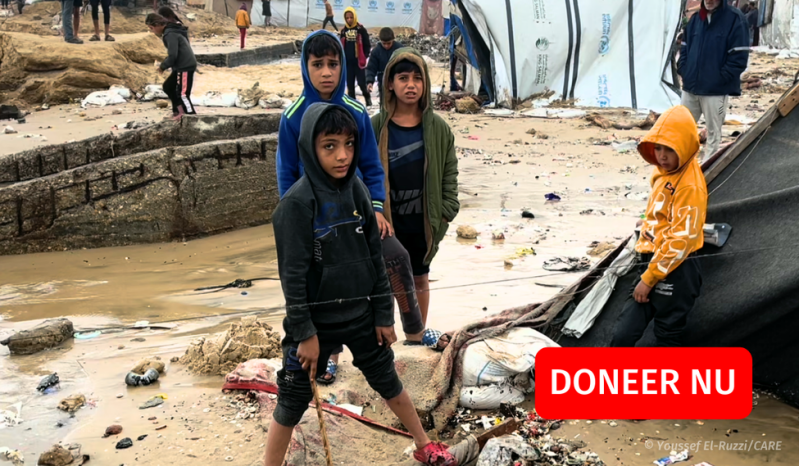
Slapen in een kapotte tent terwijl de regen naar binnen stroomt. De nachten in Gaza zijn ijskoud, vooral voor moeders en kinderen die nergens warmte of bescherming kunnen vinden.
Moeders en kinderen in Gaza trotseren noodweer met hevige regenval, overstromingen en kou. Veel kampen zijn deze week volledig onder water gelopen. In oude versleten tenten, met natte dekens en nauwelijks toegang tot voedsel is overleven hun enige doel.
In deze noodsituatie verdienen moeders en kinderen alle steun. Zij hebben die steun nu meer dan ooit nodig. Samen met u redden wij levens.
2047.

11 december 2025
Gaza Humanitarian Response
Situation Report No. 43
10 December 2025
(As of 18:00 on 9 December 2025, unless otherwise noted)
HIGHLIGHTS
- The Bani Suhaila Mekorot water pipeline, which last week supplied an average of 16,200 cubic metres of drinking water per day in Khan Younis, is now damaged and out of service.
- Three new outpatient malnutrition treatment sites opened in northern Gaza during the first week of December, bringing the total number of operational malnutrition sites to 41 in the north and 182 across the entire Gaza Strip.
- Over the past three days, approximately 20,000 dignity kits and 10,000 menstrual hygiene management kits were prepositioned in northern and southern Gaza to ensure essential support for vulnerable women and girls. In the meantime, the distribution of 146,208 child winter clothing kits is progressing apace.
SITUATION OVERVIEW
Sporadic reports of airstrikes, shelling and gunfire continued across all governorates, with the majority recorded in Gaza city, east of the “Yellow Line”. According to the Gaza Ministry of Health, two people were killed and five injured in the past 24 hours.
On 10 December, OCHA coordinated a body retrieval mission carried out by a Palestinian Civil Defense team in Beit Lahiya, in the North Gaza governorate. The body was reported by a UN mission in the area at the Al Waha Junction near Al Rasheed Road, approximately 1,450 metres south of the “Yellow Line.” The team retrieved the remains and transported them to Al Shifa Hospital in Gaza city. The deceased was reportedly a fisherman.
On 9 December, two bullets reportedly hit the ground floor of UNRWA’s Maghazi Health Center in Deir al Balah, located near the “Yellow Line.”
With a storm anticipated, low temperatures and rains are putting vulnerable groups at particular risk, including newborn children for whom hyperthermia is extremely dangerous. The UN and partners have targeted efforts to deliver assistance to communities living in flood-prone areas, including by scaling up the distribution of winter clothes for children from 5,000 to 8,000 kits per day.
In preparation for expected storm, Site Management partners have been proactively distributing the remaining flour sacks to be utilized as sandbags, along with tools and sand wherever feasible. Communication channels have been established with communities through designated site focal points to inform them about the forecasted rainfall, with practical guidance provided to help residents prepare.
According to a flood risk analysis concluded by the Site Management Cluster, 761 displacement sites hosting about 850,000 people, are at the highest risk of flooding. Over 3,500 displacement movements were recorded on 7 and 8 December, likely in anticipation of forecasted heavy rainfall expected to make landfall on 10 December.
Partners have also been accelerating the relocation of displaced households from high-risk shoreline areas. On 10 December, an initial group of 200 families was expected to relocate to a new site identified by municipal authorities in what remains of Hamad city, in eastern Khan Younis. Work continues to enable the relocation of an additional 300 households. Meanwhile, municipalities in Khan Younis are identifying more land, and site preparations are being expedited to facilitate the movement of further vulnerable families in the coming days.
UNITED NATIONS-COORDINATED AID ENTRY*
On 9 December, at least 2,367 pallets of aid administered by the UN and its partners were offloaded at Gaza’s crossings, based on data retrieved from the UN 2720 Mechanism dashboard at 18:00 on 10 December. About 46 per cent of these pallets contained food supplies, followed by shelter (31 per cent), water, sanitation and hygiene items (13 per cent), nutrition (9 per cent) and health supplies (1 per cent). At least 102 truckloads were offloaded at Kerem Shalom and 50 at the Zikim crossing.
On the same day, UNOPS international monitors deployed at Gaza’s crossings verified the collection of at least 3,736 pallets of aid – 3,514 from Kerem Shalom between 08:33 and 15:15, and 222 from Kissufim between 07:02 and 09:06. These comprised inter alia 2,556 pallets of food assistance, including flour, pasta, rice and canned food, 710 of blankets and tarpaulins, 215 of winter clothes, 165 of infant formula and 55 of medicines.
Overall, between the announcement of the ceasefire on 10 October, and 9 December, at least 153,785 pallets of humanitarian cargo were offloaded, and 135,366 collected from the different crossings. Only 2 per cent of all uplifted aid was intercepted during transit within Gaza, while over 133,400 pallets safely reached warehouses for onward distribution to people in need.
The above data excludes bilateral donations and the commercial sector.
On 9 December, five out of six humanitarian movements submitted for coordination with the Israeli authorities were facilitated. Denied outright was a planned assessment mission to Ash-Shaaf Maqbara and surrounding areas, in Gaza city, to gauge priority health, WASH, nutrition and protection needs of communities in those locations and provide appropriate support.

HUMANITARIAN RESPONSE
Food Security
- Between 1 and 8 December, Food Security Sector partners reached 52,000 households (approximately 260,000 people) with general food distributions as part of the December monthly assistance cycle. Families are receiving aid via 60 distribution points, including one newly established in the Beit Lahiya area of North Gaza that opened this week.
- The distribution of the 3,500 veterinary kits that entered Gaza on 5 December has commenced (SitRep #41 refers). So far, 133 herders have received one kit and three bags of fodder in Deir Al Balah.
Nutrition
- On 8 December, the Nutrition Cluster collected from the crossings 247 pallets of Ready-to-Use Complementary Food (RUCF), which will meet the nutritional needs of over 5,000 infants and young children for one month. The Cluster equally uplifted 167 pallets of Ready-to-Use Infant Formula (RUIF), sufficient to support more than 3,600 infants who cannot be breastfed for one month. While more RUIF is also expected to enter Gaza, there remains a supply gap in therapeutic milk (F-100). However, given the significant decline in malnutrition cases requiring inpatient treatment and the availability of therapeutic food (RUTF), this shortage is not expected to pose a major challenge.
- On the service delivery side, three new outpatient therapeutic sites for the treatment of malnutrition opened in northern Gaza during the first week of December, bringing the total number of operational sites to 41 in the north and 182 across the entire Gaza Strip. Approximately two-thirds of these sites provide integrated health and nutrition services, while the remaining one-third focuses exclusively on nutrition. Overall, the number of functional malnutrition sites has increased by 42 per cent compared to the month prior to the ceasefire.
Water, Sanitation and Hygiene
- The Bani Suhaila Mekorot water pipeline in Khan Younis is damaged and out of service. Last week, this pipeline supplied an average of 16,200 cubic metres of drinking water per day, with its damage representing a key concern. On 10 December, the team attempted to reach the site through coordination with the Israeli authorities, but access was denied.
- As part of flood preparedness measures, mobile pumps have been prepositioned in high-risk locations, contractors with heavy machinery and equipment are on standby, and mobile pumping units have been deployed in low-lying areas. Stormwater and sewage system unblocking and cleaning continues across Gaza.
- Cross-sectoral assessments are ongoing at the Nasser, Al Aqsa and Al Shifa hospitals to reinforce water supply and chlorination. The WASH Cluster is providing 30,000 cubic metres of drinking water per day to the Al-Shifa Hospital through the subsidized water program.
- Medical waste management in accordance with Scenario B of the approved medical waste protocol is taking place north of Wadi Gaza at the destroyed Sheikh Ijleen wastewater plant site. Scenario B includes clay coverage of medical waste in a temporary control cell location. The 8,000 sharps boxes from Al-Rantisi Hospital have already been transferred.
Protection
- Child Protection
- Partners are continuing the distribution of 27,622 winter clothing kits for children aged 0-3 months, 33,438 kits for children up to 12 months of age, and 85,148 kits for children aged 1–2 years. So far, 70 per cent of these kits have already been distributed through child protection and health partners and delivery hospitals. Due to the shortage of funding, partners will only be able to cover 37 per cent of the children in need.
- Gender-Based Violence (GBV) Prevention and Response
- The GBV Area of Responsibility (AoR) is supporting partners with dignity kits and menstrual hygiene materials (MHM) for women and girls. Over the past three days, approximately 20,000 dignity kits and 10,000 MHM kits have been prepositioned with GBV AoR partners in both northern and southern Gaza to ensure vulnerable women and girls can access essential support through the storm.
- As part of the closure of the 16 Days of Activism campaign on 10 December, GBV partners conducted a “Men Leading Change” training program in Deir Al-Balah, targeting 15 camp management male staff. The training emphasized the importance of engaging men in promoting sexual and reproductive health knowledge and preventing gender-based violence, fostering their role as partners in the family, and community protection. Other activities included interactive art therapy, recreational sessions, and focused psychosocial support directly targeting women and girls.
- Over the past three days, a total of 3,400 women and girls benefited from multisectoral GBV response services provided at Women and Girls’ Safe Spaces (WGSSs) across Gaza, including case management, psychosocial support, awareness sessions, and referrals across Gaza.
- Mine Action
- On 9 December, Mine Action partners conducted five Explosive Hazard Assessments (EHAs) in support of rubble removal efforts in Gaza city and Deir al Balah. Overall, 32 EHAs were conducted in the last week, 80 per cent of which in support of rubble removal efforts.
- Explosive Ordnance Risk Education activities continue through five partners in Gaza city, Deir al Balah, and Khan Younis.
Fuel
- Between 1 and 10 December, UNOPS collected approximately 1.83 million litres of diesel from Kerem Shalom and distributed nearly 1.57 million litres across northern and southern Gaza to support critical humanitarian operations.
2046.
Yesh Din
10 december 2025

Ziv Stahl, Yesh Din Executive Director at Haaretz Conference. Photo: Alon AradWe are in the midst of a crowdfunding campaign while continuing our day-to-day work. To keep documenting, exposing, and demanding accountability, we need your support.
Help us fight settler violence. Support Yesh Din today.Last week, together with 12 other human rights organizations, we published the "State of the Occupation" Report, summarizing the 58th year of the occupation and the two years of war in Gaza since October 7, 2023. The report presents a grim picture of widespread human rights violations and breaches of international law in Gaza, the West Bank, and East Jerusalem.
The publication of the report was accompanied by the “Unrestrained Occupation” conference, organized by Haaretz newspaper and partner organizations, with Yesh Din’s Executive Director, Ziv Stahl, among the speakers. Here is what she said:
“In October of last year, there were an average of eight settler violence incidents per day. Yesh Din’s data show that law enforcement is virtually nonexistent - 94% of police investigations were closed without indictments. To understand why there is so much violence and why nothing is being done about it, we have to understand who and what this violence serves. The answer lies not only in the outposts, but also in Jerusalem, more precisely, in the government that, upon its formation, declared its intention to annex the West Bank and apply Israeli sovereignty. The vision of Jewish sovereignty, of course, does not include Palestinians in the space, and its implementation is carried out through a pincer movement with two arms:
The first arm is the government, which has taken control of the levers of power and fundamentally changed the nature of Israel’s rule in the West Bank. Betzalel Smotrich, as a minister within the Defense Ministry, has effectively become the Minister of Annexation. From his office, he is dismantling the legal framework of the occupation by stripping powers from the military and transferring them to civilian loyalists. The Settlement Administration he established accelerated construction and development and the legalization of illegal outposts - all for Jews only. This is supplemented by massive budgets, land allocations, equipment, infrastructure, and legislation that facilitate land grab and dispossession. His coalition partner, Itamar Ben Gvir, has taken control of the police, leads the policy of impunity for violent settlers, and, under the cover of the war, has distributed thousands of weapons to settlers.
The second arm is on the ground - what official Israel cannot do itself, namely, ethnic cleansing, is accomplished on its behalf by outpost residents using guns, clubs, and machetes. The steep rise in the number and severity of violent incidents is also reflected in the surge in the number of Palestinians killed as a result of settler violence, and in the growing frequency of mass, organized raids inside Palestinian villages and towns. All this happens with the backing of state authorities - the police do not investigate, the army does not prevent violence, and soldiers either guard the attackers, at best, or join them, at worst. Systematic assault, with impunity, on men, women, and children to empty the area of their presence and seize their land. Dozens of Palestinian communities have already been forcibly displaced from their homes.
Trump may have pressed the brakes on formal sovereignty, but Israel has already annexed the West Bank, in practice and in effect, through violence on the ground and structural and legal changes. So at the next incident of settler violence, when we’re told again about that ‘small handful,’ supposedly just fringe youth, let’s remember - and remind others - who and what stands behind them.”
2045.

10 december 2025
ndiana University-Bloomington just became the latest university to retaliate against its students for pro-Palestine speech.
After a Jewish Ph.D. student refused to remove her "Free Palestine" profile picture, her departmental director expelled her from a Zoom meeting and then unilaterally blocked her approved conference funding — all because he disagreed with her political views.
This is censorship, bullying, and an abuse of power that suppresses academic freedom and furthers the climate of anti-Palestinian discrimination on U.S. university campuses.
Join us now in emailing IU-Bloomington to let them know that bullying and censoring pro-Palestine students is unacceptable, and to demand this departmental director step down immediately.
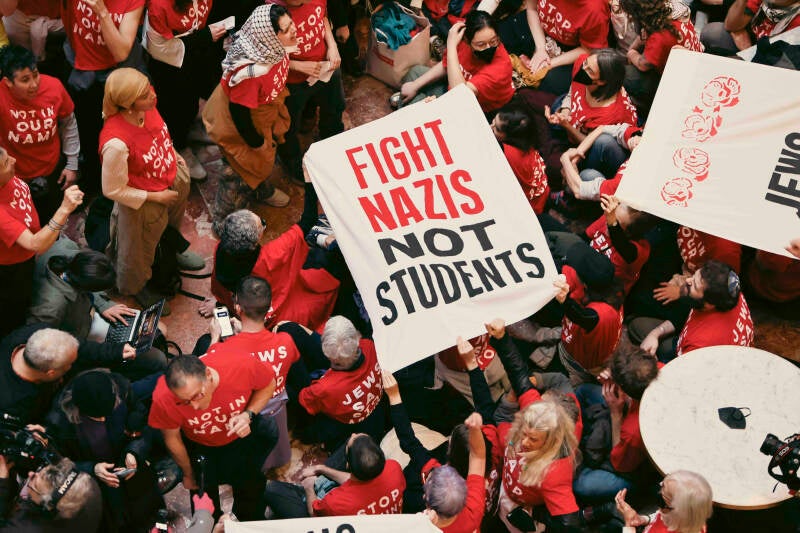
As the Trump regime escalates its crackdown on the Palestine solidarity movement, U.S. university administrators remain all too eager to shut down pro-Palestine protests on their campuses in the name of fighting "antisemitism."
As Jews and allies organizing in solidarity with Palestine, we have a responsibility to speak out against the weaponization of false claims of antisemitism. Email IU-Bloomington now to tell them to stop censoring and punishing pro-Palestine students.
Jonah Rubin
Sr. Manager of Campus Organizing
2044.

10 december 2025
Americans must choose between defending their democracy or letting Trump drag them back into dark ages
Instead of addressing the “affordability” burdens weighing heavily on Americans, an issue he dismisses as a mere “hoax,” Trump, in a speech he gave in Pennsylvania yesterday, sought to divert attention from his disastrous economic policies and his failure to deliver on campaign promises by attacking immigrants and inciting hostility against them.
Trump’s speech was not only saturated with hatred—he described several countries as “shitholes”, and has previously labeled some immigrants as “garbage,” “rapists,” and “thugs”—but it also relied on a crude racist rhetoric divorced from facts, evidence, and objectivity. At one point, Trump asked: “Why can’t we have some people from Norway, Sweden, just a few?”
It seems none of Trump’s racist or cowardly advisors bothered to inform him that countries like Norway and Sweden, and Europe more broadly, suffer from aging populations and themselves need immigrants. Without immigrants, America faces the same fate. Immigrants who respect the country's laws are an asset and a source of strength for the United States, not weakness.

For decades, Trump has made racism his path to wealth—beginning with building lower- and middle-income apartment buildings in Brooklyn and Queens, then as a real estate developer in Manhattan. Since announcing his presidential candidacy ten years ago, he has relied on racist and inflammatory rhetoric against minorities as a vehicle to power. And since returning to the presidency earlier this year, Trump has turned racism and incitement among Americans into a formula for masking his failures in governance. This is a familiar tactic of authoritarian regimes in failed or failing states: diverting attention from corruption and incompetence by sowing division.
Trump’s racist attacks on immigrants, particularly Somalis and Latinos at this moment, are extremely dangerous and risk inciting hate crimes against them, especially amid the climate of polarization and division gripping the United States. Evidence of this danger can be seen in the threats received by Congresswoman Ilhan Omar of Minnesota, who is a Somali immigrant. Meanwhile, the abusive practices of Immigration and Customs Enforcement (ICE) are not only inhumane but also unlawful, extending even to targeting American citizens based on appearance. In Minnesota, Somali-American citizens now feel compelled to carry proof of citizenship whenever they leave their homes.
America today stands at a critical juncture that will determine the future of its professed values, democracy, and global standing. Successive administrations have often failed these values both domestically and abroad—for example, in supporting Israel’s genocidal war on Gaza, where Biden’s Democratic administration has been no different from Trump’s Republican one. Yet Trump is now steering America down an even more perilous path, reviving racist and brutal policies thought to have been buried decades ago. America once believed it had cleansed itself of such poisons, but Trump is reproducing them with crude brazenness that exposes their true nature.
The choice couldn’t be clearer at this moment: either Americans collectively stand against Trump’s attempts to drag their country back into dark eras and save their democracy, or they allow him to manipulate it and redefine America in his own image, rather than upholding the Declaration of Independence and the Constitution. Every democracy is fragile by nature; it can only be strong through a robust constitution, institutions, and laws—and above all, through a people who believe in it and are willing to fight to preserve it.
In solidarity,
Dr. Osama Abu Irshaid
Executive Director, AMP
2043.

9 december 2025
Yet another governor targets CAIR in a desperate political play
American Muslims for Palestine (AMP) condemns in the strongest terms the executive order that was issued by Florida Governor Ron DeSantis yesterday, designating the Council on American-Islamic Relations (CAIR) as a “foreign terrorist organization.” AMP reaffirms its unwavering solidarity with CAIR and stands firmly by its side in the face of this malicious assault.
This is another reckless stunt, devoid of constitutional or legal foundation, yet dangerous in today’s climate of escalation. We are living through a moment when incitement and polarization are deliberately stoked by elected officials at every level of government, officials who appear to have forgotten the solemn oath they swore to uphold the Constitution.

Such a campaign does not merely target minorities through immigration policies, ICE practices, and executive overreach into legislative and judicial powers. It threatens the constitutional rights and civil liberties of all Americans.
This attack on CAIR is part of a larger effort to target, intimidate, and strip American Muslims of their rights and dismantle the civil institutions that safeguard them. It also reflects the complicity of certain elected officials with the Israeli agenda—placing it above American values, national interests, and even the needs of their own constituents. These politicians continue to put Israel first, desperately attempting to launder its image in the United States, an image already deeply tarnished in the eyes of most Americans because of its genocidal war on Gaza and its long-standing role in fueling wars and instability across the Middle East. In doing so, they continue dragging the United States into conflicts that undermine our own national interests.
Credible polling consistently shows that American public opinion stands against Israel’s crimes. A majority of Americans reject the interference of a foreign state, one dependent on U.S. aid and protection, in their country’s internal affairs, trampling on American values, laws, and interests. Yet some elected officials, consumed by hatred and Islamophobia, have chosen to betray the people who elected them, serving instead a foreign power that spies on our nation and endangers its security.
AMP calls on all defenders of justice, freedom, the Constitution, the rule of law, and civil liberties to stand with CAIR against this organized and ferocious campaign. The target is not CAIR alone—it is the very foundation of America’s constitutional, legal, and civil order.
In solidarity,
Dr. Osama Abu Irshaid
Executive Director, AMP
2042.

9 december 2025
Gaza Humanitarian Response
Situation Report No. 42
9 December 2025
(As of 18:00 on 8 December 2025, unless otherwise noted)
HIGHLIGHTS
- A severe winter storm is forecasted this week, with downpours expected to cause widespread flooding. Nearly 850,000 people are sheltering in 761 displacement sites that are particularly vulnerable to flooding.
- Market conditions continue to improve with the prices of basic food and non-food commodities dropping from 3,000 per cent above pre-conflict levels as of July to 132 per cent above pre-conflict averages as of 8 December.
- Dire shortages of essential drugs persist in Gaza. Five medical freezers were delivered to hospitals on 8 December to ensure the safe storage of therapeutic milk and foods for malnourished children.
SITUATION OVERVIEW
Sporadic reports of airstrikes, shelling and gunfire continued across all governorates, including in Jabalya al Balad and east of Jabalya in North Gaza, in Ash Shujaiyeh and At Tuffah east and northeast of Gaza city, off the coast of Khan Younis and in the east and south of the governorate, as well as east and north of Rafah city. Several locations east of the “Yellow Line” were affected. According to the Gaza Ministry of Health, one Palestinian was killed and six injured over the past 24 hours.
The Byron winter storm is forecasted this week, with downpours expected to cause widespread flooding. Past storms have flooded displacement sites, contaminating living areas with sewage and solid waste, and affecting thousands of people. Over 3,500 displacement movements were recorded on 7 and 8 December, likely in anticipation of forecasted heavy rainfall expected to make landfall on 10 December.
A flood risk analysis just concluded by the Site Management Cluster reveals that 761 displacement sites hosting approximately 849,977 individuals are at the highest risk of flooding. To date, flooding has been confirmed at 219 of these sites, directly impacting over 140,000 IDPs.
According to the Ministry of Health in Gaza, 52 per cent of essential drugs are completely out of stock, with severe shortages in primary healthcare (50 per cent), mother and child health (47 per cent), chemotherapy (63 per cent), mental health (35 per cent), emergency and ICU surgery (51 per cent), and kidney transplantation (46 per cent). Life-saving antibiotics and chemotherapy drugs are largely unavailable, putting patients’ lives at risk. Medical disposables are also critically low, with surgical gauze and laparotomy sponges at zero stock, causing delays in surgical procedures. Supplies for open-heart surgery are depleted, and orthopedic items—especially external fixators—are almost entirely unavailable (99 per cent out of stock).
UNITED NATIONS-COORDINATED AID ENTRY*
On 8 December, at least 3,230 pallets of aid administered by the UN and its partners were offloaded at Gaza’s crossings, based on data retrieved from the UN 2720 Mechanism dashboard at 18:00 on 9 December. About 69 per cent of these pallets contained food supplies, followed by shelter (23 per cent), water, sanitation and hygiene items (5 per cent), and health supplies (3 per cent). At least 128 truckloads were offloaded at Kerem Shalom and 12 at Kissufim.
On the same day, UNOPS international monitors deployed at Gaza’s crossing verified the collection of at least 3,954 pallets of aid – 2,180 from Kerem Shalom between 08:04 and 15:12 and 1,774 from Zikim between 07:58 and 10:14. These comprised inter alia 3,911 pallets of food assistance, including flour, canned vegetables, emergency food rations, and nutrition supplements, 548 of blankets, 62 of tents, 60 of winter clothing and items, 56 of tarpaulins, 117 of jerrycans, 38 of sealing off kits, and 7 pallets of medical items.
Overall, between the announcement of the ceasefire on 10 October, and 8 December, at least 151,373 pallets of humanitarian cargo were offloaded, and 133,347 pallets collected from the different crossings. Only 2 per cent of all uplifted aid was intercepted during transit within Gaza, while over 131,000 pallets safely reached warehouses for onward distribution to people in need.
The above data excludes bilateral donations and the commercial sector.
On 8 December, eight out of 10 humanitarian movements submitted for coordination with the Israeli authorities were facilitated. One movement faced impediments and was only partially accomplished, while a UN reconnaissance mission to the UN Rafah Logistics Base was denied outright.

HUMANITARIAN RESPONSE
Health
- On 8 December, WHO facilitated the evacuation of 25 patients and their 96 companions from Kerem Shalom for medical treatment outside Gaza. About 16,500 patients in Gaza still require urgent medical evacuation.
- On 9 December, WHO reported that a second batch of five medical freezers, along with furniture and medical supplies, had been delivered to five hospitals – including two stabilization centres for the treatment of severe acute malnutrition – to ensure the safe storage of therapeutic milk and foods for malnourished children. Since August, WHO has provided 23 medical freezers to hospitals offering maternity and nutrition services in Gaza. These units help strengthen maternal health services and improve child and newborn care.
Shelter
- Between 7 and 8 December, Shelter Cluster partners reached around 7,400 households with emergency shelter and non-food items in the Gaza Strip. Overall, partners distributed 839 tents in North Gaza, Gaza City, and Khan Younis; 18,997 tarpaulins in Deir al Balah and Khan Younis; 1,252 blankets in Deir al Balah and 782 winter clothing vouchers in North Gaza and Gaza City. During the same period, a total of 3,995 tents reportedly entered Gaza through both the Shelter Cluster framework and bilateral donations.
- Two months after the ceasefire, insufficient quantities of shelter supplies have entered the Strip. UN and INGO partners have only been able to bring in 14,600 tents for 85,000 people, which increases to 48,600 tents when considering also bilateral donations, while 1.3 million people remain in need of urgent shelter assistance for the winter. Most INGOs remain blocked from bringing in relief and nearly 4,000 pallets of shelter materials have been rejected.
Nutrition
- A recent Post-Distribution Monitoring (PDM) survey was conducted among 756 households that received digital cash assistance during the month of November, having been targeted because their children were being treated for malnutrition. Survey results show significant improvements in household food consumption, with a fourfold rise in fruit intake (41 per cent up from 10 per cent), doubling of dairy products to( 65 per cent up from 30 per cent), tenfold increase in meat to (10 per cent up from 1 per cent), and incremental increase in eggs to (1 per cent up from 0 per cent). These findings highlight that cash assistance is enabling families to diversify their diets and improve nutritional intake, which is critical for child health and recovery from malnutrition.
- From 3 to 7 December, Nutrition partners strengthened their cash assistance efforts, providing additional rounds of multi-purpose cash assistance to vulnerable families through cluster referrals. This included support for 1,764 families with children screened and treated for Severe Acute Malnutrition (SAM), 1,962 families with children screened and treated for Moderate Acute Malnutrition (MAM), and 377 families comprising pregnant and breastfeeding women.
Protection
- On 8 December, 289 people were reached with protection services such as individual and group mental health and psychosocial support (MHPSS) and protection first aid, winter clothing and blankets distribution, legal and health guidance, protection risk awareness sessions, training for community protection committees, volunteer engagement, and referrals, delivered with strong links to Shelter and Health partners.
- Protection risks remain high due to overcrowding, disorganized site layouts, limited privacy, and access restrictions, with growing psychosocial distress and critical winterization gaps remaining.
- Child Protection
- On 8 December, Child Protection (CP) partners reached over 1,100 children and caregivers through MHPSS, case management, recreational activities, awareness sessions and winter clothing distributions.
- Partners continue to receive 40 to 50 complex child protection cases daily, including children without parental care, child survivors of Gender-Based Violence, children experiencing physical violence, children with disabilities, and children with severe psychosocial distress. These cases are managed through tailored, individualized responses based on each child’s needs.
- On 8 December, about 50 children were referred to cash for child protection, health, education and shelter services across the Strip.
- Mine Action
- On 8 December, four Explosive Hazards Assessment (EHAs) were completed by two partners in Deir al Balah and Gaza city, in support of rubble removal activities.
- Explosive Ordnance Risk Education (EORE) activities continue through five partners in Deir al Balah, Khan Younis, and Gaza city.
Education
- The number of operational Temporary Learning Spaces (TLS) increased from 303 in October to 392 as of 8 December. Enrollment also grew significantly, with almost 221,000 students (55 per of them girls) attending classes with support from 5,180 teachers (73 per cent women). Despite this progress, only about 34 per cent of Gaza’s school-aged population is enrolled in these TLSs for the 2025-2026 academic year, highlighting the continued gap in access to education.
- Flooding in the Gaza Strip due to heavy rain during the winter season is expected to further affect TLSs. So far 38 TLS were affected by flash floods.
Multi-Purpose Cash Assistance (MPCA)
- Market conditions continue to improve. Prices of basic food and non-food commodities dropped to 132 per cent above pre-war levels from 3,000 per cent above pre-war levels in July. Leveraging these improvements, humanitarian organizations are increasing MPCA with 1.2 million people expected to be reached with US$380 per family by the end of the year. The cash out commission rate is also decreasing, down to 12 per cent as of 8 December.
Emergency Telecommunications
- As of 8 December, the Emergency Telecommunications Cluster (ETC) continues to explore avenues for replacing damaged satellite devices reported by UN agencies. Delays in device replacement are compromising staff safety and security during field missions.
- The ETC is working on installing the Very High Frequency (VHF) repeater at the Khan Yunis Training Centre following its relocation from Deir Al Balah. Additionally, installation activities are underway to improve VHF coverage in southern Gaza.
2041.
9 december 2025
As the year draws to a close, our Board would like to offer a few reflections and express their gratitude to our beautiful community, whose steadfast support enables us to carry out our mission.
Messages from our Board of Directors

It is the honor of a lifetime for me to serve on the Board of Directors of Eyewitness Palestine!
Here in the United States, we often struggle to find meaningful ways to impact American complicity in the violence of the Zionist project called Israel - apartheid, displacement, settler brutality, genocide. The entire world has recognized Israel’s rogue status, but, in the US, not only does our government support this ongoing Nakba, but our tax dollars are funding massive violations of international law.
After two plus years of a genocide witnessed by ordinary citizens on alternative media, there has been a sea change in the public opinion of Americans. No longer do people believe the lies and propaganda of the mainstream media, corporations, and the government. But our politicians refuse to join, choosing war crimes over humanity, corporate and state sponsorship over morality. We know that the only way to alter this dynamic is to build a massive resistance that will challenge their ability to continue maintain their power .
That is why Eyewitness Palestine is a critical member of the Palestine solidarity movement. Every delegation, every webinar, all the mutual aid that EP raises, contributes mightily to the growth of advocacy for Palestine and the end of the corrupt politics that bankrupts our souls.
Eyewitness Palestine is a powerful engine for the change that we all want to see. EP represents one meaningful and practical way to stand up for Palestine. As we end another year of unspeakable horrors, please consider a donation of any kind to help EP continue its mission of justice, dignity, and freedom. Thank you.
-Harry Soloway
I thought I knew what to expect on that first delegation in May 2008 given the efforts IFPB (now Eyewitness Palestine) had made in giving the delegation a 2 day preparatory workshop. But I was not prepared for the visceral response I had as I witnessed first hand the clear segregation and abuses Palestinians were subjected to on a daily basis. The memories have stayed with me, going through Qalandia checkpoint, walking through the souk in Hebron, all but empty of stalls, listening to Iyad Burnat’s family share their experiences protesting against the segregation wall, visiting with a refugee family - four generations - in Dheshieh refugee camp. I fell in love, and became committed to the Palestinian fight for justice.
I returned home in June and began to arrange speaking engagements with churches and social justice groups to share what I had witnessed. I realized how much we here in the US needed to learn about Palestine and the occupation, and how valuable and transformative our delegations are. Since June 2008, there have been many heartbreaking moments. When I was offered the opportunity to join the EP board, I was thrilled because it’s given me the chance to work closely with the incredible EP team, to encourage and support more folks to go on delegations. When friends ask why I continue to engage with justice for Palestine, I tell them how important it is to “go and see and come and tell.” Thank you for your support, which fuels this important work!
-Paula Roderick
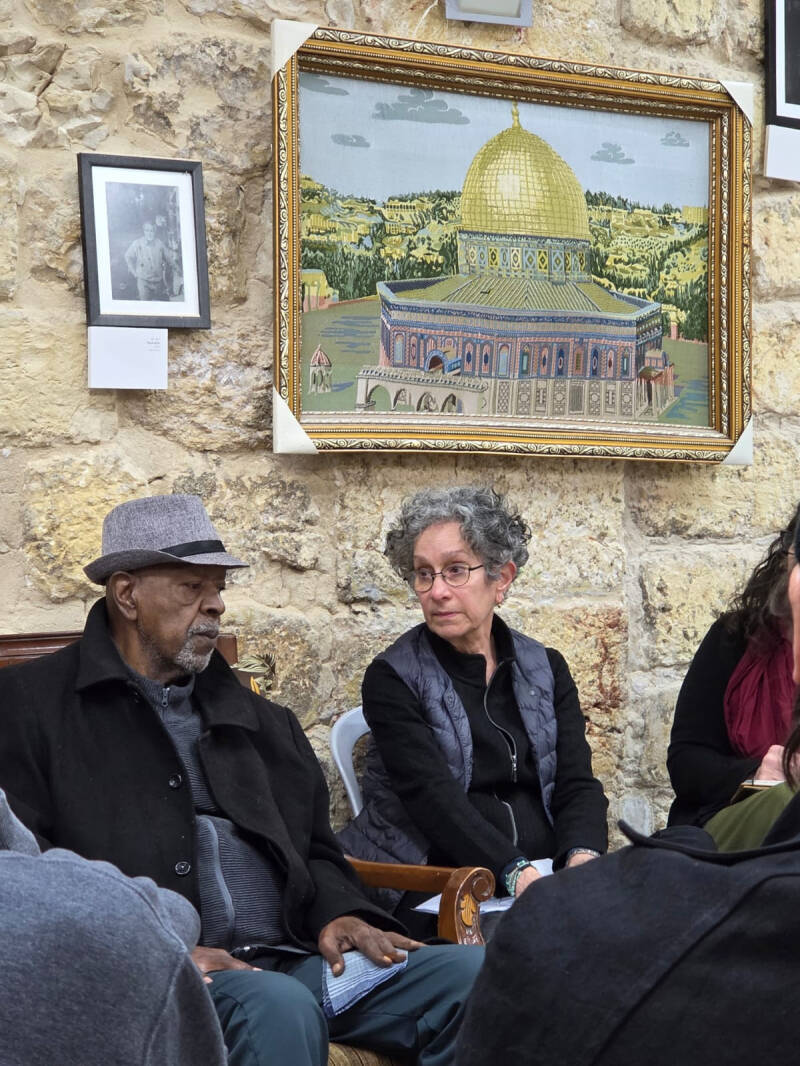
I had the profound good fortune of joining an Eyewitness Palestine delegation of mental health professionals in April of 2025. Traveling with Eyewitness Palestine means you are not a tourist. You are welcomed with extraordinary warmth, and you leave not simply as a visitor, but as an informed, committed partner in the struggle for justice and liberation.
The experience was more than life-changing. It was inspiring, grounding, and deeply uplifting. It strengthened both my understanding and my resolve, and it reminded me of the power of human connection in the face of immense structural violence.
In this time of growing global demands for justice, we find ourselves watching the majority of elected officials bow to the corporate and political interests that continue to fuel the ongoing genocide and ethnic cleansing. It forces us to ask: How can this continue while the whole world is watching?
The answer, in part, lies in the reality that many stand to gain—politically, financially, or professionally—from the perpetuation of this violence. After spending countless hours advocating in Washington, D.C., and in other political spaces, I am no longer surprised to discover that the offices of our elected representatives too often have less accurate, on-the-ground information than we do. Those of us who maintain direct relationships with partners in the region—those of us who speak daily with people living this struggle in Palestine—carry a deeper, more urgent understanding of what is happening.
This is precisely what Eyewitness Palestine offers: the chance to go beyond the headlines and into the land itself, into the homes, workplaces, and communities of the people who live this reality every day. It is not a passive learning experience; it is a journey of relationship-building, of witnessing, and of standing in solidarity.
Your donation in any amount will help further this critical work - for justice, for humanity, for those in Palestine and the diaspora who are relying upon us to stay the course. Thank you.
-Cheryl Qamar
I first became aware of Eyewitness Palestine in 2015, when a friend told me he was going on a delegation to the West Bank. Being Lebanese, I knew many Palestinians but did not really know much about the situation there. I joined my friend on the delegation, and it changed my life and my perceptions forever.
I saw first-hand the tremendous injustices visited upon Palestinians in their homes and their communities. The horrors of home demolition, detention and imprisonment even of young children, the physical and psychological violence visited upon them day after day, month after month, year after year, decade after decade.
I also saw, to my amazement, the grace and warmth and fortitude of Palestinian people who regularly experience humiliation and indignities at the hands of the IDF and Israeli settlers. The trip inspired me to a lifelong commitment to work on behalf of Palestinian freedom.
Upon returning from the delegation, I joined the board of Eyewitness Palestine and have been involved in the movement ever since. Because views in the US are so skewed toward Israel – in our government, in the media, and in every discourse – the work of Eyewitness Palestine is more important than ever. Our organization takes delegates to Palestine and gives them a first-hand view of the truth of what is happening. Then these delegates return to America committed to telling these truths about the Occupation and its impact on Palestinian people. So many delegates, upon their return, say “the trip changed my life.”
That is why it is so important to support Eyewitness Palestine. As a board member and as someone who is dedicated to the the movement for Palestinian liberation, I am asking you to support Eyewitness Palestine in whatever way you can. Thank you.
-Tom Hier
2040.

9 december 2025
There’s no doubt that 2025 has been a challenging year.
October marked two years of Israel’s ongoing genocide of the Palestinian people. Despite the so-called ceasefire agreement going into effect on October 11, Israel has continued to attack Gaza nearly every day since, while blocking life-saving aid from entering. In the West Bank, settler attacks are on the rise. All the while, Israel continues to bomb Lebanon with complete impunity.
I’m writing to you today because I know a better world is possible, Nico. A world where our tax dollars fund healthcare, housing, and education—programs that make our communities stronger—instead of fueling a genocide with billions of dollars in weapons and military funding.
How do I know a better world is possible? Because of people like you, who are unrelenting in your compassion and commitment to justice and the liberation of the Palestinian people, and all people.
We have a long road ahead of us, but these past two years have shown that our movement is growing by leaps and bounds.
As I reflect on this past year, I am eternally grateful for steadfast supporters like you, who day after day power our critical advocacy work. Thank you.
In the year ahead, we need your help to keep shifting the narrative, providing vital resources like our Congress Scorecard and Not My Tax Dollars map, and supporting organizers who are fighting to move dollars away from genocide through local divestment campaigns.
2039.
BDS
9 december 2025
These past two years have brought overwhelming grief. But alongside that pain, something else has grown — a deeper determination, a clarity of purpose, and a refusal to give up on our people’s struggle for freedom, justice and equality.
Since the announcement of the so-called "ceasefire", our focus has remained unwavering: to push for a real end to Israel’s genocide and to protect our people’s decades-long struggle for justice and liberation from all threats including the latest illegal colonial plan of Trump and Netanyahu.
Watch Omar Barghouti, co-founder of the BDS movement and recipient of Gandhi Peace Award, reflecting on the dangers facing our struggle and how we can collectively rise to meet them.
Share this video with your friends and networks so our reach grows stronger.
2038.
AVAAZ
9 december 2025
Eén verpleegkundige uit Gaza is zojuist vrijgelaten uit Israëlische detentie -- maar dr. Abu Safiya en zo’n 90 andere hulpverleners worden nog steeds vastgehouden. Mogelijk worden zij gemarteld terwijl jij dit leest. Sluit je aan bij meer dan 520.000 anderen wereldwijd en laat je horen voor hun vrijlating.

Maar hij bleef levens redden -- totdat Israëlische troepen hem ontvoerden en naar verluidt martelden.
Nu worden hij en zo’n 90 andere zorgverleners gevangen gehouden. Velen van hen zijn opgepakt terwijl ze voor hun patiënten zorgden. Vijf van hen zouden achter de tralies zijn omgekomen, anderen worden mishandeld en geslagen.
Terwijl wereldleiders zich richten op een staakt-het-vuren, staan artsen wereldwijd op om vrijheid te eisen voor hun moedige collega’s, zodat zij duizenden gewonde kinderen in Gaza in leven kunnen houden.
Laten we ons bij hen aansluiten! Sluit je aan bij de oproep voor de vrijlating van dr. Abu Safiya en zijn collega’s, die hebben laten zien waartoe mensen in staat zijn, en help om ze met hun familie te herenigen:
Net als dr. Hussam Abu Safiya, directeur van het laatste nog functionerende ziekenhuis in Noord-Gaza tot het werd aangevallen, zitten bijna 100 medische zorgverleners nog steeds gevangen in Israël. Veel van hen werden tijdens hun werk in Palestijnse ziekenhuizen of ambulances ontvoerd.
Laten we het verhaal van dr. Abu Safiya wereldnieuws maken en de wereld laten zien welk onrecht de mensen wordt aangedaan die alles op het spel hebben gezet om levens te redden.
Een wereldwijde petitie met honderdduizenden handtekeningen van over de hele wereld kan kracht bijzetten aan de druk om hen vrij te laten en de publieke aandacht op deze zaak gericht houden totdat Gaza’s artsen vrij zijn. Sluit je nu bij ons aan.
Met onvermoeibare hoop,
Julian, Mo, Harriet, Marco, Nadia, Liliana, Christoph en het hele Avaaz-team
2037.
8 december 2025
A full week of powerful webinars is on the way, created to inform, inspire action, and advance our mission. When you register, you’re helping sustain the work that makes these important conversations possible. It takes a few minutes to register and we have a really great offer on ALL 5 webinars available within the links!
Threads of Resistance Webinar Series: December 15 – 19, 2025
End the year on an inspiring note and join us this December for “Threads of Resistance,” a powerful week-long series of online events uplifting voices across the global movement for Palestinian liberation. Throughout the week, we’ll feature artists, organizers, public figures, spiritual leaders, and past Eyewitness Palestine delegates who have witnessed the occupation on the ground firsthand. What unifies our speakers is their commitment to standing firmly in truth, even when doing so comes at personal cost.
Each session offers unique perspectives, bringing together stories, experiences, and acts of resistance that span communities and continents. We invite you to be part of these conversations, to learn, to reflect, and to engage in meaningful dialogue with us.
Donations raised will go towards sustaining Eyewitness Palestine’s work throughout the year, including our virtual and in-person delegations, webinars, and mutual aid projects.
REGISTER FOR THE FOLLOWING UPCOMING EVENTS BY CLICKING ON THIS LINK:
December 15th, 8pm EST: "Blacklisted": This session spotlights individuals who are not new to speaking out against the occupation, and who have been fired, silenced, de-platformed, shadow banned or publicly targeted for speaking the truth. Hear firsthand accounts from people who have endured retaliation for standing in solidarity with Palestinians and learn how censorship shapes movement work globally. Together, we will explore the consequences of suppression, and imagine collective strategies to resist attempts to fracture, intimidate, or silence the movement.
December 16th , 12pm EST - “Breaking Borders: Globalizing Palestine": Join us for a conversation with activists, organizers, and artists from around the world. This session explores how global struggles for liberation intersect with Palestine, and how international solidarity continues to break through borders, policing, and political pressure.
December 17th , 8pm EST - “Palestine Through My Eyes” : In this session, past delegates will share their firsthand experiences from the ground in Palestine. Hear personal reflections, stories, and insights from those who have witnessed the violence of the occupation as well as the strength, creativity, and beauty of the Palestinian people, across the West Bank.
December 18th , 12pm EST - “Artists for Palestine” : Hear from artists across disciplines who use their creative platforms to uplift Palestinian voices, challenge injustice, and inspire global solidarity. This session highlights how art can be employed as a tool for resistance, storytelling, and collective liberation.
December 19th , 12pm EST - “Religious Voices for Palestine” : Religious and spiritual leaders from various traditions come together to discuss solidarity with Palestine through a spiritual and ethical lens. Explore how faith communities interpret justice, liberation, and moral responsibility in the context of Palestine.

2036.

8 december 2025
A Week of Major Legal Actions: HRF Targets War Criminals From Spain to Canada
Brussels, 08 December 2025
In the past 14 days, the Hind Rajab Foundation (HRF) has advanced several major legal actions across Europe and North America, strengthening the global push to hold Israeli perpetrators accountable.
Most recently, HRF filed a criminal complaint in Spain seeking the arrest of an Israeli soldier involved in the large-scale destruction of Beit Hanoun, supported by verified video and photographic evidence.
We have also joined partners in Canada to invoke universal jurisdiction against former Prime Minister Ehud Olmert and former Foreign Minister Tzipi Livni, urging their arrest during their planned visit to Toronto for their roles in the 2008–09 Gaza massacre.
Meanwhile, in the Netherlands, HRF has called on the Dutch Bar Association (NOvA) to adopt new safeguards ensuring that legal professionals do not facilitate international crimes through corporate or financial structures. This resolution was adopted on the 2nd of December.
Beyond these public actions, HRF has filed three additional cases in recent days that cannot yet be disclosed for strategic reasons — including one major case targeting an entire Israeli battalion implicated in systematic war crimes.
Taken together, these developments mark a rapid expansion of HRF’s international legal work, as impunity fragments and accountability takes root, jurisdiction by jurisdiction.
More info below
HRF Seeks Arrest of Israeli Soldier in Spain Over the Destruction of Beit Hanoun
03 December 2025 – HRF initiates legal action in Spain against a soldier accused of taking part in the destruction of Beit Hanoun in northern Gaza.
HRF and Partners Seek Arrest of Olmert and Livni in Canada Over 2008-09 Crimes
03 December 2025 – HRF files complaint urging Canada to arrest former Israeli leaders Ehud Olmert and Tzipi Livni for alleged war crimes in Gaza during 2008–2009 war.
The Dutch Debate on Complicity and the Responsibility of Lawyers
24th November 2025– As Israel commits genocide in Gaza, Haroon Raza urges the Dutch Bar to examine lawyers’ roles in enabling atrocity crimes.
2035.

8 december 2025
West Bank Monthly Snapshot
Casualties, Property Damage and Displacement
October 2025

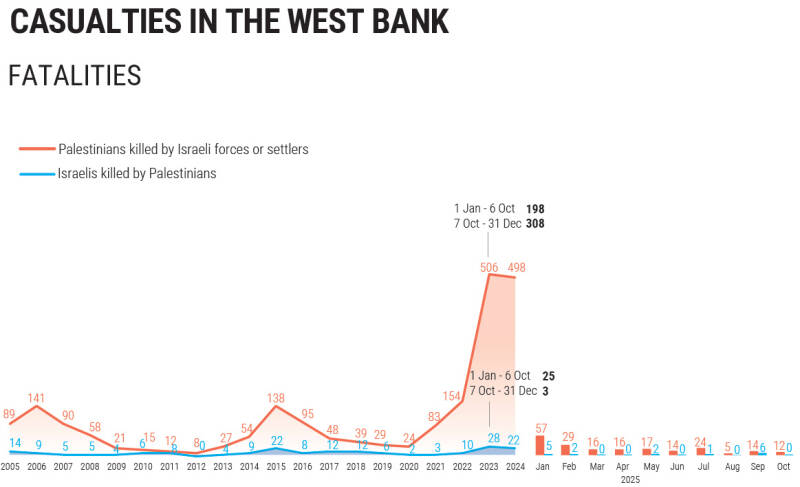


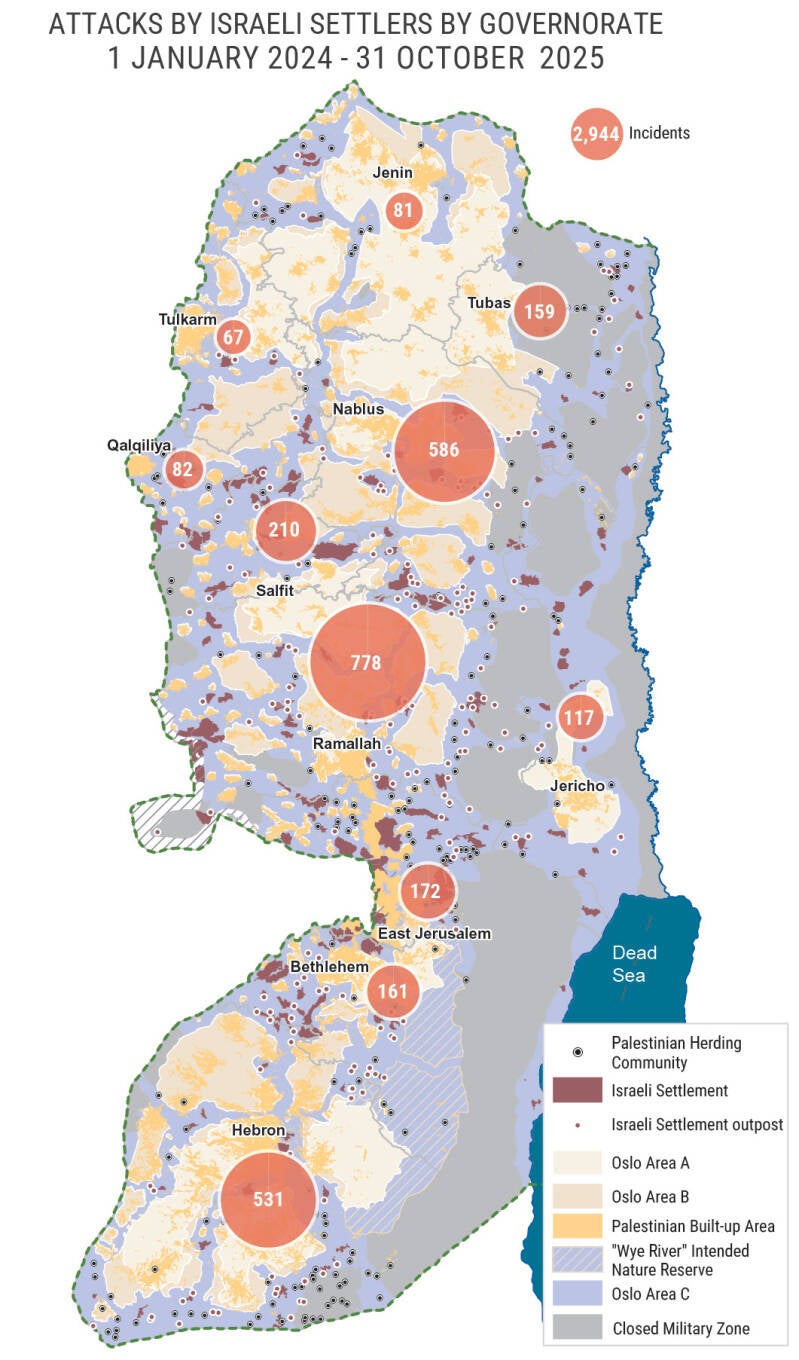
2034.
MONDOWEIS
8 december 2025
2033.
Mondoweis
7 december 2025
2032.
7 december 2025
Now is the time: We now need your help to build the anti-occupation movement. Any gift can help, and as little as $10 can provide crucial training for one activist.
Support War Refusers
I would like to tell you about our work to create a support infrastructure for anti-occupation and war resistance. We were able to grow and develop effective Israeli resistance initiatives that helped to push for a ceasefire. We are now in a critical moment where we can use the ceasefire to bring the occupation closer to an end. We need your help to do it by providing training for activists.
Immediately after October 7th, we tried to encourage the Israeli anti-occupation movement to resist the predictable invasion of Gaza, but we did not succeed. The movement was in shock and mourning members who were murdered that day. It caught us all unprepared and unready. This experience sent us on a mission to understand how we can support the movement to respond faster, be more adaptable and have the power not to stop war after it happens but prevent it. We discovered that many successful movements around the world were supported by organisations that provide infrastructure to support, mentor and train activists and new initiatives. We started to develop this infrastructure.
Support War Refusers
What we do is like a desert greenhouse for cultivating organized anti-occupation resistance, especially focusing on refusal. Its goal: to transform individual grassroots initiatives into a coordinated anti-war movement from within. It provides the support system that new initiatives need to emerge, mentorship to advise and guidance and training to provide knowledge and skills to activists.
We are one of the leading forces of the growing Israeli resistance against the genocide and one of the forces that helped to force a ceasefire. We supported and provided mentorships to initiatives and activists who protest and execute direct action that interfere with the genocidal machine. The most successful, and it is our speciality, was the reservist’s refusal wave which started and was supported by us. I will discuss it further in the next newsletter.
Support War RefusersUntil today, we have mostly focused on developing and supporting new resistance initiatives. Now we are starting to provide training for activists. Activism is not random actions and hoping for good, but calculated strategic action plans to undermine the power of the regime. We provide activists the knowledge and tools that they need to take action to break the foundation of the Israeli occupation. Training also helps to bring new people and power into movements; this is why training is so urgent to the movement now. With the ceasefire agreement, the movement entered a new phase. The movement has here the opportunity to use the momentum to keep the ceasefire and push for the end of the occupation. We need to create new initiatives that fit the phase and bring new activists from the hostage protests to the anti-occupation movement. That is what training can do, bring new people and create new initiatives.
In order to do that, we need your help. With our $50,000 goal, we will be able to strengthen the anti-occupation movement by training activists. Your gift, even the smallest amount, can make a difference. We do not have millionaires who support us, but normal people, like you, who want peace and justice from the river to the sea. Support the Israeli resistance today to bring the occupation one step closer to an end.
In solidarity,
Mattan Helman
Refuser Solidarity Network
2031.

7 december 2025
Gaza Humanitarian Response
Situation Report No. 40
6 December 2025
(As of 18:00 on 5 December 2025, unless otherwise noted)
HIGHLIGHTS
- Health service delivery in northern Gaza surged after the ceasefire, with the number of active health partners more than doubling, and consultations increasing more than tenfold, from 5,000 to 55,000 as of mid-November.
- On 4 December, the WASH Cluster distributed 35,607 dignity and 2,208 hygiene kits in the North Gaza governorate, reaching approximately 45,000 people.
- Three hundred essential cleaning supply kits were distributed to 93 learning spaces in Khan Younis, Deir al Balah and Gaza city to help mitigate the spread of communicable diseases.
SITUATION OVERVIEW
Reports of airstrikes, shelling and gunfire continued across all governorates, with all incidents recorded east of the “Yellow Line”. On 5 December, OCHA helped the Palestinian Civil Defence coordinate the attempted rescue of an injured person in North Gaza’s Beit Lahiya area. The mission, initially requested at 17:00, could only proceed five hours later, when the Israeli forces approved the deployment, exclusively on foot, of a Civil Defence team to the incident location. Upon arrival, however, the team found the individual had already died. The incident reportedly occurred when a family comprised of a father, mother, and son went to their damaged home in Beit Lahiya to retrieve winter clothes; they were impacted by a shell near the “Yellow Line”, with the father – who was also a Civil Defence worker - succumbing to his injuries.
The Site Management Cluster (SMC) currently records 942 active displacement sites, hosting nearly 1.5 million people. The vast majority, 783, are makeshift or scattered sites, accommodating more than 1.1 million people. Site Management partners are operational in 356 of these sites, about 38 per cent of the total, undertaking winterization and flood mitigation measures as possible, despite the extremely limited supply of construction materials that entered the Strip over the past two years. This leaves most of the population sheltering in displacement sites without dedicated Site Management support. The Cluster has started collecting data on these sites to assess flooding risks and needs; so far, 170 sites hosting over 191,000 people have been contacted. Of these, 141 reported flooding during recent rainfall, directly affecting 65,745 people. This information is currently being reviewed and will be shared with relevant partners to help inform potential support and targeted interventions.
In Gaza City, the garbage mountain of solid waste at Faras Market has now reached 13 metres with an arrival rate of one truck every three to five minutes. New spontaneous dump sites are also appearing, all of which include medical waste mixing.
Only half of drinking water samples and 4 per cent of domestic samples meet standards and just 21 per cent of drinking water in health facilities is chlorinated. All partners operating wells, desalination units, or trucking have been requested to test water quality and inform communities.
According to WASH Cluster surveillance, Acute Respiratory Infections (ARI) and Acute Watery Diarrhea (AWD) remain the most frequently reported conditions, accounting for an average morbidity of 60% and 39%, respectively. A rise in AWD morbidity has been observed among individuals aged ≥5 years, while a decline in ARI cases is noted.
UNITED NATIONS-COORDINATED AID ENTRY*
On 5 and 6 December, all Gaza’s crossings were closed for offloading.
Collection of humanitarian cargo from the platforms into Gaza, however, proceeded. While no comprehensive information is available yet, at least 401 pallets of menstrual health management kits and 1,058 pallets of dignity kits, diapers, jerrycans and winter clothes were uplifted from Kerem Shalom for onward distribution to people in needed.
The above data excludes bilateral donations and the commercial sector.
Overall, out of 14 humanitarian movements submitted for coordination with the Israeli authorities on 5 and 6 December, seven were facilitated, three faced impediments and were only partially accomplished, two were denied outright, and two were cancelled by the organizers. Out of six aid cargo collection missions, four were facilitated by the Israeli forces, one was impeded, and one was cancelled due to lack of humanitarian cargo left for uplifting at Zikim. An attempt to undertake a reconnaissance mission of Salah ad-Deen Road on 5 December was only allowed for the first two kilometers; a new coordination request to cover the remaining section was denied on 6 December.
HUMANITARIAN RESPONSE
Health
- Health service delivery in the Gaza city and the North Gaza governorates has increased since the announcement of the ceasefire, with the number of active health partners nearly doubling from 16 to 30, and consultations increasing more than tenfold, from 5,000 before the ceasefire to 55,000 as of mid-November.
- On 4 December, the Health Cluster conducted a mission to the North Gaza Governorate to assess health service points (HSP) requirements. Initial findings confirm a critical need for a primary health care centre and a field hospital in underserved areas, while the reactivation of the Kamal Adwan and Indonesian hospitals remains uncertain due to repeated mission denials and military operations in the area. The Health Cluster has identified three locations for the establishment of these HSPs and will work with partners to address community needs in the assessed areas.
- Between 3 and 5 December, WHO delivered 10 anesthesia machines to partner hospitals and supported a new field hospital set up in Gaza city with essential emergency department equipment, including beds, monitors, and emergency trolleys.
- Between 24 and 30 November, one new case of Guillain-Barré Syndrome (GBS) was reported in Gaza, bringing the total suspected cases registered since 1 June to 142, including 21 deaths. GBS is a rare autoimmune disorder where the body’s immune system attacks its own nerves, causing weakness, pain, and sometimes paralysis. In Gaza, the abnormal surge in cases is driven by overcrowding because of destruction and displacement and the collapse of water and sanitation systems, which increase the risk of infections that can trigger the syndrome.
WASH
- On 4 December, the Cluster distributed 35,607 dignity kits and 2,208 hygiene kits in the North Gaza governorate, reaching about 45,000 people.
- Cluster partners installed 15 tap stands in the Al Satar area of Khan Younis, began repairs on Al Zarka well in Jabalya, continued water network repairs in Al Yarmouk and Shatia in Gaza city, and signed a new contract to repair two water wells, carry out maintenance and emergency repairs of 15 water networks, and ad-hoc flood mitigation activities.
- A 3000Kva electric generator has been installed in Beit Lahia Central water well which now has the capacity to provide 220 cubic meters of water per hour and serve 30,000 people in Beit Lahia city.
- As part of winterization efforts, cluster partners are cleaning inlet grills at both the Sheikh Radwan stormwater pond and Al-Samer sewage pump station in Gaza city. At Sheikh Radwan, water levels have dropped to 1.4 metres, partially reducing the risk of flooding; operating hours have been decreased to match inflow and maintain a steady water level.
Protection
- Child Protection
- On 4 December, Child Protection (CP) partners distributed 2,000 clothing kits to children in need and supported 100 families of children with protection concerns with essential shelter items to help them cope with current conditions.
- In the north, partners organized an orientation session for 35 frontline staff to strengthen their skills in child participation ahead of upcoming activities.
- Gender-Based Violence Prevention and Response
- On 4 December, GBV partners provided psychosocial support to 150 people through individual consultations. In addition, awareness sessions on GBV, sexual exploitation and abuse prevention, sexual violence, and legal rights reached approximately 350 participants across the Strip, while specialized mental health support continued across Women and Girls Safe Spaces (WGSS).
- On the same day, legal assistance, provided through individual consultations and group sessions, reached more than 60 people across the Strip, covering topics such as marriage, divorce, custody, guardianship, inheritance, and civil documentation.
- On 5 December, a total of 400 women and girls received dignity kits and menstrual hygiene management (MHM) items through Women and Girls’ Safe Spaces (WGSSs) across the Strip, and an additional 3,000 dignity kits and MHM items were distributed to partners in northern Gaza to continue supporting vulnerable women and girls.
Education
- On 4 December, partners distributed 300 essential cleaning supply kits to 93 learning spaces in Khan Younis, Deir al Balah, and Gaza city. These aim to promote better hygiene practices within the learning spaces and help reduce the risk of communicable disease outbreaks, particularly critical during the winter season.
- On the same day, four High-Performance Tents (HPTs), each measuring 48 square meters, were installed in two schools east of Gaza city to expand in-person learning spaces and accommodate increased student enrollment.
2030.

6 december 2025
Gaza Humanitarian Response
Situation Report No. 38
4 December 2025
(As of 18:00 on 3 December 2025, unless otherwise noted)
HIGHLIGHTS
- In the last 10 days, six health service points have become newly functional across the Strip. Over sixty per cent of all health facilities, however, remain non-operational.
- During the month of November, at least 50 new Temporary Learning Spaces (TLS) were established across the Strip. Over 370 TLSs are currently functional in Gaza, providing in-person learning for approximately 215,000 children or 32 per cent of all school-aged population in Gaza.
- In five days, Shelter partners reached 4,400 families with critical shelter items across all Gaza governorates.
SITUATION OVERVIEW
On 3 December, reports of airstrikes, shelling, and gunfire continued in North Gaza’s Beit Lahiya area, east of Gaza city, east of Deir al Balah, east and southeast of Khan Younis, as well as north and north-east of Rafah city. According to the Gaza Ministry of Health, six people were killed and 16 injured.
The Israeli Defence Forces reported that four soldiers were injured in an attack by militants emerging from a tunnel in Rafah. As a result of the clashes in the area, all UN operations along Philadelphi Corridor were temporarily halted.
On 4 December, Israeli authorities confirmed that the remains transferred to them the evening before (SitRep #37) belonged to the last deceased Thai hostage. Presently, the body of one Israeli hostage is still believed to remain in the Gaza Strip.
Site Management Cluster partners are undertaking efforts to relocate approximately 4,000 people living along the Khan Younis shoreline in areas at risk of risk flooding and unstable sand cliffs. One thousand people have been prioritized for relocation, and 3,000 to receive in-situ shelter support. The cluster is working with the Khan Younis municipality to operationalize two safer relocation sites, while similar discussions are ongoing with the Deir al Balah and Gaza city municipalities to identify suitable land.
UNITED NATIONS-COORDINATED AID ENTRY*
On 3 December, at least 4,860 pallets of aid administered by the UN and its partners were offloaded at Gaza’s crossings, based on data retrieved from the UN 2720 Mechanism dashboard at 19:00 on 4 December. About 70 per cent of these pallets contained food supplies, followed by water, sanitation and hygiene items (12 per cent), shelter supplies (11 per cent), nutrition supplies (5 per cent), and health supplies (2 per cent). At least 178 truckloads were offloaded at Kerem Shalom and 31 at Kissufim.
On the same day, UNOPS international monitors deployed at Gaza’s crossing verified the collection of at least 5,450 pallets of aid – 4,909 from Kerem Shalom between 08:30 and 15:45 and 541 from Zikim between 07:58 and 09:30. These comprised inter alia 3,118 pallets of food assistance, including flour, canned chickpeas and lentils, 1,687 pallets of dignity kits and 44 of hygiene kits, 153 of tents, 280 of blankets and winter clothes, 54 of sleeping mats, as well as 50 of mobility devices.
Overall, between the announcement of the ceasefire on 10 October, and 3 December, at least 137,902 pallets of humanitarian cargo were offloaded, and 119,191 pallets were collected from the different crossings. Only 2 per cent of all uplifted aid was intercepted during transit within Gaza, while over 117,000 pallets safely reached warehouses for onward distribution to people in need.
All the above data excludes bilateral donations and the commercial sector.
As of 4 December, the Kerem Shalom, Zikim and Kissufim crossings remained operational, with humanitarian cargo offloading and uplifting alternating days between Zikim and Kissufim.
Since the ceasefire, UNOPS has collected 182 trucks of fuel into Gaza, corresponding to approximately 7 million litres of diesel and around 105,000 litres of petrol.
HUMANITARIAN RESPONSE
Health
- Between 24 November and 3 December, six additional health service points became operational across the Strip: one field hospital, one primary health care centre (PHC), and two medical points in Gaza City, one medical point in Khan Younis, as well as one PHC in Rafah. The total number of functioning health facilities has risen by approximately 17 per cent since the October ceasefire. More than 60 per cent of all health service points, however, remain non-operational across the Strip.
- On 3 December, the Health Cluster facilitated the referral and transfer of the first patient to the Emirati Field Hospital in Rafah, which until recently had been inaccessible following the 2024 Rafah incursion. Presently, this is the only functioning medical facility serving the Rafah area.
Shelter
- Between 30 November and 3 December, Shelter partners reached 4,400 families across the Strip with critical shelter and NFI assistance. Supplies distributed included 552 clothing vouchers, 354 tents and 145 tarpaulins in North Gaza and Gaza city governorates, benefiting 1,302 households; 1,291 tarpaulins, 983 clothing kits, 556 blankets, 266 kitchen sets, and 87 tens in Deir al Balah and Khan Younis, to support 2,164 households in total, and 3,906 tarpaulins to 1,302 families in Rafah.
WASH
- WASH Cluster partners are rehabilitating five wells in the Beit Lahiya area of North Gaza, one of which will provide drinking water through the installation of a desalination plant. Repairs have also begun on three wells in Gaza city and a 10-metre damaged section has been replaced at Al Shati Camp. In Khan Younis, the Al Rahma water reservoir is now 50 per cent operational, while maintenance on a well in the governorate has been completed, and pumping is expected to start next week.
- Water production by the Southern Gaza Desalination Plant has increased following the addition of a high-pressure pump.
- Cluster partners are repairing water networks in Gaza city. Communal water tanks and bladders have been delivered for shelters and camps in Khan Younis, while two displacement sites in Deir Al Balah have been connected to municipal water networks.
- Partners are supporting winterization works, including clearing stormwater networks and manholes in streets adjacent to Nuseirat camp, in Deir al Balah.
- The repair of two sewage trucks for the Coastal Municipalities Water Utility (CMWU) operating in Deir al Balah was undertaken. Sewage system manholes are being assembled from rubble blocks due to the lack of cement or pre-cast concrete manholes.
Protection
- Between 30 November and 3 December, Protection Cluster partners collectively reached over 12,000 people through protection services, including psychosocial support, relief assistance, targeted support for people with disabilities, and community-based interventions.
- During the same reporting period, jointly with the Prevention of Sexual Exploitation and Abuse (PSEA) Network, mobile protection teams conducted 46 safeguarding visits at distribution points to ensure assistance was safe, accountable, and protection sensitive. Additionally, 13 people with disabilities were integrated into the Mobile Teams after completing training on Protection and Safeguarding monitoring at distribution sites.
- Gender-Based Violence Prevention and Response
- Between 1 and 3 December, Gender-Based Violence (GBV) partners reached approximately 2,500 women and girls across the Strip with case management, cash for protection, awareness-raising, and targeted psychosocial support to address GBV.
- During the same period, 1,000 dignity kits and menstrual hygiene management (MHM) items, were distributed via partners, particularly in northern Gaza and Khan Younis, based on assessed needs.
- Additional small grants and resources were provided to partners to scale up services in Gaza city (including Beach camp area), Khan Younis, and Maghazi camp, in Deir al Balah.
- Mine Action
- On 4 December, 2 Explosive Hazards Assessment (EHAs) were completed in Deir al Balah and Gaza city, bringing the total EHAs to 52 completed over the past week, most of them in support of rubble removal activities.
- Explosive Ordnance Risk Education activities continue through five partners in Deir al Balah, Khan Younis, and Gaza city.
- Mine action partners are working to expand their operational capacity; however, the lack of dedicated vehicles to access assessment sites remains a significant constraint.
Education
- During the month of November, at least 50 new Temporary Learning Spaces (TLSs) were established across the Strip, bringing the total of TLSs to more than 370 sites across the Strip that now provide in-person learning opportunities to approximately 215,000 school-aged children - up from 154,000 in October. Despite this progress, coverage remains limited to about 32 per cent of the school-aged population, highlighting the urgent need for additional resources to sustain the scale-up of TLSs and to ensure the dignified relocation of displaced populations currently sheltering in school buildings.
Nutrition
- On 1 December, the Nutrition Cluster visited a Stabilization Centre for the treatment of Severe Acute Malnutrition with medical complications and an Outpatient Therapeutic Program (OTP) site in Gaza city where they observed some improvements. While progress was noted in the malnutrition detection rate and supply availability at the OTP site, critical gaps persist at the Stabilization Centre including staffing, water shortages, and support for vulnerable children requiring specialized care or evacuation.
Site Management Cluster
- Site management interventions remain limited due to shortages of materials, access, and safety constraints, with partners covering only 30 per cent of known displacement sites. Over 1 million people in sites lack basic site management support, including drainage, planning, and community structures. The cluster continues to prioritize winterization works such as drainage pathways, and basic flood protection where possible.
2029.
DAILY HEADLINES MONDOWEIS
6 december 2025
2028.

5 december 2025
My heart breaks over and over seeing the inhumane torment our people are living through each day of this genocide.
Our opposition wants us to feel helpless. But the truth is that we’re each a critical part of the long-haul, global fight for Palestinian liberation, and we are powerful in our numbers. Every BDS victory we’re achieving on that path chips away at the Israeli apartheid economy.
Keep fighting for the sake of every Palestinian person who is still alive in our homeland and every martyr murdered. Read the latest updates below.
Your Activist Scoop
OUR GOVERNMENT'S GUILT
- Contrary to what Trump says, there is no ceasefire. Israel is bombing Gaza on a daily basis, massacring trapped and starved Palestinian families, while violently invading Palestinian communities in the northern West Bank with impunity.1
- Texas Governor Greg Abbott , the largest Muslim civil rights and advocacy organization, in a defamatory proclamation steeped in Islamophobic tropes.2
- In a show of dangerous U.S. imperialism, Trump is threatening to start an unconstitutional war with Venezuela and is pushing for his genocidal land grab to occupy Gaza with a foreign board and military force.3
YOUR IMPACT
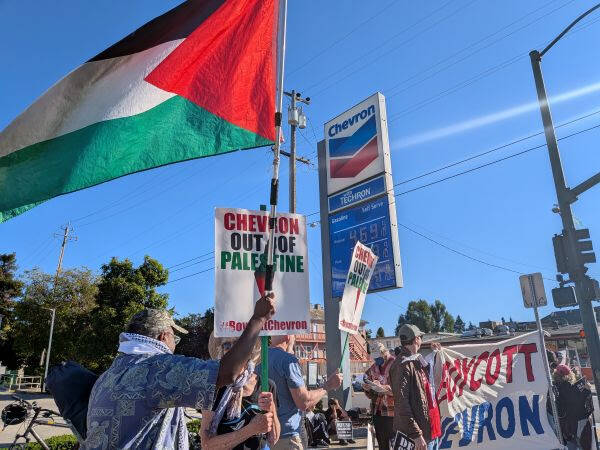
Nov. 22nd Boycott Chevron Day demonstration in Oakland, Calif.
- Sixteen-year-old Palestinian American Mohammed Ibrahim is finally free after almost ten months in Israeli prison. Grassroots pressure from people like you across the country helped build toward his release.
- In a stunning string of victories, North Carolina, Minnesota, Michigan, and several Ohio counties have all divested from Israel Bonds, breaking ties that helped sustain the Israeli apartheid economy.
- Somerville, Mass. has divested from companies complicit in genocide after a ballot measure vote.
- Activists in over 20 locations around the world held gas station pickets, banner drops, and educational events for Boycott Chevron Day on Nov. 22. Our sibling organization USCPR has been active in the Boycott Chevron campaign.
READ ABOUT THE SOMERVILLE WIN
WHAT YOU CAN DO NEXT
- Watch our last Mass Movement Call, to understand and challenge anti-Palestinian lobbying.
- Register for the from IMEU Policy Project on Tuesday, Dec. 9 at 5:30 PM ET, including Rep. Rashida Tlaib who introduced the recent resolution H.Res.876.
- Register for the upcoming from the BDS National Committee on Monday, Dec. 15 at 8 PM ET to learn from activists who organized recent ballot measure campaigns.
- Find a strategic campaign you can plug into for the long haul. Check out our new campaign pages: Arms Embargo Now, City Divestment, and Break Israel Bonds.
TAKE ACTION: ARMS EMBARGO NOW
Thank you for taking action with us.
Onward to liberation,
CAT KNARR
Communications Director
USCPR Action
2027.

5 december 2025
$27 million in divestment victories.
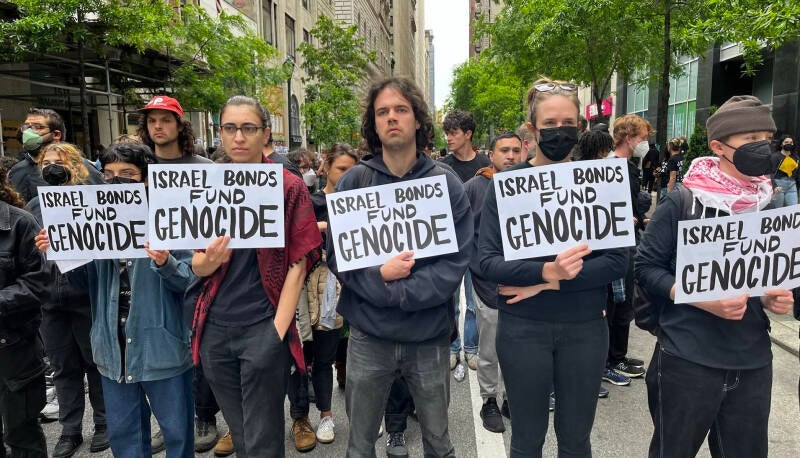
In North Carolina, Michigan, and Minnesota, local campaigns have notched divestment wins totaling more than $27 million.
Across the country, JVP chapters and our partners are organizing to demand their state and municipal fund managers divest from Israel Bonds — essentially investments in Israeli genocide and apartheid — and invest instead in the well-being of our communities.
This organizing targets the engine enabling Israel’s violence against Palestinians: material support from our own institutions in the U.S. And the momentum is growing…
Defend anti-Zionist students.
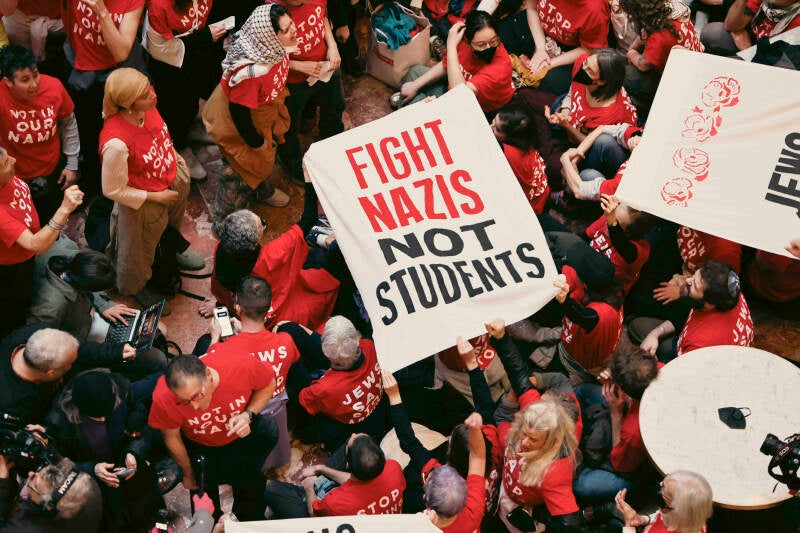
As our organizing gains power, repression against our movement continues to grow. Now, Indiana University-Bloomington has become the latest university engaging in blatant censorship and violations of academic freedom against its anti-Zionist community members.
Email the IU administration now to let them know this is unacceptable.
Plug in locally.

JVP chapters across the country are fighting to end their communities’ complicity in Israeli genocide and apartheid. While not every chapter is running an Israel Bonds campaign, there are many ways to get plugged into this work.
Check out the map of JVP across the country and see who’s organizing near you.
2026.

5 december 2025
Rita Baroud is een Palestijnse journalist en Safe Haven Fellow aan het NIAS. Ze komt uit Gaza en leeft momenteel in ballingschap in Amsterdam. De komende tijd zal ze voor The Rights Forum een reeks essays schrijven, waarin ze onder meer reflecteert op hoe Europa omgaat met de genocide, en met haar als overlevende.
In haar krachtige eerste stuk beschrijft ze de dubbele moraal in het Westen. Hier zijn begrippen als vrijheid en gerechtigheid geen universele principes of rechten, betoogt Baroud, maar privileges. De vraag is steeds: voor wie?
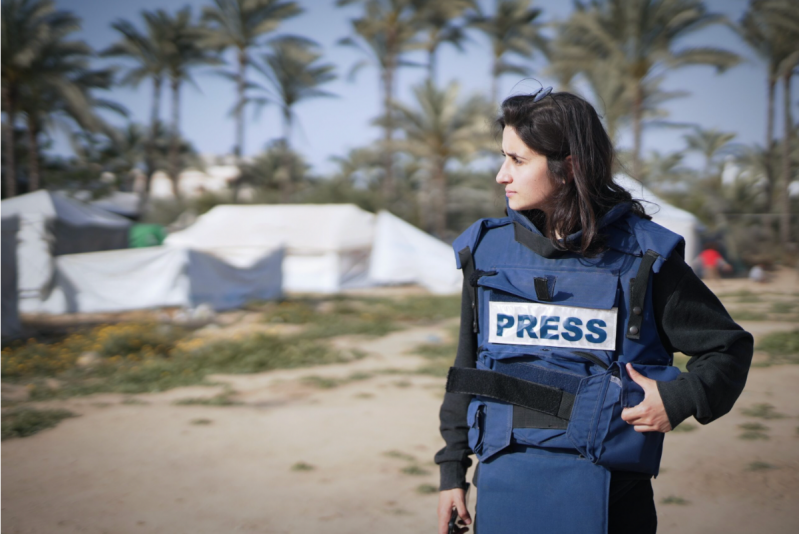
Journalist Rita Baroud
'In Europa heb ik geleerd dat pijn wordt afgemeten aan geografie,' schrijft Baroud. 'In Parijs, in Amsterdam, in Brussel, in Berlijn hoor ik dezelfde verhaallijn, anders ingekleed: "We leven mee met de slachtoffers… maar de situatie is gecompliceerd."'
'In Oekraïne was de situatie niet gecompliceerd. In Rwanda was de situatie niet gecompliceerd. Toen al die mensen op één avond werden vermoord in een Frans café was de situatie niet gecompliceerd. Het wordt pas gecompliceerd nu het slachtoffer Palestijns is.'
'Het Westen wil een Palestijn die vriendelijk is, poëtisch, zacht, esthetisch dramatisch – maar onschadelijk voor de ethische orde. Het Westen heeft geen plaats voor de Palestijn die zonder omwegen wijst op de medeplichtigheid. Het wil verzet zonder verzet. Een lichaam zonder beschuldiging. Een verhaal zonder aanklacht.'
Mishandeling Palestijnse gevangenen op ‘bevel van hogerhand’
Onder veiligheidsminister Ben-Gvir worden Palestijnse gevangenen nóg slechter behandeld. Het Israëlische gevangenissysteem heeft ‘het ondenkbare genormaliseerd en het onmenselijke gelegaliseerd’, schrijft de Palestijnse journalist Rajaa Natour in een nieuw stuk op onze website.
Natour sprak over de verslechterende gevangenisomstandigheden met advocaat Ben Marmarelli. Hij biedt juridische bijstand aan Palestijnse ‘veiligheidsgevangenen', die lange straffen uitzitten in zwaarbewaakte gevangenissen.

De Israëlische minister van Nationale Veiligheid Itamar Ben-Gvir in december 2024. © UPI via Alamy
Marmarelli vertelde onder meer over de wijdverbreide verkrachting van Palestijnse gevangenen, onder wie zijn cliënt, door gevangenisbewakers. Nu is dat geen breaking news: verkrachting van Palestijnse gevangenen in Israëlische gevangenissen is oud nieuws.
Nieuw is wel dat de onthullingen nu in de schijnwerpers staan – en wel om twee redenen. Ten eerste doorbreken Palestijnse slachtoffers de barrière van stilte en schaamte en durven ze te vertellen over marteling en verkrachting.
Ten tweede verzamelen mensenrechtenorganisaties zoals het Palestijnse Centrum voor de Rechten van de Mens (PCHR) getuigenissen, documenteren ze dit seksuele geweld nauwgezet en presenteren ze het als een integraal onderdeel van de aanhoudende genocide in Gaza.

Documentaire | Het grotere plaatje
Eind juli verschijnen wereldwijd foto's in de media van uitgemergelde kinderen in Gaza. De beelden maken grote indruk, ook op de politiek. Eén foto springt eruit: Mohammed Al-Motowaq van anderhalf jaar, het jongetje oogt meer dood dan levend.
Al snel volgt kritiek: Mohammed is ziek, hij zou geen honger lijden. Premier Netanyahu spreekt van 'fake news'. Leon de Winter noemt de beelden 'manipulatief en kwaadaardig'. BILD beschuldigt een Palestijnse fotograaf van enscenering. En NU.nl verwijdert de foto.
Hoe ontstaat deze beeldvorming? Medialogica maakte een goede documentaire over het onderwerp, die nu op NPO Start te zien is. Het werd een verhaal over het zwartmaken van foto's en fotografen, en een kort geding tegen de NOS.
Nederland niet naar Songfestival wegens deelname Israël
Nederland gaat volgend jaar niet meedoen aan het Eurovisie Songfestival. Dat maakte omroep AVROTROS gisteren bekend, nadat duidelijk was geworden dat Israël niet wordt uitgesloten door EBU, de organisator van het Songfestival.
De Europese publieke omroepen kwamen gisteren bijeen bij de EBU in Genève om te praten over de toekomst van het Songfestival. Daar pleitten AVROTROS en publieke omroepen uit Ierland, IJsland, Spanje en Slovenië voor het uitsluiten van Israël vanwege de oorlog in Gaza.
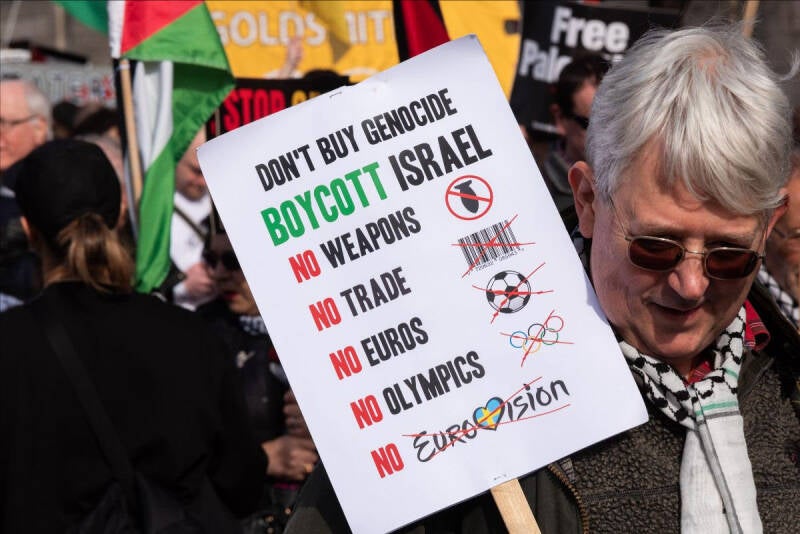
Een protestbord bij een demonstratie in Londen: 'Koop geen genocide. Boycot Israël. Geen wapens, geen handel, geen Europees Kampioenschap, geen Olympische Spelen en geen Eurovisie.' [c] Avpics/Alamy
Andere landen, waaronder Duitsland en de organisator van de volgende editie Oostenrijk, waren fel tegen een boycot van Israël. Het kwam uiteindelijk niet tot een stemming, waardoor de deelname van Israël alsnog door kan gaan.
Naast Nederland hebben ook de Spaanse, Ierse en Sloveense publieke omroepen laten weten niet mee te doen aan het Songfestival volgend jaar. IJsland en België nemen op een later moment een besluit over deelname.
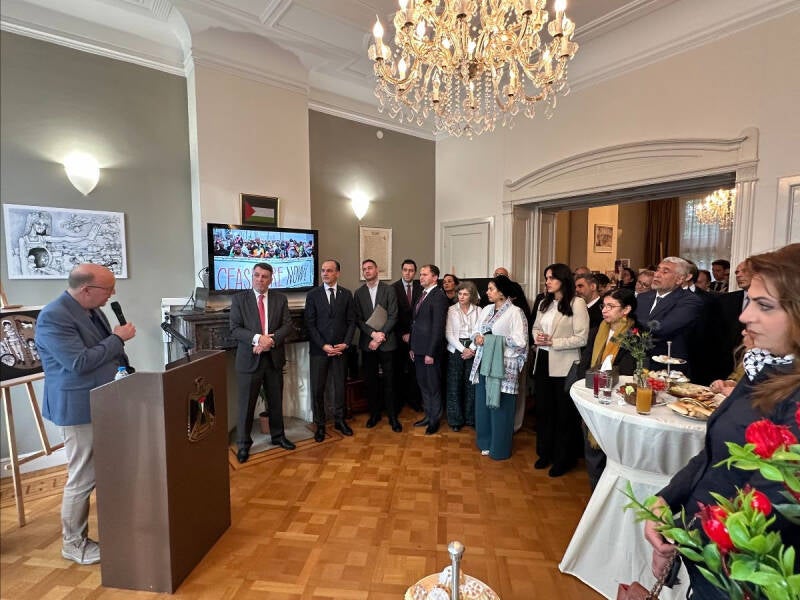
Nederlanse pleitbezorgers van Palestina geëerd door Palestijnse missie
Op zaterdag 29 november, de Internationale Dag van Solidariteit met het Palestijnse Volk, was The Rights Forum te gast bij de Palestijnse missie in Den Haag. Samen met PAX, Amnesty International, Save the Children en Oxfam Novib werden wij bedankt voor onze inzet voor de rechten van het Palestijnse volk.
De Palestijnse missie schreef op Facebook dat deze dag bedoeld is om 'alle onbekende helden van internationale solidariteit met Palestina' te eren. Ambassadeur Ammar Hijazi benadrukte dat echte solidariteit betekent dat het Palestijnse volk wordt gezien, gehoord en niet wordt uitgewist.
In dit kader eerde hij de organisaties voor hun onvermoeibare inzet voor rechtvaardigheid, vrede en vrijheid voor Palestijnen. Gerard Jonkman (The Rights Forum) en Pim Kraan (Save the Children) namen de erkenning namens de coalitie in ontvangst.
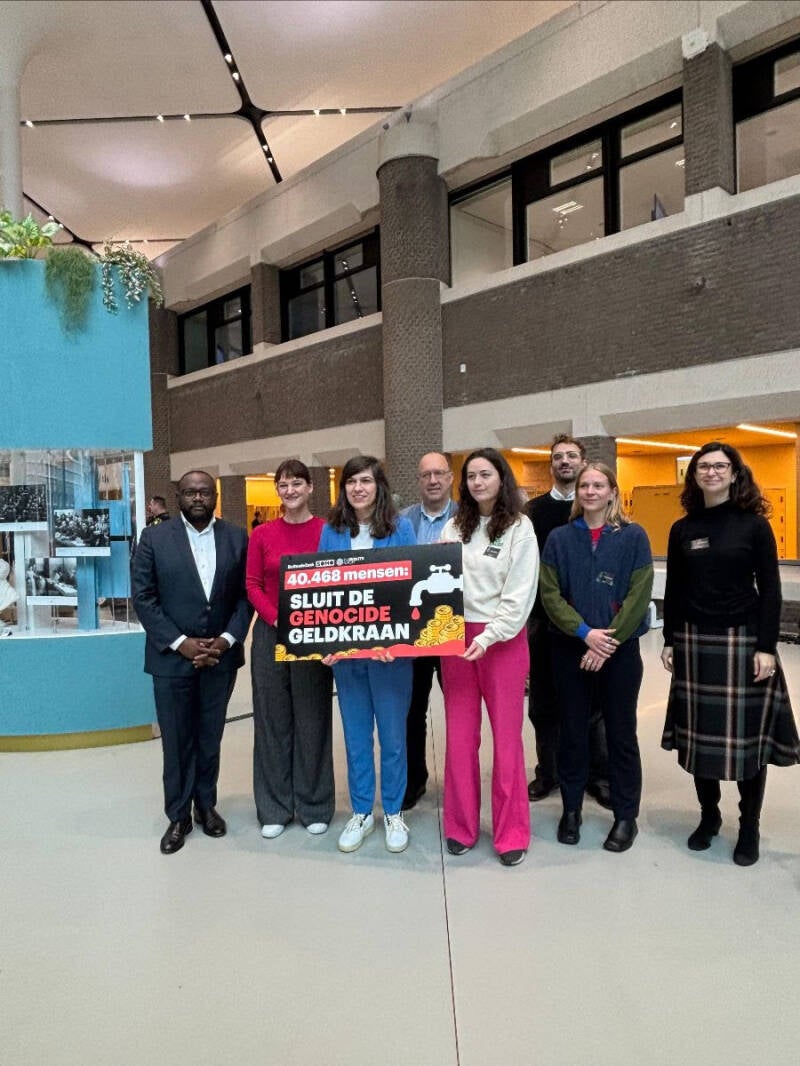
Namens 40.000 Nederlanders: sluit de genocide geldkraan!
Deze week boden wij samen met De Goede Zaak en SOMO onze petitie Sluit de genocide geldkraan namens ruim 40 duizend Nederlanders aan bij de Tweede Kamer. Bij de overhandiging waren Kamerleden Sarah Dobbe (SP), Stephan van Baarle (DENK), Mpanzu Bamenga (D66) en Ines Kostić (PvdD) aanwezig.
Wij bedanken iedereen die de petitie heeft ondertekend en helpen verspreiden. Met jullie steun hebben we opnieuw een krachtig signaal afgegeven aan de Tweede Kamer en de Nederlandse politiek: de geldkraan voor het genocidale Israëlische regime moet nú gesloten worden. Uit onze agenda
zaterdag 6 december t/m zaterdag 13 december
DEMONSTRATIES EN WAKES
UTRECHT DOORDEWEEKSE DAGEN 08.30 - 09.30 (donderdagen vanaf 08.00) | Dagelijks stilteprotest voor Palestina, tegen genocide en bezetting (Neude, langs het fietspad)
GRONINGEN ZA 6 DEC 13.00 | Tweewekelijkse wake van Vrouwen in het Zwart (Waagplein)
MAASTRICHT ZA 6 DEC 16.00 | Maandelijkse wake van Vrouwen in het Zwart (Markt, bij het standbeeld van J.P. Minckelers, aan de kant van de Boschstraat)
HAARLEM ZO 7 DEC 14.00 | Wekelijks protest tegen de onderdrukking van de Palestijnen (Grote Markt)
LEIDEN ZO 7 DEC 13.00 | Demonstratiemars en menselijke keten voor Palestina (Beestenmarkt)
DEN HAAG DO 11 DEC 12.00 | Sit-in van Rijksambtenaren bij het ministerie van Buitenlandse Zaken, Rijnstraat 8
STATIONS IN NEDERLAND DO 11 DEC 18.00 | Wekelijkse lawaaidemonstratie op stations in heel Nederland: Stations Stations Alkmaar (17.30) Almere Centrum, Amersfoort, Amsterdam CS, Arnhem, Assen, Ede/Wageningen, Enschede, Groningen, Hengelo, Hilversum (17.30), Leiden, Lelystad (17.30), Maastricht, Nijmegen, Purmerend (17.00), Sassenheim (17.00 uur), Tiel, Tilburg, Utrecht, Zaandam (17.00), Zutphen
Let op: The Rights Forum probeert de verschillende acties in Nederland zo goed mogelijk bij te houden, maar dat is niet altijd goed mogelijk. Houd de sociale media-pagina's van de plaatselijke solidariteitsorganisaties in de gaten voor de meest actuele informatie.
CULTURELE EN ANDERE EVENEMENTEN
AMSTERDAM ZO 7 DEC 11.00 | A Day in Palestine: een dag vol kunst, eten, gesprekken, film en muziek (Tolhuistuin - Zonzij, IJpromenade 2)
AMSTERDAM ZO 7 DEC 13.00 | Dekolonisatie Conferentie van LinksBoven (IIRE, Lombokstraat 40)
ENSCHEDE ZO 7 DEC 13.00 | Programma van Amnesty in het kader van de dag voor de rechten van de mens in samenwerking met Concordia en Vrouwen voor Vrede. Het programma omvat o.a. een vertoning van korte film Close Your Eyes Hind, en een nagesprek met Regisseur Amir Zaza en directeur van The Rights Forum Gerard Jonkman (Concordia, Oude Markt 15)
AMSTERDAM WO 10 DEC 20.00 | Lezing: Why does Europe continue to support Israel? (Pakhuis de Zwijger)
UTRECHT VR 12 DEC 14.00 | SIVMO-PAX Lezing 2025 met de Palestijnse fotograaf Mohammed Zaanoun (Kantoor PAX, Sint Jacobsstraat 12)
LIVESTREAM ZA 13 DEC 34.00 | The Rights Forum in Conversation with Ilan Pappé and Mariam Barghouti. Het evenement is uitverkocht, maar is te volgen via livestream. Meld je hier aan.
Onze agenda wordt doorlopend aangevuld. Bekijk de hele agenda
2025.

5 december 2025
Humanitarian Situation Update #346
West Bank
4 December 2025

“My tractor was everything to my work and my family’s income.” Iyad, a Palestinian farmer from Burqa, Nablus, standing next to his tractor, set on fire by settlers in early December 2025. Photo by OCHA
Key Highlights
- Half of the 227 Palestinians killed by Israeli forces or settlers between 1 January and 1 December in the West Bank were in Jenin and Nablus governorates.
- Operations by Israeli forces trigger new displacement, movement restrictions, school closures, and service disruption in communities already affected by recurrent militarized operations since early 2025.
- Over 95,000 Palestinians were affected by expanded operations by Israeli forces in the northern West Bank this week, particularly in Jenin and Tubas governorates.
- OCHA documented 1,680 attacks by Israeli settlers in more than 270 communities across the West Bank so far in 2025 - an average of five incidents per day.
- The olive harvest continues to be marked by widespread settler violence, with 178 attacks documented in October and November in 88 communities.
Humanitarian Developments
-
Between 25 November and 1 December, Israeli forces killed four Palestinians, including one child, bringing the total number of Palestinians killed by Israeli forces or settlers in 2025 to 227. Nearly half of all fatalities this year were recorded in the Jenin and Nablus governorates. During the same reporting period, Israeli forces and settlers injured 212 Palestinians across the West Bank, including East Jerusalem. Over 75 per cent of all injuries (163) occurred during the Israeli forces’ operation in Tubas governorate, including 107 people injured by live ammunition and 56 due to physical assault or tear-gas inhalation (see more information below). Also, this week, in Hebron city, a 17-year-old Palestinian boy injured an Israeli female soldier in a car-ramming attack, after which Israeli forces shot and killed him. The following are details of the incidents that resulted in fatalities:
-
On 26 November 2025, Israeli forces shot and killed a Palestinian man during a raid by Israeli forces into homes and shops in Qabatiya town, in Jenin governorate. According to local sources, Palestinians threw stones at Israeli forces, and the forces fired live ammunition. The Israeli military stated that they opened fire at the man after he threw an improvised explosive device (IED) at them, and they destroyed other IEDs found in his car.
-
On 27 November, Israeli forces killed and withheld the bodies of two unarmed Palestinian men whom they shot at close range in Jenin city during a raid concentrated in the eastern side of Jenin refugee camp, particularly Jabal Abu Dhair neighbourhood. The incident was caught on film by a TV channel. The Israeli military stated that they are investigating the incident. In a statement on 28 November, the spokesperson for the UN High Commissioner for Human Rights said the Office was “appalled at the brazen killing” of the two Palestinians, describing it as “an apparent summary execution.” OHCHR stressed that impunity for Israeli forces’ “unlawful use of force, and ever-growing Israeli settler violence, must end,” urging independent, prompt and effective investigations and accountability.
-
On 1 December, a Palestinian carried out a car ramming attack at one of the checkpoints on Road 35 near Farsh al Hawa leading to Hebron city, injuring an Israeli female soldier. Israeli forces sealed the entrances to Hebron city, deployed flying checkpoints, and conducted raids across the city, including in the yards of four hospitals, in search of the assailant. On 2 December, Israeli forces announced that they had killed the assailant in Hebron city. He was later identified to be a Palestinian boy from Hebron city, and his body has been withheld by Israeli authorities.
-
-
On 2 December (outside the reporting period), Israeli forces shot and killed a Palestinian man near Umm Safa village, in Ramallah governorate, after he stabbed and injured two soldiers when he was stopped for inspection at a flying checkpoint on Road 465. Israeli forces subsequently closed nearby checkpoints and road gates in western Ramallah governorate. Additionally, the forces broke into Beit Rima village, the hometown of the man, and searched his family’s house.
-
Between 25 November and 1 December, OCHA documented the demolition of 11 Palestinian-owned structures for lacking Israeli-issued building permits, which are almost impossible for Palestinians to obtain. Six of the structures were in four communities in Area C of the West Bank, while five were in Beit Hanina and Sur Bahir in East Jerusalem. Among the demolished structures in Area C were an under construction, three-storey residential building in Al Khader village, in Bethlehem governorate, and a 1,200-square-metre cow farm in Jinsafut village in Qalqiliya governorate. In total, five people, including a child, were displaced in one incident in East Jerusalem, and 48 people, including 20 children, were otherwise affected.
-
On 1 December, Israeli forces raided and sealed the offices of the Union of Agricultural Work Committees (UAWC) in Al Bireh and Hebron cities, posting military closure orders on the gates of both premises. During the raids, Israeli forces vandalized office contents, confiscated all electronic devices and documents, and detained employees, keeping them blindfolded and handcuffed, including several women who were released after a few hours. In Al Bireh city, Palestinians threw stones at the forces, who fired rubber bullets and tear-gas canisters, injuring four Palestinians. UAWC is a Palestinian non-governmental organisation that has supported farmers and rural communities across the West Bank since the late 1980s. The UN Human Rights Office (OHCHR) in the Occupied Palestinian Territory (OPT) said the raid “comes amidst an escalating Israeli targeting of Palestinian civil society and human rights defenders, most recently in the context of the olive harvest season.”
Operations by Israeli Forces in the Northern West Bank
- Israeli forces continue to carry out large-scale operations across the northern West Bank, particularly in parts of Jenin and Tubas governorates, imposing curfews, taking over residential buildings and converting them into military posts, and significantly restricting movement and Palestinians’ access to essential services. On 28 November, Save the Children reported that these operations forced it to “halt its remedial education classes and child protection work, including mental health support, in these areas, with no indication of when programmes might be able to resume,” affecting over 700 children.
- Between 25 November and 1 December, expanded operations triggered new displacement, movement restrictions and school closures, and disrupted access to basic services, affecting over 95,000 Palestinians and compounding the humanitarian impact on communities already affected by recurrent militarized operations since early 2025. In some cases, families have remained displaced. For example, at least 11 families comprising about 55 people have remained displaced since 7 November after their homes were converted into military posts in Ya’bad town (pop ~16,000), in Jenin governorate, where Israeli forces continued to carry out extensive raids, primarily in the southwestern area of the town.
-
On 26 November, Israeli forces carried out a large-scale, four-day operation across Tubas city and the towns of Tammun, Aqqaba, Tayasir, and Wadi al-Fara’, with a combined population of over 58,000 Palestinians. The operation involved the use of drones, aircraft, bulldozers and wide-ranging movement restrictions, resulted in the injury of 163 Palestinians, and caused extensive damage to homes and infrastructure, displacement, and prolonged disruption of access to essential services. On 28 November, Israeli forces withdrew from Tammun, where some homes that were converted into military posts sustained extensive damage and a 1,700-metre road was destroyed. As a result, the main water network between eastern Tammun and the communities of Khirbet ‘Atuf and Khirbet as Ras al Ahmar was destroyed, causing a three-day water cut that affected nearly 17,000 people and greenhouses. On the same day, the operation expanded into Al Far’a refugee camp, where Israeli forces raided or occupied at least 10 residential structures, forcing at least 20 families to leave their homes, imposed a curfew, as well as detained and interrogated dozens of Palestinians before withdrawing.
-
On 27 November, Israeli forces shot and injured two Palestinian children (aged 14 and 16 years) with live ammunition in Jenin refugee camp, shortly after the Palestinian DCL coordinated a two-hour window for 12 displaced families to briefly return and collect belongings from their homes, which they have been unable to access for nearly ten months. According to UNRWA, nearly 32,000 Palestinians, including more than 12,000 children, continue to be displaced from three refugee camps in the northern West Bank.
- Since 30 November, in Salfit governorate, Israeli forces have carried out extensive operations in multiple villages, with movement restrictions still in place as of the time of reporting. In Az Zawiya village, Israeli forces blocked the main entrance with an earth mound, affecting roughly 7,000 Palestinians, searched homes, confiscated security cameras, and arrested more than 30 people. An elderly man was physically assaulted and injured by Israeli forces. Five schools were forced to close, affecting about 1,300 students. In nearby Mas-ha village, Israeli forces closed the only access road with military jeeps and carried out multiple home raids, detaining residents for several hours. In parallel, road gates leading to Deir Ballut and Rafat villages were closed.
- On 1 December, a day after withdrawing from Tammun town following a four-day operation (see above), Israeli forces launched another large-scale, three-day operation in Tubas city and the surrounding towns and villages, including Aqqaba, and imposed an open-ended curfew. During the operation, Israeli forces closed five main roads with earth mounds, including three in Tubas city and two in Aqqaba, and several secondary roads, severely restricting movement for about 30,000 Palestinians. In both towns, Israeli forces converted at least eight residential buildings, each consisting of multiple homes, into military posts, forcibly displacing at least 11 families.
- On the afternoon of 2 December, Israeli forces launched a three-day operation in the southern outskirts of Jenin city, imposing an open-ended curfew that initially affected Qabatiya town (~28,000 people) and was expanded on 3 December to Misliya village (~3,300 people). According to Qabatiya municipality, Israeli forces searched over 20 houses, intermittently occupied rooftops and turned them into observation points, and forcibly evacuated at least two families from their homes, converting them into military posts and field interrogation centres for the duration of the operation. In Misliya village, where the curfew was announced less than an hour before taking effect, one school was abruptly evacuated. The Palestinian DCL reported that ambulance movements were permitted without prior coordination in both communities.
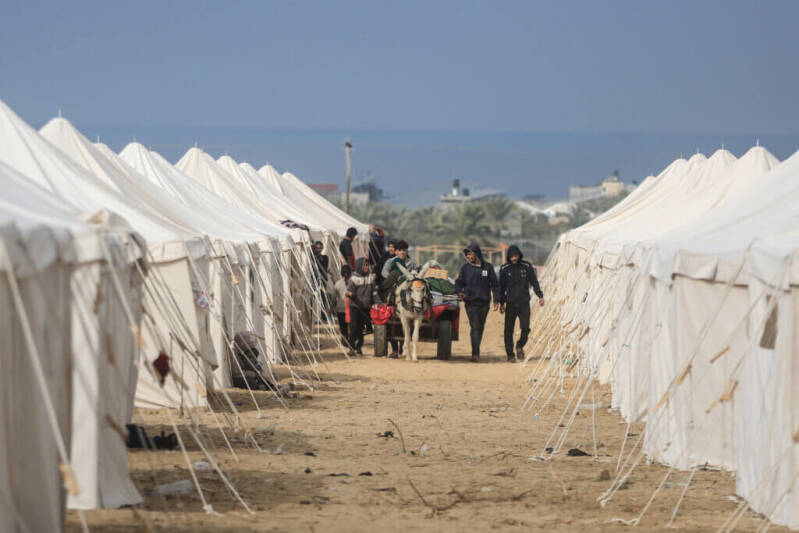
Israeli Settler Attacks
- With the olive harvest season nearing completion, the 2025 season has been marked by widespread settler violence, severe access restrictions, and low yields. Between 1 October and 30 November 2025, OCHA documented 178 olive-harvest-related settler attacks resulting in casualties, property damage or both. These incidents included attacks on farmers inside or on their way to olive groves, theft of crops and harvesting equipment, and vandalism of olive and other trees and saplings. While lower than the 213 attacks recorded during the corresponding period in 2024, this figure remains significantly above pre-2023 levels, when annual totals for the same period were roughly in the range of 30 to 60 attacks. The geographic scope of attacks has expanded, with 88 Palestinian towns and villages affected so far this year, the highest number recorded since 2020, more than double the number of communities affected in 2022, and four times the number of communities affected in 2020. Damage to olive trees and saplings has similarly reached its highest level in six years, with over 6,000 trees and saplings vandalized in 2025, nearly double the trees and saplings vandalized in 2024 and three times the levels documented in 2020 (see chart).
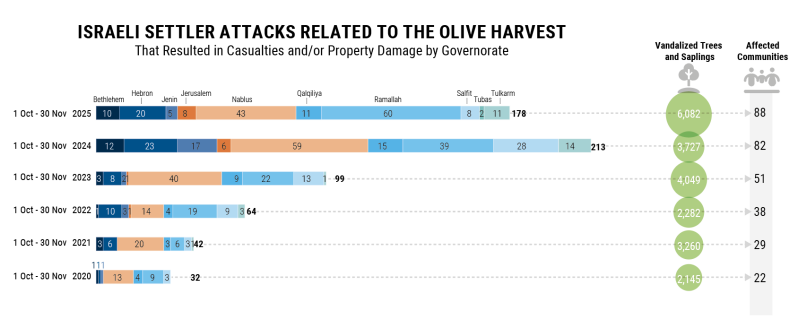
-
Between 25 November and 1 December, OCHA documented 35 Israeli settler attacks against Palestinians that resulted in casualties, property damage or both in the West Bank, including East Jerusalem. The attacks led to the injury of 29 Palestinians, including 20 by Israeli settlers and nine by Israeli forces. More than 150 Palestinian-owned (mainly olive) trees and saplings were vandalized. The number of settler attacks during this past week has been consistent with the weekly average of approximately 35 attacks recorded since the beginning of 2025. OCHA documented 1,680 attacks by Israeli settlers in more than 270 communities across the West Bank so far in 2025 - an average of five incidents per day.
-
Settler attacks, threats, and harassment continued across several governorates this week, predominantly affecting communities located near old or newly established settlement outposts. Incidents involved repeated assaults, raids, and damage to agricultural and water infrastructure, including in communities where some families had been displaced following settler violence. Key incidents resulting in casualties and property damage included the following:
-
In Bethlehem governorate, residents of Khallet al Louza village, with a population of about 700 people, have faced sustained attacks by Israeli settlers since September 2023, following the establishment of a settlement outpost on the village’s land. The situation further intensified after additional outpost structures, including new caravans, were installed in August 2024. OCHA has documented 21 settler attacks in the village since the establishment and subsequent expansion of these outposts, compared with only three attacks recorded between January 2017 and August 2023. This week, on 29 November, 10 Palestinians, including one woman, were injured when settlers attacked a family after the landowner asked a settler grazing sheep inside his land to leave. Settlers called in additional settlers from a nearby settlement outpost and began throwing stones at the house, injuring nine people and damaging a vehicle and two surveillance cameras. During the attack, settlers opened live fire, injuring one person. A PRCS team treated six people on-site and transported four others, including the gunshot casualty, to hospital.
-
Also in Bethlehem governorate, Israeli settlers attacked Palestinian farmers ploughing their land on 27 November in Arab ar Rashaydeh Bedouin community, injuring nine people, including four children. When the farmers refused settler demands to leave, clashes ensued. Israeli forces intervened by firing tear-gas canisters, one of which landed in the yard of a kindergarten, causing cases of tear-gas inhalation among children. In total, nine people were injured and received medical treatment by a PRCS team. On 14 September, four families comprising 31 people, including 23 children, were forcibly displaced from this community following repeated settler raids and threats to burn their homes and belongings.
-
In Jericho governorate, in Ein ad Duyuk al Fauqa village, settler attacks intensified over the past two months, reportedly by settlers believed to be from a settlement outpost established in August 2024, near three outposts established in the area since 2012. Residents report near-daily raids and harassment by settlers from this outpost, heightening insecurity. Settlers from this outpost are also believed to have perpetrated attacks against the nearby Bedouin community of Al Mu’arajjat East, whose residents were fully displaced following two major settler attacks in October 2024 and July 2025. This week, on 27 November, settlers broke into Ein ad Duyuk al Fauqa on quad bikes, moved among the shelters, and harassed residents. On 30 November, settlers raided a house hosting four foreign activists present to support the community in the context of recurrent settler attacks; settlers broke down the door, physically assaulted and injured the activists, and stoned the house, smashing windows and solar panels. All four were transported to hospital.
-
In Ramallah governorate, in Rantis village, settler attacks have sharply increased following the establishment of a new settlement outpost in September 2024, contributing to the displacement of two herding families in 2024 and 2025 and sustained restrictions on access to agricultural and grazing land. Since the establishment of the settlement outpost in September 2024, OCHA has documented 17 settler attacks in Rantis, compared with only one incident recorded between 2017 and the period prior to the outpost’s installation. This week, at least three settler attacks were documented in the community. On 25 November, settlers broke into privately owned farmland, destroyed about 20 olive saplings, damaged two water tanks, and cut a metal fence. On 26 November, settlers physically assaulted a Palestinian farmer while he was working his land, beating him with a stick and injuring his hand before chasing him out and preventing his return. On 28 November, settlers raided the area again, destroying dozens of olive saplings, vandalizing stone fencing, and damaging the agricultural water network.
-
Also in Ramallah governorate, on 30 November, Israeli settlers damaged critical water infrastructure in Ein Samiya, where a Bedouin community was fully displaced due to settler violence in May 2024. Settlers raided Ein Samiya spring area and damaged the connection cables linking the well to the main monitoring and supply system, which serves some 100,000 Palestinians in 20 villages. While the Jerusalem Water Undertaking (JWU) managed to maintain the water flow without interruption, it reported repeated daily settler incursions targeting the facility, posing serious risks to the continuity and security of the water supply. So far in 2025, OCHA has documented at least 10 attacks in which settlers infiltrated the spring area in Ein Samiya, damaged surveillance cameras, stole equipment belonging to the JWU, and assaulted maintenance staff who arrived to carry out repairs.
-
- For key figures and additional breakdowns of casualties, displacement and settler violence between January 2005 and October 2025, please refer to the OCHA West Bank September 2025 Snapshot.
Funding
- As of 4 December, Member States disbursed approximately $1.6 billion out of the $4 billion (40 per cent) requested to meet the most critical humanitarian needs of 3 million out of 3.3 million people identified as requiring assistance in Gaza and the West Bank, including East Jerusalem, under the 2025 Flash Appeal for the Occupied Palestinian Territory. Nearly 88 per cent of the requested funds is for the humanitarian response in Gaza, with just over 12 per cent for the West Bank. In November, the oPt Humanitarian Fund managed 128 ongoing projects, totalling $73.5 million, to address urgent needs in the Gaza Strip (89 per cent) and the West Bank (11 per cent). Of these projects, 61 are being implemented by international NGOs, 51 by national NGOs and 16 by UN agencies. Notably, 58 out of the 77 projects implemented by international NGOs or the UN are being implemented in collaboration with national NGOs. For more information, please see OCHA’s Financial Tracking Service webpage and the oPt HF webpage.
2024.
JASMIJN VAN DE GOEDE ZAAK
5 december 2025
Dinsdag overhandigden we ruim 40.000 handtekeningen tegen handel die bijdraagt aan Israëls genocide op de Palestijnen. Dankjewel voor jouw steun!
Ondanks het staakt-het-vuren gaat de genocide in Gaza gewoon door. [1] Ook neemt het geweld van kolonisten tegen Palestijnen toe. Geen enkel land ter wereld investeert meer in Israël dan Nederland.[1] We dragen daarmee actief bij aan genocide en illegale bezettingen.
Om dit te stoppen zijn we in juli een petitie gestart met SOMO en The Rights Forum. [2] Namens ruim 40.000 (!) mensen hebben we deze aan de Tweede Kamer aangeboden. Nu zijn zij aan zet.

Vóór de verkiezingen zijn er veel moties voor sterkere maatregelen tegen de genocide gesneuveld, omdat er nét geen meerderheid voor was. Maar met de nieuwe Tweede Kamer is een andere koers mogelijk.
Nederland mag niet stil blijven. Het Genocideverdrag verplicht ons om genocide te voorkomen en te stoppen, door alles te doen waartoe we in staat zijn. Met het onderzoek van SOMO [3], waar onze petitie op is gebaseerd, wordt duidelijk dat Nederland genoeg kan doen én zou moeten doen.
Als we de geldstromen van Nederland naar Israël kunnen minderen, wordt het voor Israël moeilijker om de economie van genocide en bezetting draaiende te houden. Daarom moet Nederland alle handel die bijdraagt aan genocide stoppen!
Wij blijven niet stil. Dankjewel voor je steun.
Strijdbare groet,
Jasmijn van DeGoedeZaak
[1] NOS: nieuwe luchtaanvallen op Gaza
[2] Petitie: Sluit de Genocide Geldkraan
[3] Onderzoek van SOMO over investeerders in Israël.
2023.

4 december 2025
Humanitarian Situation Update #345
Gaza Strip
04 December 2025

An aid worker with patients requiring medical evacuation for advanced treatment not available in Gaza. Photo by the World Health Organization.
Key Highlights
- Forty-two health facilities, including four hospitals, have opened or resumed operations since the ceasefire in Gaza, while 61 per cent of all health service points remain non-functional, the Health Cluster reports.
- Amid limited rehabilitation services and shortages of assistive devices, persons with disabilities face heightened protection risks during winter, particularly in overcrowded sites and unsuitable shelters, according to the Protection Cluster.
- UNICEF reports that two-thirds of children under five consumed two or fewer food groups in October, while winter conditions, overcrowding and rising disease risks are worsening vulnerabilities among children.
- Most of the debris in Gaza could be cleared within seven years, UNDP estimates, provided there is stable access, uninterrupted operations, and sufficient funding.
Context Overview
-
Over the past week, airstrikes, shelling and gunfire continued to be reported across the Gaza Strip, with the majority of incidents occurring in the vicinity of the so-called “Yellow Line,” resulting in casualties. In areas where the Israeli military remains deployed, comprising over 50 per cent of the Gaza Strip, daily detonations of residential buildings continue to be reported and access to humanitarian assets, public infrastructure and agricultural land remains restricted or altogether barred. Access to the sea remains prohibited.
-
Over the past week, shifts in the yellow cement blocks marking the so-called “Yellow Line” have prompted new waves of displacement, particularly from At Tuffah and Ash Shuja’iyyeh neighbourhoods in eastern Gaza city to Ad Daraj, An Naser and other parts of central Gaza city. According to the Protection Cluster, coupled with winter weather, these compounding factors have disrupted service delivery, decreased community participation in planned protection activities, and heightened protection risks and psychological distress, particularly among vulnerable groups including children, persons with disabilities, older persons, and female-headed households. Between 26 November and 2 December, the Site Management Cluster (SMC) reported that more than 20,500 displacement movements were recorded across the Strip, including more than 5,000 movements from eastern to central Gaza city. This is compared with over 17,000 movements in the preceding week. While in the first month following the ceasefire, displacement movements were mainly associated with returns to places of origin, displacement over the past month have been primarily related to heavy rainfall and flooding. Since the ceasefire came into effect on 10 October, over 774,000 displacement movements have been recorded, of which about 639,000 were from southern to northern Gaza.
-
On 29 November, the United Nations Secretary-General marked the International Day of Solidarity with the Palestinian People by highlighting the horrific suffering in Gaza after two years of hostilities and the glimmer of hope that the recent ceasefire offers. The UN Chief emphasized that “all parties must work in good faith towards solutions that restore and uphold international law […] Lifesaving humanitarian aid must be allowed to enter Gaza at scale, and the international community must continue to stand firmly with UNRWA – an irreplaceable lifeline for millions of Palestinians, including Palestine refugees.”
-
On 1 December, the World Health Organization (WHO) facilitated the medical evacuation of 18 patients from Gaza, in addition to 54 companions. According to WHO, since October 2023, 10,620 patients have been evacuated along with 12,074 companions. This includes 235 patients and 708 companions who have been evacuated since the ceasefire. More than 16,500 patients, including 4,000 children, still require medical evacuation, as the advanced care they need is not available in the Strip. WHO continues to call for additional support and the opening of all evacuation routes, particularly to the West Bank, including East Jerusalem.
-
According to the MoH in Gaza, between 26 November and 3 December, 11 Palestinians were killed, 16 were injured and 20 bodies were recovered from under the rubble. This brings the casualty toll among Palestinians since 7 October 2023, as reported by the MoH, to 70,117 fatalities and 170,999 injuries. According to the MoH, the total number includes 299 fatalities who were retroactively added between 21 and 28 November after their identification details were approved by a ministerial committee. MoH reported that since the ceasefire, 360 Palestinians were killed, 922 were injured and 617 bodies were retrieved from under the rubble.
-
According to the Israeli military, between 26 November and 3 December, as of noon, no Israeli soldiers were killed in Gaza. The casualty toll among Israeli soldiers since the beginning of the Israeli ground operation in October 2023 stands at 471 fatalities and 2,984 injuries. According to Israeli forces and official Israeli sources cited in the media, more than 1,671 Israelis and foreign nationals have been killed, the majority on 7 October 2023 and its immediate aftermath. As of noon on 3 December, it is estimated that the bodies of two deceased hostages remain in the Gaza Strip.
-
Coordination with Israeli authorities continues to be required for humanitarian convoy movements by the UN and its partners in Gaza, to crossings as well as in or near other areas where Israeli forces remain deployed. Between 26 November and 2 December, humanitarian organizations coordinated 54 missions with the Israeli authorities, of which 38 were facilitated, seven were cancelled, five were impeded and four were denied. At present, three crossings remain open. Kerem Shalom is used for both cargo and staff movements, including medical evacuations, while Zikim and Kissufim are used exclusively for cargo. Zikim and Kissufim operate on an alternating schedule: when one is open for cargo offloading, the other is open for cargo uplifting. Kerem Shalom is currently the only crossing where both processes can occur on the same day. The Philadelphi Corridor remains the sole route available for movements to Kerem Shalom crossing, as the southern section of Salah Al Din Road remains inaccessible.
-
The rubble generated by the destruction in Gaza is accumulated in large debris fields, blocking roads and key access routes and limiting the movement of people, goods and emergency services. The Debris Management Working Group reports that Gaza faces an immense recovery challenge, with over 80 per cent of buildings damaged or destroyed. Debris also poses significant health and environmental hazards, often contaminated with explosives, asbestos, industrial by-products, and medical waste. According to UNDP, clearing debris is hindered by several factors, including contamination with explosives and hazardous materials, restricted access to priority sites, inconsistent fuel supplies, and the need for permits from Israeli authorities to bring in specialized equipment. UNDP emphasizes that if these challenges are removed, through stable operating conditions, unimpeded access and adequate funding, most of the rubble could be cleared within seven years.
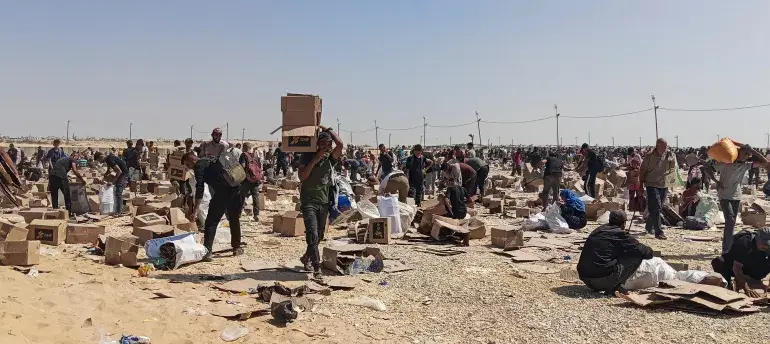
Access to Emergency Food Assistance and Nutrition Services
-
Towards the end of November, Food Security Sector (FSS) partners further expanded food assistance across the Gaza Strip, delivering more than 1.5 million hot meals per day through 213 community kitchens, including over 340,000 meals in North Gaza and Gaza city and 1.2 million in Deir al Balah and Khan Younis. As part of the November assistance cycle, nearly 1.4 million people (273,000 households) were assisted with general food distributions through 59 sites, and since 16 November the ration size has been increased to two food parcels and one 25-kilogram flour bag per family. Bread production has also improved, since the 1 December, with 19 UN-supported bakeries producing 180,000 two-kilogram bundles daily, complemented by about 370,000 loaves from one FSS partner.
-
While market activity is slowly resuming, dietary diversity remains poor, with essential protein sources still largely unavailable or unaffordable. Limited cooking gas continues to constrain the operations of some community kitchens and bakeries. According to the Global Price Watch – October 2025, released on 30 November by the Famine Early Warning Systems Network (FEWS NET), food prices fell sharply in October but remained well above the levels prior to October 2023. In early November, with the ceasefire entering its fifth week, families struggled financially due to a lack of cash, and many could not afford basic food items despite the drop in prices.
-
On 28 November, the United Nations Children’s Fund (UNICEF) stated: “With more than two-thirds of young children continuing to consume two or fewer food groups [in October], combined with limited access to health services, inadequate water and sanitation, and sub-optimal feeding practices, the entire under-five population of 320,000 children is at risk of acute malnutrition.” Despite increased access to services, major gaps persist, with winter conditions, overcrowding and elevated disease risks further heightening the vulnerability of children. Partners report that winterization supplies are being depleted faster than they can be replenished, underscoring the need for sustained, unhindered humanitarian access.
-
While caseloads remain among the highest recorded and nearly five times higher than during the February 2025 ceasefire, acute malnutrition admissions have declined since August, reflecting progress in treating and preventing acute malnutrition among children in Gaza, according to UNICEF. In October, Nutrition Cluster partners screened more than 102,000 children aged 6-59 months, reflecting improved access in Khan Younis and Deir al Balah, but there were still limited services in Gaza city at that time, with only 6,000 children screened in the city. Of those screened, nearly 9,300 children under five years were identified with acute malnutrition, including more than 7,300 children with moderate acute malnutrition (MAM) and about 1,900 with severe acute malnutrition (SAM) who were admitted for treatment. Since the ceasefire, the number of acute malnutrition treatment points in Gaza city has increased from seven to 26, allowing improved access to life-saving services for children suffering from acute malnutrition, according to UNICEF.
-
Needs among pregnant and breastfeeding women (PBW) remain substantial. In October, partners screened nearly 45,000 PBW for acute malnutrition, of whom over 8,000 were enrolled in programmes for the management of acute malnutrition, according to the Nutrition Cluster. During the same period, UNICEF reported that it distributed fortified high-energy biscuits to more than 13,000 PBW, multiple micronutrient supplements to more than 5,900 PBW, iron and folic acid to more than 6,700 PWB, and vitamin A supplements to over 15,000 children aged 6-59 months. These services help curb a nutritional decline among mothers and young children who continue to face displacement, food shortages and limited access to care.
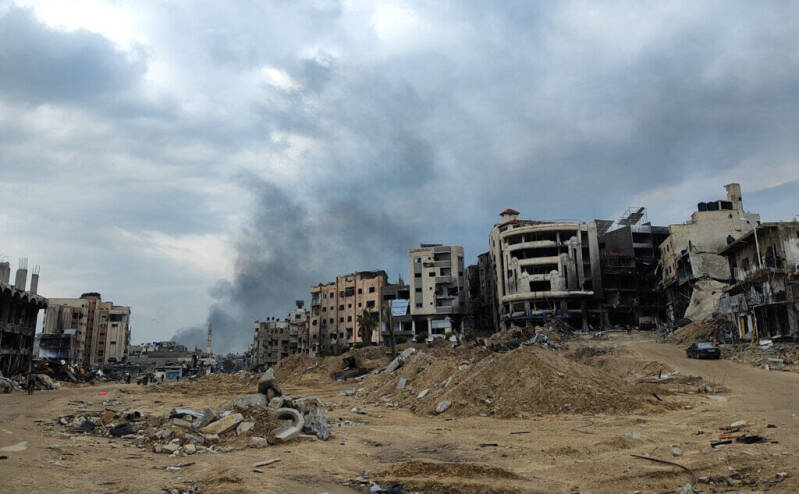
Access to Health Care
-
Health facilities and services have expanded to improve health-care delivery across the Gaza Strip, where 61 per cent of health service points remain non-functional, placing significant strain on the health system. According to the Health Cluster, since the ceasefire and as of 3 December, 42 health service points have become operational, all partially, including four hospitals, one field hospital, 16 primary health-care centres (PHC), and 21 medical points. These include both newly established and reopened facilities. Among the new facilities is a 150-bed, field hospital which opened on 19 November in Gaza city and is operated by International Medical Corps, providing outpatient services including prenatal care, non-communicable disease care, mental health support and physiotherapy. The inpatient capacity plan is to set up 200 surgical and non-surgical beds. The Paediatric Intensive Care Unit at Al Shifa Hospital, with a capacity of seven beds, was also inaugurated following the completion of renovation works, according to the MoH.
-
According to Medical Aid for Palestinians (MAP), functional hospitals remain overwhelmed with critically injured and malnourished patients, as the entry of medical supplies has not increased in any meaningful way. For example, testimonies collected by MAP indicate that Nasser, Al Shifa and Patient’s Friends Benevolent Society (PFBS) hospitals are facing severe shortages of essential drugs and supplies, including IV fluids, anaesthesia medications, and gauze, which are fundamental to keeping emergency and surgical services operational. According to MAP, one of the most critical shortages is a lifesaving medication for more than 1,100 patients who rely on kidney dialysis to survive amid severe shortages of dialysis beds. Orthopaedic teams at Nasser and Al Shifa report being forced to re-use items such as external fixators for amputees, which can significantly increase the risk of infection and hinder recovery from limb loss. Diagnostic capacity has similarly been compromised, with only one functioning CT machine at Al-Ahli Hospital in northern Gaza, forcing clinicians to ration imaging to the most critical cases and disrupting MAP’s own diagnostic referral pathways.
-
The MoH in the Gaza Strip warned this week that severe challenges are threatening the continuity of specialized eye-care services, as extensive damage to diagnostic and surgical equipment has greatly limited surgical capacity and increased waiting times, while critically low stocks of essential ophthalmic medications have gravely affected thousands of patients. MoH highlighted that 4,000 glaucoma patients are now at high risk of permanent vision loss due to the lack of necessary treatment and limited surgical options. MoH urgently called for the immediate entry of specialized medication and diagnostic equipment to prevent further deterioration of eye-care services.
-
According to the UN Population Fund (UNFPA), access to sexual and reproductive health (SRH) services remains limited as health facilities in Gaza continue to be overstretched and under-resourced. Recovery is impossible without predictable access to medicines, consumables, fuel, and medical equipment, UNFPA emphasizes. Only 14 hospitals and 64 PHCs and medical points currently provide SRH and emergency obstetric care services, all partially. In parallel, the lack of adequate shelter, heating, and sanitation is creating severe health risks, particularly for pregnant women and newborns. UNFPA estimates that 40,000 displaced pregnant women are enduring overcrowded, unsanitary conditions that heighten their vulnerability and further restrict access to timely, life-saving care.
-
UNFPA and partners are scaling up SRH services across Gaza to help meet these urgent needs. In November, eight medical points and PHCs providing SRH services reopened, with renovation work underway to re-open seven additional PHCs and the maternity department at Al Khair Hospital. To expand service delivery capacity, during November, UNFPA distributed 17 high-performance tents to health partners, equipped more than 90 midwives with midwifery kits, and provided postpartum kits to more than 4,200 new mothers. During the same period, UNFPA delivered reproductive health kits to health facilities for the treatment of sexually transmitted infections, management of postpartum haemorrhage, and emergency deliveries, among others. This has enabled 8,000 SRH services, including 500 safe deliveries, alongside the distribution of more than 450,000 units of essential maternal health medicines, consumables, and contraceptives.
Persons with Disabilities
-
The number of persons with disabilities in the Gaza Strip has grown significantly due to conflict-related injuries. In 2022, prior to the escalation of hostilities, MoH registered over 55,000 persons with disabilities in the Gaza Strip. In September 2025, the World Health Organization (WHO) estimated that nearly 42,000 additional people in the Gaza Strip have sustained potentially life-changing injuries that require ongoing rehabilitation and care, or about 25 per cent of the reported injuries between October 2023 and September 2025. According to WHO, a quarter of them are children. On 3 December, MoH in Gaza reported that there are at least 6,000 amputation cases in Gaza since October 2023. According to the Protection Cluster, while persons with disabilities in Gaza already faced major barriers accessing basic services before October 2023, the destruction of the health system, the loss of health workers, and the widespread damage to infrastructure have sharply increased these barriers and reduced access to essential care.
-
In a positive development, on 2 December, the Palestine Red Crescent Society (PRCS) announced the opening of its Rehabilitation Hospital in Khan Younis, with an initial capacity of 100 beds, to meet the growing need of injured persons and other patients for specialized rehabilitation services. Hamad Hospital also recently reported that it has provided more than 100 people with prosthetic limbs since March 2025. Since the ceasefire and as of 3 December, Protection and Disability partners, through the Protection Cluster and the Disability Working Group, reached 140 people with prosthetics and orthotics for disability rehabilitation, 167 people with assistive devices and physiotherapy, 500 people with adult hygiene kits, and 45 people with specialized rehabilitation referrals. At least 38,000 people, including persons with disabilities, were reached with mental health and psycho-social support services and over 6,200 additional people, including persons with disabilities, were reached with intersectoral referrals for multi-purpose cash assistance, shelter tents and blankets, winterization assistance, and food security support. The response remains far from sufficient in meeting the scale of needs, the Protection Cluster notes, amid significant gaps in rehabilitation services and the entry of prosthetics and other specialized materials.
-
With most people currently living in sub-standard, overcrowded shelters, most shelters and latrines are inaccessible to persons with disabilities, according to the Protection Cluster. This severely limits access for people with mobility challenges, increasing dependence on caregivers, reducing wellbeing, and exposing them to potential risks of abuse. According to the Protection Cluster and the Disability Working Group, the situation is further compounded by extensive damage to roads and explosive hazards, which severely hinder movement and accessibility, further depriving persons with mobility impairments of adequate access to essential services.
-
To effectively deliver medical, psychosocial, case management, and community-based services to persons with disabilities, the Protection Cluster underscores the criticality of embedding disability inclusion and universal (accessible) design in multisector programming efforts, including future reconstruction planning. The Cluster further highlights that the entry of appropriate materials to establish safe spaces must be fully facilitated, noting that partners have faced challenges in bringing in needed items, such as assistive devices, including materials required to repair existing devices. The lack of access to essential assistive devices significantly reduces the coping capacity of people with functional impairments, leading to heightened physical vulnerability and risks of health complications, loss of independence, psychological distress, social isolation, and diminished dignity, further marginalizing already at-risk people, the Protection Cluster warns.
Funding
- As of 4 December, Member States disbursed approximately $1.6 billion out of the $4 billion (40 per cent) requested to meet the most critical humanitarian needs of 3 million out of 3.3 million people identified as requiring assistance in Gaza and the West Bank, including East Jerusalem, under the 2025 Flash Appeal for the Occupied Palestinian Territory. Nearly 88 per cent of the requested funds is for the humanitarian response in Gaza, with just over 12 per cent for the West Bank. In November, the oPt Humanitarian Fund managed 128 ongoing projects, totalling $73.5 million, to address urgent needs in the Gaza Strip (89 per cent) and the West Bank (11 per cent). Of these projects, 61 are being implemented by international NGOs, 51 by national NGOs and 16 by UN agencies. Notably, 58 out of the 77 projects implemented by international NGOs or the UN are being implemented in collaboration with national NGOs. For more information, , please see OCHA’s Financial Tracking Service webpage and the oPt HF webpage.
2022.

4 december 2025
Gaza Humanitarian Response
Situation Report No. 37
3 December 2025
(As of 18:00 on 2 December 2025, unless otherwise noted)
HIGHLIGHTS
- During the month of November, Food Security Sector partners reached 65 per cent of Gaza’s population with monthly general food assistance.
- As part of ongoing winterization efforts, Child Protection partners distributed 6,000 child winter clothing kits on 1 December.
- Throughout November, Mine Action partners conducted 132 Explosive Hazard Assessments and reached nearly 116,000 people, almost half of them children, through Explosive Ordnance Risk Education sessions.
SITUATION OVERVIEW
On 3 December, the Israeli authorities announced that the Rafah crossing would open in the coming days “exclusively for the exit of residents” from the Gaza Strip to Egypt. The Israeli statement indicated that exit would be facilitated “through coordination with Egypt, following security approval by Israel and under the supervision of the European Union mission”, similarly to the mechanism operational in January 2025.
On the afternoon of 3 December, a casket containing the apparent remains of one of the last two deceased hostages from Israel still believed to remain in Gaza was handed over to the Israeli authorities. As of 19:00 local time, the identity of the deceased had not been ascertained yet.
Over the past 48 hours, reports of airstrikes, shelling, and gunfire continued across the Gaza Strip. On 1 December, OCHA helped to coordinate the rescue of injured people in the At-Tuffah neighbourhood of Gaza city, following a distress call received from the area by Civil Defence teams.
UNITED NATIONS-COORDINATED AID ENTRY*
On 2 December, at least 4,362 pallets of aid administered by the UN and its partners were offloaded at Gaza’s crossings, based on data retrieved from the UN 2720 Mechanism dashboard at 18:00 on 3 December. About 68 per cent of these pallets contained food supplies, followed by shelter (19 per cent), water, sanitation and hygiene items (11 per cent), and health supplies (3 per cent). At least 133 truckloads were offloaded at Kerem Shalom and 26 at Zikim.
On the same day, UNOPS international monitors present at Kerem Shalom between 07:30 and 14:18 verified the collection of at least 3,026 pallets of aid. These comprised inter alia 1,753 pallets of food supplies, including flour, canned corn, fresh fruit and vegetables, 507 pallets of hygiene and dignity kits, 395 pallets of tarpaulins and ropes, 62 of tents, 166 of clothes and blankets, 100 of water tanks, as well as animal fodder.
Overall, between the announcement of the ceasefire on 10 October, and 2 December, at least 132,547 pallets of humanitarian cargo were offloaded, and 117,050 pallets were collected from the different crossings. Only 2 per cent of all uplifted aid was intercepted during transit within Gaza, while over 115,000 pallets safely reached warehouses for onward distribution to people in need
All the above data excludes bilateral donations and the commercial sector.
As of 3 December, the Kerem Shalom, Zikim and Kissufim crossings remained operational, with humanitarian cargo offloading and uplifting alternating days between Zikim and Kissufim.
HUMANITARIAN RESPONSE
Food Security
- During the month of November, partners distributed monthly food parcels to more than 273,000 families (1,365,000 people), representing 65 per cent of all 2.1 million people requiring monthly food assistance in Gaza.
Shelter
- On 1 December, Shelter partners distributed shelter items to 1,950 households across the Strip. This includes 628 bedding kits, 82 tents and 70 kitchen sets distributed to 780 families, as well as 366 tarpaulins to 122 families in Khan Younis; 168 tents, 237 winter clothing vouchers and 145 tarpaulins to 483 families in North Gaza and Gaza city; and 1,695 tarpaulins to 565 families in Rafah.
Protection
- On 1 December, in a single day, approximately 1,117 people were reached with individual psychosocial support, legal consultations, and group awareness activities: 100 received protection awareness sessions, 203 adults accessed mental health and psychosocial support services, 5 cases required adult case management, 45 people received legal aid, and over 800 people received dignity kits, clothing, blankets, and food parcels.
- Child Protection
- On 1 December, Child Protection partners continued large-scale winterization efforts across the Strip, distributing 6,000 winter clothing kits to help children cope with the harsh weather conditions.
- On the same day, partners set up 30 activity tents across the Strip to ensure safe spaces where children can access psychosocial support and structured activities.
- As part of strengthening meaningful child engagement, partners delivered training on child participation for 40 frontline staff from child protection service providers, equipping them with the skills needed to lead child consultations on children’s vision for the future of Gaza.
- Mine Action
- Throughout November, Mine Action partners conducted 132 Explosive Hazard Assessments (EHAs) across priority humanitarian locations, including warehouses, distribution sites, major transport corridors, and key infrastructure. Findings were categorized as low, medium, or high risk, with hazardous areas marked, mapped, and reported through the Mine Action information management system. Partners also supported 17 inter-agency missions, providing technical expertise on Explosive Ordnance (EO) threats and conducted 6,861 Explosive Ordnance Risk Education (EORE) sessions to sensitize the population on EO risks, reaching 115,917 people, nearly half of them children, across all five Gaza governorates. Additionally, a Training of Trainers session on EORE was delivered to seven humanitarian partners to enhance their capacity and strengthen community outreach efforts. Overall, during the month, five EO incidents were reported, leading to 17 causalities – 6 killed and 11 injured - in Deir al Balah and Gaza city.
- Between 2 and 3 December, another 11 EHAs were conducted, mostly in support of rubble removal efforts, while EORE activities reached at least a further 2,326 people, nearly 30 percent of whom were children, in Deir al Balah, Khan Younis and Gaza city.
2021.
DAILY HEADLINES
3 december 2025
2020.
3 december 2025
We did it!!
More than 700 other people gave in the last 48 hours, and as of this writing, we’ve raised $39,278 to fund our organizing for a free Palestine and a just future for us all.
That’s well above our original $20,000 goal, and means we were able to secure the maximum amount of Giving Tuesday matching funds to fuel our work in 2026.
If you haven’t had the chance to give yet, it’s not too late. Your donation will still be doubled by our matching funders through December 31, 2025.
This money will help us expand our divestment and cultural boycott campaigns to transform public opinion into political power, provide more political education connecting Palestine to other critical justice struggles, and bring more leaders together to coordinate strategy across movements as we fight fascism in the U.S. and genocide in Palestine side by side.
AJP supporters like you are making all of this work stronger.
From the bottom of my heart—thank you for being in this fight with us.
In solidarity,
sophie lipman
Development Director
Adalah Justice Project
2019.


3 december 2025

Record-breaking crowds gather for Palestine in Chicago
On Saturday, November 29th, we wrapped up our most energetic and inspiring convention yet with a record-breaking 5,000+ people in attendance at the Tinley Park Convention Center near Chicago, IL!
With more than 60 speakers, 40 sessions, a buzzing bazaar, and multiple tracks, this year's convention has been hailed by attendees as one of the best they've ever experienced.
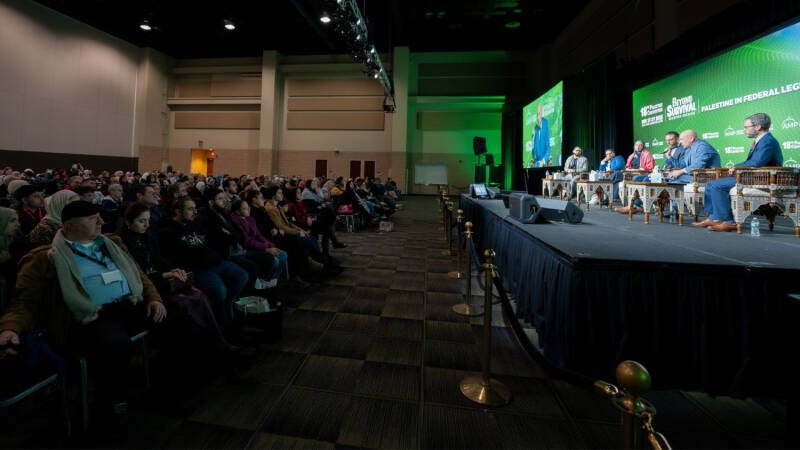
This year's theme revolved around the genocide in Gaza. Our approach to addressing the catastrophe that has unfolded over the last two years was to develop a framework to move beyond survival. Historically, when empires and world powers counted the Palestinians out, the Palestinian people found a way to maintain continuity and ensure their growth as a nation and people, beyond survival.
On Thursday, the convention was inaugurated by groundbreaking sessions on political prisoners, lessons learned from the Gaza genocide, and a screening of Watermelon Pictures’ The Encampments, which shed light on the incredible student movement that swept US college campuses in the spring of 2024.
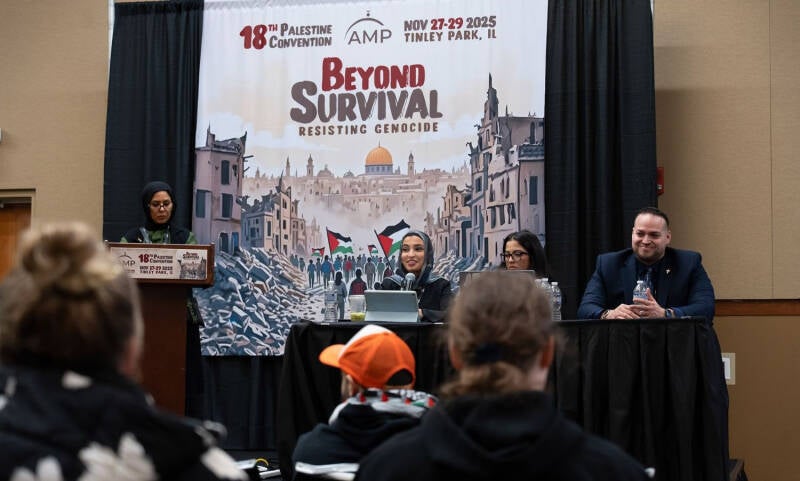
On Friday, important discussions on the Israel lobby and the 2026 election featuring former congressmen Dr. Jamaal Bowman and Cori Bush electrified the crowd, and inspiring talks from Dr. Hatem Bazian, Dr. Osama Abu Irshaid, and Dr. Manal Fakhoury grounded us in what matters most: a deep commitment to the just and noble cause of Palestine. Sessions also included panels on divesting from Israeli bonds and the role of social media during genocide. We capped the night with a panel on Gaza and with the captivatingly heartbreaking film The Voice of Hind Rajab, which portrayed the last moments of the life of the little girl in Gaza whose murder by Israeli soldiers shocked the conscience of the world.


On Saturday, the “Gaza is The World” session featuring Dr. Norman Finkelstein and the following panels was the capstone of our discussions on Gaza and its future, which emphasized the communal and global commitment to Gaza and its people. The grand finale at the convention was the Night of Sumud, headlined by Palestinian artist Maher Alatilli.


From our campus activism track to our youth program, the youth and students were front and center throughout the entire convention. Children as young as 1 to students finishing their final year in college were the largest contingent of attendees at our convention this year, marking a turning point in our work for Palestine in America.


The AMP Annual Convention, with all its different facets and programs, has become a flagship event for AMP, making it our largest national educational event, bringing together thousands of people from all over the world.
We look forward to seeing you next November at the 19th Palestine Convention! As a matter of fact, we have a special early bird registration offer just for you: a $25 flat rate for all ticket levels, valid until December 7th. Click here to claim your special offer.
In solidarity,
American Muslims For Palestine (AMP)
18th Palestine Convention Team
2018.

3 december 2025
At least 50 Palestinian women are held in Damon Prison, including one from Gaza and two girls. They are all subjected to a range of systemic crimes, including repeated strip searches, beatings, systemic theft and deprivation of basic necessities and medical negligence. These inhumane and brutal conditions and the use of systematic incarceration to try breaking dissent, remain widely invisible in the mainstream discourse.
That’s why we ask you to support and share influential stories of Palestinian prisoners, including from our Freedom Breakers interview series.
In our latest episode, Lana discloses how she confronts both the violence of occupation and the added threat of gender-based violence rooted in patriarchy. This week we invite you to listen to Lana’s testimony, share her story with a friend, and continue speaking out for the freedom of all prisoners.
With gratitude,
Sarah
2017.


3 december 2025
Gaza Humanitarian Response
Situation Report No. 36
2 December 2025
(As of 18:00 on 1 December 2025, unless otherwise noted)
HIGHLIGHTS
- As of 29 November, Food Security Sector partners supported more than 264,000 families (1,320,000 people) with general food parcel distributions as part of the November monthly assistance cycle, representing 63 per cent of their monthly target.
- On 30 November, Education Cluster partners installed six high-performance tents of 72 square metres each at two learning spaces in Gaza city to expand access to in-person learning.
- On 1 December, 18 patients were medically evacuated from the Gaza Strip to Jordan and Türkiye, bringing the total number of patients evacuated abroad to 10,620 since October 2023 and to 235 since the ongoing ceasefire.
SITUATION OVERVIEW
Between 28 and 29 November, a Site Management partner conducted a comprehensive winter risk assessment across all 86 Designated Emergency Shelters (DESs) in the Gaza Strip to identify urgent needs ahead of the cold and rainy season. The analysis revealed a critical shortage of tarpaulins to be used as sealing-off kits, with most DESs lacking window and door shutters, many spaces remaining open, and Temporary Learning Spaces (TLSs) experiencing leaks during rainfall. To ensure adequate protection against rain and cold, an estimated 15,663 tarpaulins are required, covering all rooms, TLSs, and family tents within the DESs. This allocation is based on three tarpaulins per room, two per family tent, and three per TLS, aiming to safeguard displaced families and students from harsh weather conditions.
UNITED NATIONS-COORDINATED AID ENTRY*
On 1 December, at least 3,662 pallets of aid administered by the UN and its partners were offloaded at Gaza’s crossings, based on data retrieved from the UN 2720 Mechanism dashboardat 17:00 on 2 December. About 41 per cent of these pallets contained food supplies, followed by water, sanitation and hygiene items (32 per cent), shelter (22 per cent) and nutrition supplies (5 per cent). At least 130 truckloads were offloaded at Kerem Shalom and 6 at Kissufim crossing.
On 1 December, United Nations Office for Project Services (UNOPS) international monitors deployed at Gaza’s crossings verified the collection of at least 4,610 pallets of aid – 3,518 from Kerem Shalom between 10:27 and 14:59 and 1,092 from Zikim between 08:08 and 12:15. These comprised 3,031 pallets of food supplies, including flour, canned food, lentils, beans, and fortified biscuits, 665 pallets of tarpaulins, 105 pallets of tents, 276 pallets of blankets, 111 pallets of winter clothes, 407 pallets of hygiene kits, and 15 pallets of stretchers.
Overall, between 10 October, when the ceasefire was announced, and 1 December, at least 127,697 pallets of humanitarian cargo were offloaded, and 110,792 pallets were collected from the different crossings. Of the collected cargo, 1,951 pallets (2 per cent) were intercepted during transit within Gaza.
All the above data excludes bilateral donations and the commercial sector.
As of 2 December, the Kerem Shalom, Zikim and Kissufim crossings remained operational, with humanitarian cargo offloading and uplifting alternating days between Zikim and Kissufim.
Between 25 and 30 November, UNOPS collected 19 trucks with 834,490 litres of diesel, and distributed 850,135 litres of diesel to partners - 610,199 litres in the south and 239,936 litres in the north - to support critical WASH, health, food, logistics, rubble removal, education, nutrition, site management, and protection operations.
HUMANITARIAN RESPONSE
Health
- On 1 December, 18 patients were medically evacuated from the Gaza Strip to Jordan and Türkiye, accompanied by 54 companions. This brings the total number of patients evacuated abroad to 10,620, including 5,608 children, since October 2023, while more than 16,000 patients in critical need of treatment unavailable in Gaza remain blocked in the Strip. Meanwhile, a planned field assessment for establishing a primary health care facility at Kamal Adwan Hospital, in northern Gaza, was denied on the same day.
Food Security
- Between 1 and 29 November, partners distributed monthly food parcels to more than 264,000 families (1,320,000 people) through 59 distribution points across the Strip, including two in northern Gaza and 19 in Gaza city. This represents 63 per cent of all 2.1 million people requiring monthly food assistance in Gaza. Transportation and road conditions have been noted as one of the main challenges for communities and partners in northern Gaza.
- Cooked meal distribution continues to expand. As of 29 November, 1,582,000 meals were being delivered daily by 28 partners through 213 kitchens: 342,000 in northern Gaza and 1,240,000 in the south.
Water, Sanitations and Hygiene
- On 30 November, 309 family latrines were installed in eight camps across the Strip, reaching approximately 20,000 people.
- Sewage network maintenance projects are ongoing in three areas of Deir al Balah and in Gaza city, while rehabilitation of the Southern Well in Khan Younis and of the Al Zarka Water Well in Jabalya, North Gaza, are underway.
Protection
- Mine Action
- On 1 December, three Explosive Hazard Assessments (EHAs) were completed in Deir al Balah and Gaza city, in support of rubble removal activities. Mine Action partners, however, continue to face restrictions in conducting the full spectrum of Explosive Ordnance (EOD) activities.
- Explosive Ordnance Risk Education (EORE) activities continue through five partners in Deir al Balah, Khan Younis and Gaza city.
Education
- On 30 November, Education Cluster partners installed six high-performance tents of 72 square metres each at Dar Al-Arqam and Al-Kamaleya TLSs in Gaza city to expand access to in-person learning. This intervention aims to create safe and functional spaces for students and support the continuation of education in northern Gaza amid severe shortages of learning facilities. Additional alternative learning spaces remain urgently needed, particularly given the ongoing restrictions on the large-scale entry of tents.
Shelter
- Between 29 and 30 November, shelter partners distributed 186 tents and 265 clothing vouchers to 551 families in the North Gaza and Gaza city governorates; 975 tarpaulins, 5 tents, 556 blankets, 983 clothes kits and 196 kitchen sets to families in need in Deir al Balah and Khan Younis, as well as more than 2,200 tarpaulins to 737 families in the Mawasi area of Rafah. During the same period, Cluster partners received 1,941 tarpaulin sheets into Gaza.
Emergency-Telecommunications Cluster
- The Emergency Telecommunications Cluster has been conducting telecommunications assessments in Gaza city and North Gaza governorate, focusing on very high frequency coverage using both portable and mobile radios, while also evaluating eSIM roaming data services and analyzing the cost and quality of Wi-Fi internet reseller services.
2016.


2 december 2025
There is nothing more urgent than imposing a full military embargo on Israel to stop its genocide and apartheid against the Palestinian people. And it’s getting real.
Over the last year, people power has made it increasingly difficult for Israel to secure its military supplies. Across the Mediterranean, inspiringly determined dock workers and unions have refused to handle complicit vessels, rendering entire ports off limits for the criminal cargo. We have pushed some states to ban vessels from docking at their harbours. Two steel shipments have been stopped from reaching Israel’s military companies.
Help us cut off the military supply chain for genocide and apartheid.
Every week we learn of more vessels carrying tonnes of military materiel to Israel. Our response: a coordinated network of activists, trade unions, and movement lawyers that can immediately launch #BlocktheBoat actions, simultaneously targeting flag states, shipping companies, insurance companies, ports and governments.
The following victories cut shipping companies’ profits and build momentum, sustaining hope in our joint struggle:

You can support us to prevail against genocidal Israel and its partners in crime. Organize. Show meaningful solidarity.
It is the determination of people like you that sustains our struggle and builds power to bring us ever closer to a comprehensive military embargo on apartheid Israel, similar to that imposed on apartheid South Africa.
We need your sustained support to help take the BDS movement to the next level at this critical moment. Together, until freedom, justice and equality.
2015.


1 december 2025
Didi here. As a refuser and the head of Refuser Solidarity Network, I’m writing to you at a fragile moment. News shifts by the hour: one headline declares a “ceasefire,” the next warns of the “reoccupation” of Gaza. Amid the confusion, one truth remains clear: the only force that has ever stopped Israel’s wars of annihilation is the people who refuse to fight them. This ceasefire was not granted by the government or diplomacy. It was forced into being by resistance: by global outrage, by organizing, and by soldiers who said no. Refusers slowed mobilization, broke ranks, and disrupted the machinery of war. Now those same refusers face a new challenge as Israel prepares to reoccupy Gaza under the guise of peace. That is why we are turning to you today. RSN is launching its end-of-year campaign to grow this movement with the momentum of the ceasefire. Netanyahu is betting on silence, on the world’s attention fading so he can deepen control. But we are still here. The struggle did not end but changed phase. That is why we need you today. We plan to continue training organizers, support refusers, and build the movement that can stop this.
In recent weeks, Israeli officials have begun sketching plans for a long-term reoccupation of Gaza. New military zones have been mapped across the Strip, separating the west from the east. Armed checkpoints and “buffer areas” are expanding even though they are supposed to be temporary, effectively carving Gaza into controlled enclaves. Displaced Palestinians remain barred from returning home. The Israeli government doesn’t even pretend this is temporary while it entrenches itself in the Gaza Strip. This is a new phase of domination that is poised to expand. We need a strong resistance movement to stop it.
At RSN, we know refusal works. It worked during the Intifada, it worked during this war, and it will work now. Our mission is to make refusal widespread, organized, and impossible to ignore. We support the networks that make it happen: from reservist groups to grassroots activists. Together, we are building the most powerful resistance Israel has ever known, a movement that grows stronger each time someone says enough. But refusal demands resources. It needs us. Because the truth is, the ceasefire is fragile, the fire has not ceased, and the occupation is not over. Yet we have an opportunity to end the Israeli occupation, but it can happen only with real resistance.
But resistance will continue to grow, despite the ceasefire, and in spite of Israel’s plans.
In solidarity,
Didi Remez
Executive Director
Refuser Solidarity Network
2014.
